Wedoany.com Report-May 28, Australian wheat stockpiles are projected to be significantly higher at the end of the current season compared to last year, driven by reduced exports and increased global competition, according to analysts and traders. This surplus is exerting downward pressure on prices, with benchmark Chicago futures already near their lowest levels since 2020 due to abundant global supply.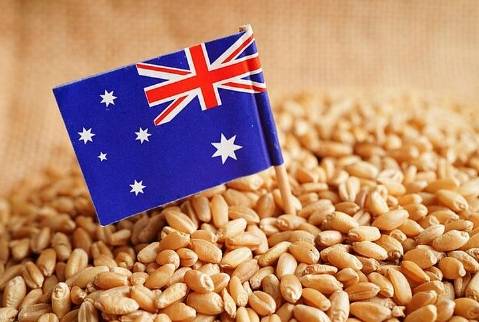
Between October and March, the first half of the marketing season, Australia exported 546,000 metric tonnes of wheat to China, a sharp decline from 2.9 million tonnes in the same period of the 2023/24 season and 4.4 million tonnes in 2022/23, based on Australian Customs data. Meanwhile, Russia, the world’s leading wheat exporter, continues to supply large volumes, even during its typically quieter second quarter, further limiting Australia’s export opportunities.
“If the current pace of Australian exports continues, we will have 5-6 million tonnes of carryover from last season,” said Vitor Pistoia, an analyst at Rabobank in Sydney. “We are creating a huge problem. It doesn’t look like the global market is undersupplied.”
The total carryover, including grain from previous seasons, could reach up to 8 million tonnes, according to a source at an Australia-based international grain trader. “If the new season crop looks good, it could be a problem for storage. It would force people to sell cheaper for export to make room,” the source noted. Over the past five years, Australia’s end-of-season wheat stocks have averaged 3.3 million tonnes, with 4 million tonnes considered manageable and above 6 million tonnes challenging, per U.S. Department of Agriculture data.
Australia is expected to produce 28-34 million tonnes of wheat this year, down from 34.1 million tonnes last year but above the 10-year average of 27.6 million tonnes, according to government figures. To accommodate the new harvest in the last quarter, a significant sell-off of stored grain may be necessary, potentially pushing prices down to A$300 ($194) per tonne from the current A$325-$350 range.
In early May, Chinese buyers purchased four or five 55,000-tonne shipments of Australian wheat, but no further orders have been reported this year. Recent rainfall in China’s key wheat-growing regions, expected on May 27, 2025, may further reduce demand for imported wheat. A Singapore-based grain trader remarked: “We had hoped to see more cargoes of Australian wheat reaching destinations in the Middle East and Africa. There was an expectation that Russia would export less.”