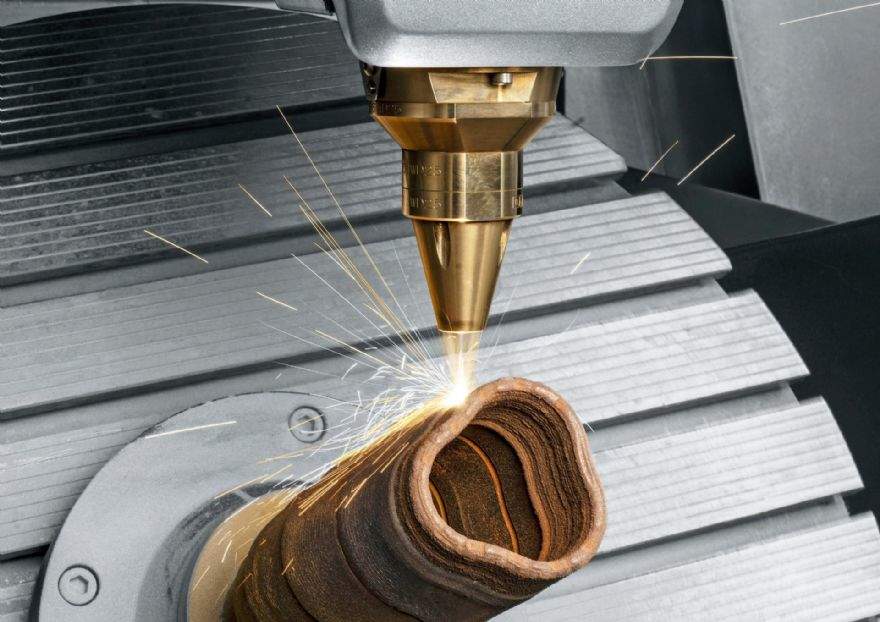
en.Wedoany.com Reported - Engineers and archaeologists at Koç University's Manufacturing and Automation Research Center (MARC) and the Mustafa V. Koç Maritime Archaeology Research Center (KUDAR) have developed a conservation method: using 3D printing to replace missing sections of archaeological amphorae, with sensors embedded in the repairs to track the condition of the artifacts.
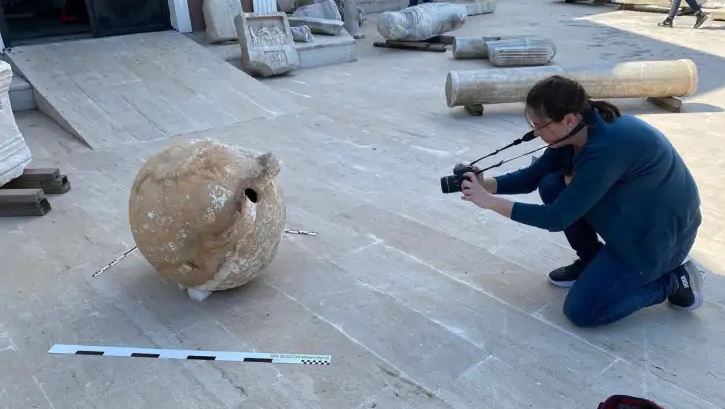
The first step in the process is photogrammetry, which combines hundreds of overlapping photographs of an amphora into a three-dimensional digital model. Researchers reconstruct the missing sections in the digital model and then use additive manufacturing to produce custom-fit fill pieces. Unlike traditional plaster repairs, these printed repairs can house sensors to detect temperature, humidity, pH levels, and physical stress—factors that can lead to salt migration, deformation, and micro-cracking in ceramic artifacts.
Because the sensors are embedded within the repairs themselves, rather than placed elsewhere in the display case, they can collect data specific to each individual artifact. The researchers tested the method on artifacts from two collections: a Günsenin IV amphora recovered from the Çamaltı Burnu I shipwreck, on display at the Bandırma Archaeology Museum in Türkiye, and a group of amphorae from the Amalfi Coast held at the Minori Villa Romana e Antiquarium in Italy. Initial measurements at both sites showed that the embedded sensors could record daily temperature and humidity fluctuations and capture patterns of force variation detected by the stress sensors.
The study, published in the Journal of Cultural Heritage, focuses on introducing and evaluating the method itself. The authors state that future work will examine its effectiveness, practical application, and cost-efficiency. The method aims to provide a replicable workflow for the documentation, reconstruction, and monitoring of archaeological ceramics, particularly for maritime artifacts that often require case-by-case treatment due to deterioration in underwater environments.