Wedoany.com Report-Sept. 13, The Legislative Assembly of El Salvador has approved the new Geothermal Energy Law with 57 votes in favor out of 60 members, following a proposal presented by President Nayib Bukele through the Ministry of Economy. The legislation consists of 83 articles, creating a comprehensive framework for the expansion of geothermal energy in the country, especially in relation to concessions granted to private companies.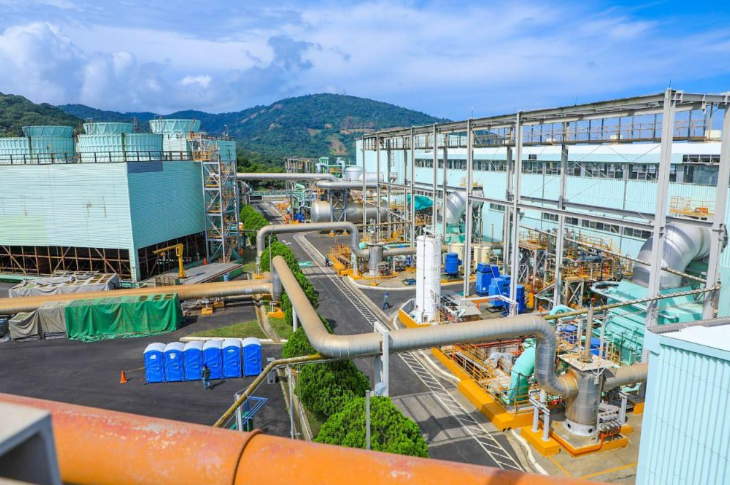
The Berlin geothermal power plant in El Salvador
The law permits geothermal concessions for private investors, generally through public bidding, with a validity of up to 30 years. However, in certain circumstances, concessions may also be awarded without public bidding. According to the law, direct awarding can occur for projects declared of national interest by the General Directorate of Hydroelectric and Mining Energy (DGEHM), particularly when projects are considered essential for energy security, economic development, or national well-being.
The DGEHM is tasked with conducting public tenders in areas identified with geothermal potential. Interested parties must submit exploration plans, and the agency has 45 days to review applications. Exploration concessions may last up to 36 months and cover areas of up to 50 square kilometers. Companies that carry out exploration will hold preferential rights when applying for subsequent development concessions. The DGEHM will also supervise compliance with contracts throughout the phases of construction, generation, operation, and eventual closure of projects.
Holders of geothermal concessions and new investors in this sector will benefit from incentives, including exemptions from Income Tax, Import Duties, and other taxes linked to revenues from renewable energy or reduced emission certificates. The law specifies that foreign concessionaires must establish a company in El Salvador in order to operate. Furthermore, the legislation provides for the possibility of expropriations in areas with geothermal potential to facilitate development.
During the legislative debate, some members voiced concerns. Representative Claudia Ortiz from the VAMOS party stated: “The direct awarding of contracts does not favor transparency and may increase the risk of corruption.” Francisco Lira also argued that the bill was not sufficiently consulted with academics, experts, and community representatives. Despite these comments, proposed amendments reflecting such criticisms were not adopted.
One notable modification was introduced at the request of Representative Dania González, who called for the removal of an article that had initially designated several sites—Ahuachapán, Berlín, Chinameca, San Vicente, Obrajuelo, Conchagua, Chilanguera, and Santa Rosa de Lima—as exploitation areas under the control of CEL or its subsidiaries. This article was deleted before the final approval of the law.
The Geothermal Energy Law is expected to encourage further private investment and contribute to the diversification of El Salvador’s energy matrix. By offering long-term concessions, regulatory oversight, and fiscal incentives, the government aims to strengthen geothermal generation as a reliable renewable energy source to support the country’s economic and environmental goals.