Wedoany.com Report-Nov. 4, The Port of Duisburg in Germany and the Port of Rotterdam in the Netherlands have signed a letter of intent (LoI) to strengthen cooperation in developing sustainable waterway transport corridors and advancing energy transition initiatives. The agreement reflects both ports’ shared goal of promoting environmentally responsible logistics and supporting industrial transformation across Europe.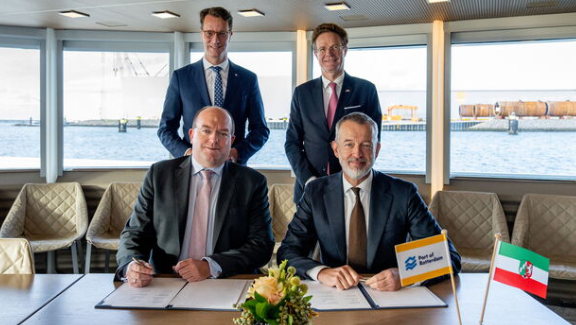
A key new focus of the collaboration is the export of carbon dioxide (CO₂). The ports plan to create favorable conditions for cross-border carbon capture, utilization, and storage (CCU/CCS) activities, supporting the establishment of an integrated European network for low-carbon operations.
Another major objective outlined in the agreement is the further development of the Rhine corridor as a sustainable, cross-border logistics hub. The ports emphasized that the Rhine corridor plays a vital role in Europe’s energy supply chain, ensuring efficient access for production sites to international markets while enhancing supply security and maintaining the competitiveness of industries along the entire value chain.
Markus Bangen, CEO of the Port of Duisburg, stated: “We face great challenges which we can overcome much more quickly, efficiently and intelligently together. It is crucial for us to bundle our expertise and develop collective cross-border solutions, especially in sustainable logistics and the sectors surrounding the energy transition. Logistics is a team sport – and the port of Rotterdam is our ideal partner.”
Boudewijn Siemons, CEO of the Port of Rotterdam Authority, commented: “13 percent of Europe’s energy demand is imported by way of Rotterdam. This is still primarily made up of fossil fuels, but our long-term aim is to become Europe’s port for importing renewable energies. Inland shipping – and thus our cooperation with duisport – is especially important in the onward transport of these energy sources.”
Hendrik Wüst, Minister-President of North Rhine-Westphalia (NRW), said: “The port of Rotterdam – as Europe’s largest seaport – and Duisburg’s port – the world’s largest inland port – together make a decisive contribution to the industrial future of North Rhine-Westphalia. Both ports will become central hubs for hydrogen and CO₂ in the future, making them important partners on our path to climate-neutral industry. It is good news for North Rhine-Westphalia that both ports are taking their cooperation another step further.”
He further emphasized that closer cooperation between the two ports strengthens economic competitiveness and the resilience of supply chains. He noted that North Rhine-Westphalia remains a key logistics hub for Europe’s energy supply and transport network.
The Port of Duisburg and the Port of Rotterdam had previously signed a letter of intent in 2022 to cooperate on rail and inland land development, digitalization, and energy transition. Earlier initiatives between the two ports include collaboration with Brazil’s Port of Pecém for green energy transport to Europe, joint development of digital port community systems, and projects related to low-carbon ammonia transport.
The new LoI marks another milestone in the long-term strategic partnership between the two ports, reinforcing their role in shaping a sustainable and interconnected European logistics and energy system.