Wedoany.com Report-Nov. 17, In Shanghai, China Telecom and ZTE have successfully deployed a three-tier intelligent computing system, “5G+AI cloud-edge-end,” alongside the Mobile Turbo ubiquitous deterministic connection solution. This deployment enables practical applications of AR smart glasses across industrial inspections and intelligent cultural tourism.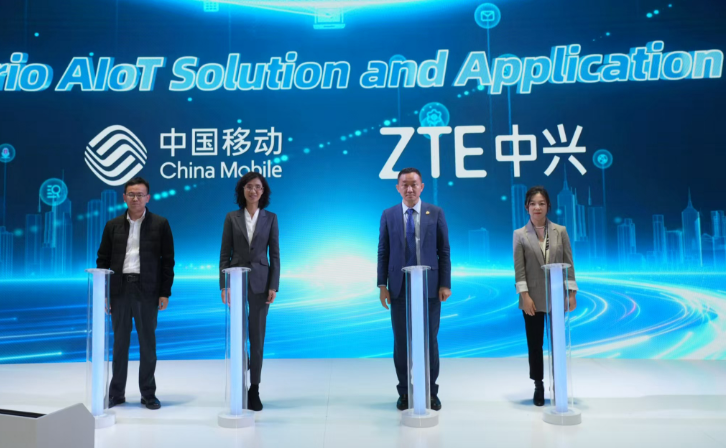
The 5G MobileTurbo system integrates 5G-A networks with artificial intelligence, creating a high-fidelity digital twin platform and employing intelligent prediction to establish precise supply-demand matching. The solution upgrades management from broad oversight to refined connection-level services, advancing network capabilities from best-effort to ubiquitous determinism. It provides high-reliability, deterministic network and computing support for AR applications, facilitating large-scale adoption in key scenarios such as industrial inspection and smart tourism.
Built on edge AI adaptive technology, the solution dynamically balances computing loads, enhancing AI efficiency by over 20% and supporting large-scale, real-time decision-making. AR systems can intelligently allocate edge computing resources according to real-time service demands, ensuring stable execution of complex AI tasks. Connectivity performance is optimized, with single uplink rates of at least 20 Mbps and air interface latency consistently below 20 ms, meeting the high-definition video, instant command reception, and precise motion requirements of AR glasses.
In industrial applications, the system has transformed inspection workflows. Field workers equipped with AR glasses can operate hands-free while transmitting first-person real-time footage to command centers. Leveraging 5G-A ultra-low latency and AI-driven scheduling, remote experts can provide annotated guidance or perform remote operations, addressing timeliness challenges in complex equipment maintenance. This process digitizes inspections and converts expert experience into reusable organizational knowledge, enhancing operational efficiency and safety, while supporting industrial digital transformation.
In cultural tourism, AR glasses powered by AI offer immersive experiences, such as on cruises along Shanghai’s Huangpu River. The system provides real-time multilingual translation and location-specific explanations. As visitors view different attractions, relevant augmented reality content is automatically triggered. Integrated large-model AI enables instant Q&A, allowing exploration of historical and cultural narratives at any time. By combining digitalization, connectivity, and AI technologies, including graphic recognition, smart voice, and deep learning, the solution significantly enriches traditional tourism experiences.
The collaboration between China Telecom and ZTE marks a shift in 5G-A and AI integration from technical validation to large-scale implementation. Harmonizing AI scheduling with 5G-A networks optimizes resource allocation and supports the widespread adoption of AR technology. As AI continues to advance and 5G-A networks expand, lightweight AR glasses are expected to become key tools in various industrial and tourism applications, ushering in a new era of digitalization and intelligence.