
The European Space Agency plans to launch a CubeSat named "Hayabusa" at the end of 2026, which will be the first miniature satellite to independently enter deep space and autonomously reach its predetermined orbit. This deep space early warning technology validation mission aims to extend solar storm warning time from the current tens of minutes to several hours by observing solar radiation.
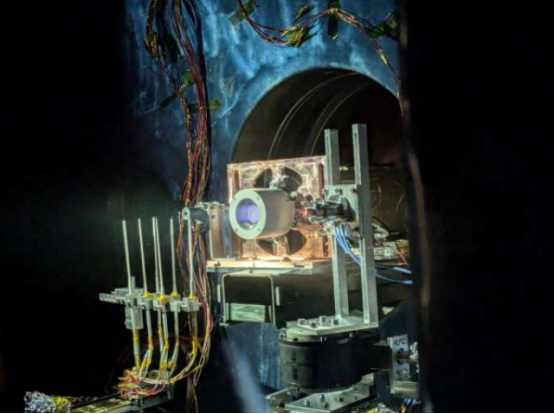
The Hayabusa CubeSat is jointly developed by the European Space Agency and main contractor Argotec, has completed the critical design review, and has entered the final implementation phase. The satellite will be equipped with a new electric propulsion system and a miniature ion thruster, enabling autonomous maneuvers from the Sun-Earth L2 Lagrange point to a distant retrograde orbit. European Space Agency CubeSat technology manager Roger Walker stated: "Once this new propulsion system is validated, it will open opportunities for future low-cost lunar landing, asteroid exploration, and even Mars orbital exploration missions."
This deep space early warning technology validation mission will utilize the satellite's unique position in the distant retrograde orbit to achieve early monitoring of solar storms. European Space Agency Space Weather Office director Juha-Pekka Luntama pointed out: "Demonstrating this early warning capability with the Hayabusa satellite will open a new path for future development of small spacecraft constellations. This constellation will provide continuous early warning services to operators of critical ground infrastructure, giving us ten times the time to take mitigation measures." The miniaturized instruments carried by the satellite can issue warnings 3 to 6 hours before solar storms reach Earth.
As the Hayabusa CubeSat prototype enters the testing phase, the research team will validate the spacecraft's reliability in deep space environments. The results of this deep space early warning technology validation mission will lay the technical foundation for building a multi-satellite monitoring network, enhancing the forecasting capability for space weather events.