
A research team from the University of British Columbia's Okanagan campus has developed an innovative artificial intelligence system called TrajReducer, which accurately predicts ship navigation directions and arrival times, providing strong support for Canadian ports in addressing global supply chain challenges. This achievement was jointly completed by Dr. Lü Zheng from the School of Engineering and PhD student Chengkai Zhang, with the related research published in the journal Ocean Engineering.
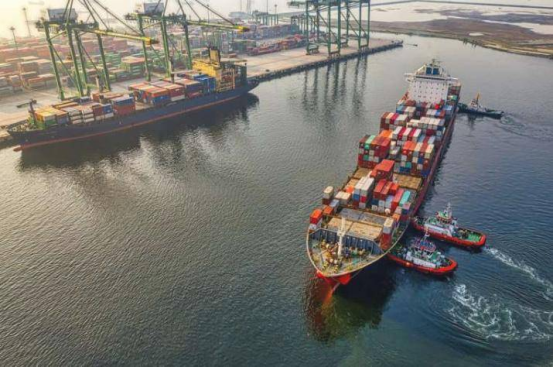
Dr. Lü Zheng pointed out that maritime transport carries over 80% of global trade volume, but traditional prediction methods suffer from slow speeds and high error rates, with approximately 30% of ship departure and arrival time data missing. TrajReducer analyzes navigation patterns from thousands of vessels, integrating multi-dimensional data such as ship type, speed, direction, and weather to build an intelligent prediction framework. "It's like an upgraded GPS—not only recording historical trajectories but also forecasting destinations based on vessel characteristics and sailing habits," Dr. Lü explained. The system compares current routes with historically similar voyages, enabling high-accuracy predictions even in the early stages of a journey while significantly reducing computational resource consumption.
As a global trade hub, Canada has four major ports—including Vancouver and Prince Rupert—handling over 100 million tons of cargo annually. Dr. Lü Zheng emphasized that knowing the dynamics of large cargo ships several days in advance can optimize berth allocation, equipment scheduling, and land transportation connections, significantly improving operational efficiency. "Even minor efficiency gains can translate into substantial economic benefits," added PhD student Zhang Chengkai. TrajReducer's unique advantage lies in its adaptive learning capability—as global shipping patterns adjust due to trade agreements, infrastructure changes, or climate factors, the system continuously learns to optimize its prediction models, ensuring long-term reliability.
Currently, this technology has attracted widespread attention in the maritime field. Its applications extend beyond port management to areas such as maritime safety monitoring, environmental risk assessment, and supply chain resilience optimization. "This is not only a technological breakthrough but also a key step in building a sustainable logistics system," Zhang Chengkai stated.