
Scientists from the Centre for Cell Dynamics at Queen Mary University of London's School of Biological and Behavioural Sciences, in collaboration with Carl Zeiss, have successfully developed an innovative live-cell imaging technology called FRAP-SR. This technique combines 60-nanometer super-resolution with fluorescence recovery after photobleaching (FRAP), significantly reducing light-induced cell damage and providing a new tool for studying key biological processes such as DNA repair and chromosome dynamics.
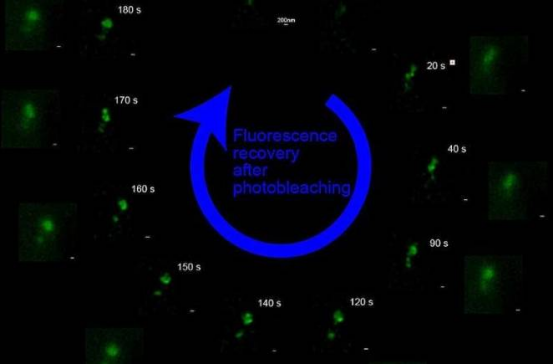
Led by Professor Viji Draviam, the team integrated lattice-structured illumination microscopy (diSIM/SIM²) with FRAP technology, overcoming the phototoxicity issues of conventional microscopes. This allows researchers to observe nanoscale dynamics in living cells with higher clarity. The results have been published on the bioRxiv preprint server. Professor Draviam stated: "FRAP-SR enables us to observe living cell structures as small as 60 nanometers—2000 times thinner than a human hair—without imposing significant stress on the cells."
Using FRAP-SR, the team analyzed the dynamic behavior of the DNA repair protein 53BP1, revealing that it forms liquid condensates of different natures—some structures are stable and dense, while others are more fluid. Through super-resolution imaging, the scientists further uncovered functional sub-compartments within 53BP1 foci, showing differences in protein mobility influenced by cellular states. Professor Draviam noted: "This technology provides a new approach for studying light-sensitive processes and is expected to accelerate the development of anti-cancer drugs."
The application prospects of FRAP-SR are broad, aiding research in DNA damage repair, chromosome organization, cellular senescence, and other fields. The global DNA repair drug market is projected to grow from $9.18 billion in 2024 to $13.97 billion by 2030, and FRAP-SR could speed up the development of related therapies. The high-end imaging equipment used in the study, such as the Zeiss Elyra 7 system, provided critical support for the technology's implementation.