en.Wedoany.com Report on Mar 25th, Quino Energy from California, USA, and Germany's Jena Flow Batteries announced the signing of a joint development agreement, under which Quino will provide quinone-based electrolytes to optimize flow battery performance. This collaboration aims to replace traditional vanadium-based materials and enhance the competitiveness of flow batteries in the grid energy storage sector.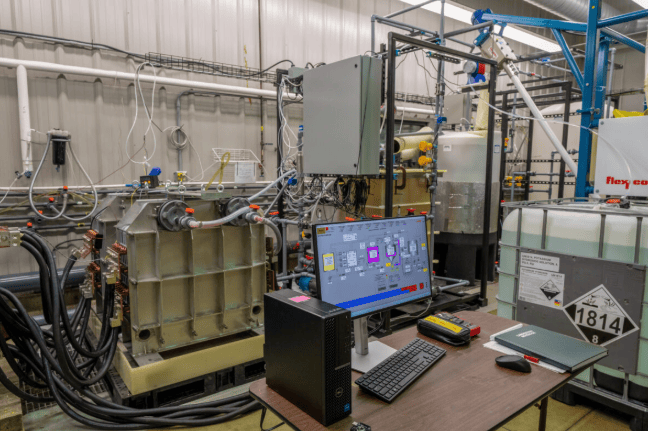
Quino's electrolyte formulation uses non-toxic, low-cost dye chemicals, making it suitable for densely populated or environmentally sensitive areas. As a subsidiary of China's Suqian Times Energy Storage, Jena focuses on selling flow battery systems in Europe. The two companies have been collaborating technically for about two years, and this agreement formalizes the existing arrangement.
Quino CEO Eugene Beh stated, "Jena's battery hardware is currently optimized for different electrolytes; we will collaborate to adjust the hardware to fit our formulation." He noted that the EU has strict regulations on toxicity, and Quino's formulation could help Jena explore new application scenarios.
Meanwhile, Jena's flow battery stacks will support Quino in advancing commercial projects in the US. In 2025, Quino received a $10 million grant from the California Energy Commission to build an 8 MWh flow battery project to provide emergency backup power. Beh mentioned that Jena's systems are strong contenders as hardware suppliers for the project.
"We plan to use Jena hardware for commercial demonstrations, with the first demonstration expected to launch in the second half of this year," Beh added. Regarding potential impacts of Jena's Chinese ownership on U.S. incentives, Beh stated that under current rules, projects pairing U.S.-made electrolytes with foreign hardware remain eligible for incentives such as the Inflation Reduction Act.
Quino conducts test production at its headquarters and scales up at the Electrosynthesis facility near Buffalo, New York, with an annual capacity of approximately 25 MWh. Last year, the company partnered with Atri Energy Transition to produce electrolytes in India, with an annual output capacity of up to 150 MWh. Beh emphasized that the company can quickly replicate its production model to meet market demand.