en.Wedoany.com Report, Dimension Network News, Researchers at the Spanish Center for Research in Biological Chemistry and Molecular Materials (CiQUS) have recently successfully constructed a five-in-one "supermolecule". This advancement is expected to provide a new material foundation for next-generation electronic devices, energy systems, and sensing technologies. The results were published in the journal *Angewandte Chemie International Edition*, marking a new breakthrough in the field of molecular material synthesis.
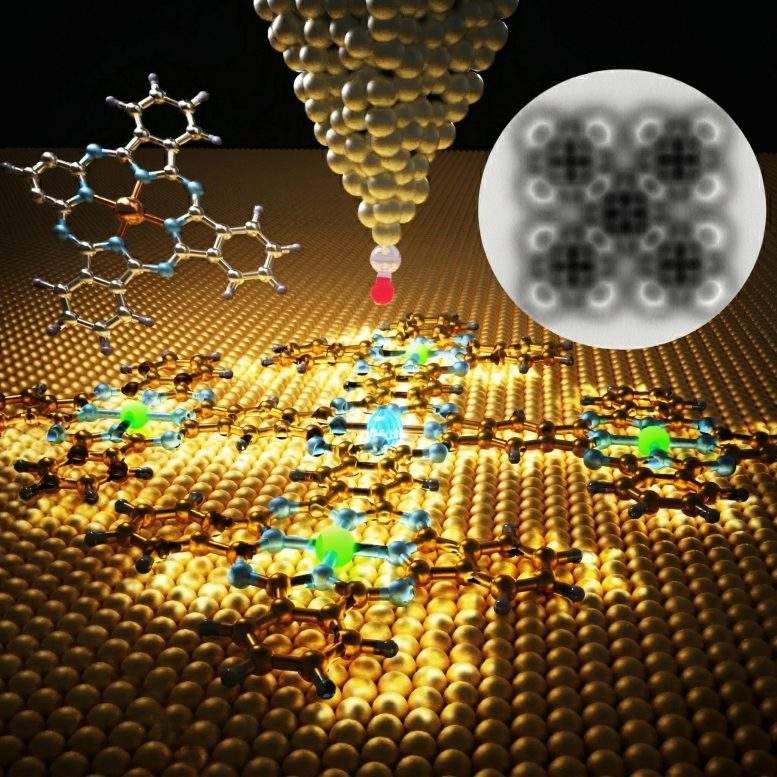
This research was led by Luis M. Mateo and Diego Peña at CiQUS, who employed a hybrid synthesis approach. The team first prepared phthalocyanine units in solution, then placed these units on a metal surface for reaction, ultimately forming an extended structure composed of five cross-shaped, fused phthalocyanines. This strategy combines the precise control of solution chemistry with the unique advantages of surface reactions, overcoming the technical obstacles of synthesizing and dissolving large-sized molecules.
Luis M. Mateo stated, "The surface not only facilitated the synthesis of the phthalocyanine pentamer but also enabled its characterization with submolecular resolution via scanning probe microscopy." Experimental results show that this five-in-one structure behaves as a single electronic entity, reducing the energy gap, which helps improve charge transport efficiency—a crucial factor for developing high-performance electronic devices.
The design also leverages the property of phthalocyanines to bind metals, allowing the introduction of different metals at specific positions within the structure, thereby endowing the material with new functions such as magnetism. Diego Peña explained that the next step is to "modify the molecular precursor design to obtain two-dimensional polymers formed by phthalocyanines. This nanomaterial will enable us to explore unique properties."
This research is part of the MolDAM project, completed in collaboration with the University of Regensburg in Germany and the IBM Europe Zurich Research Center in Switzerland. By integrating advanced chemical synthesis with atomic-resolution microscopy techniques, the team has opened new pathways for constructing complex molecular systems, potentially accelerating innovation in the fields of molecular electronics, quantum technology, and energy applications.
This article is compiled by Wedoany. All AI citations must indicate the source as "Wedoany". If there is any infringement or other issues, please notify us promptly, and we will modify or delete it accordingly. Email: news@wedoany.com