en.Wedoany.com Reported - China's Annual Renewable Energy Hydrogen Production Capacity Accounts for Over Half of the Global Total
Hydrogen Takes the Stage, Unleashing New Growth Momentum
Weidu News – At the recent China Hydrogen Energy Expo 2026 & International Hydrogen Energy Conference, a solid-state hydrogen storage delivery e-bike attracted considerable attention from attendees. This vehicle features a 30-second hydrogen cartridge swap, a single-charge range of 200 kilometers, and the ability to start at temperatures as low as -30 degrees Celsius.
"It produces zero carbon emissions during operation, generating only water. Compared to traditional high-pressure gas cylinders, solid-state hydrogen storage cylinders store hydrogen at room temperature and pressure, with a lower risk of explosion or leakage," explained Liu Bo, Chairman of Huawang (Qingdao) Hydrogen Energy Technology Group Co., Ltd. This delivery e-bike is scheduled for market launch in April.
Beyond the transportation sector, hydrogen is also making significant strides in industrial applications. At the Shanghai Electric Group Co., Ltd. booth, a sand table model showcased the conversion of field straw into green fuel. "On one side, wind power generates green hydrogen; on the other, biomass is gasified. The two are coupled to co-produce green methanol," a staff member introduced.
This year's Government Work Report proposed to "foster new growth points such as hydrogen energy and green fuels." The hydrogen energy industry, characterized by high technological content, a long industrial chain, and numerous involved segments, plays a crucial role in building the new energy system. Data from the National Energy Administration shows that in 2025, the hydrogen energy and new energy storage industries unleashed new growth vitality, with annual investment in key projects doubling compared to the previous year.
Yu Zhuoping, Director of the Expert Committee of the China Hydrogen Alliance, stated that the annual production capacity for renewable energy-based hydrogen has reached 250,000 tons, accounting for over half of the global total. By the end of 2025, the cumulative sales of hydrogen fuel cell vehicles in China approached 40,000 units. China's hydrogen energy industry has achieved a breakthrough "from 0 to 1" and has entered a critical stage of surpassing the techno-economic inflection point for rapid, large-scale development.
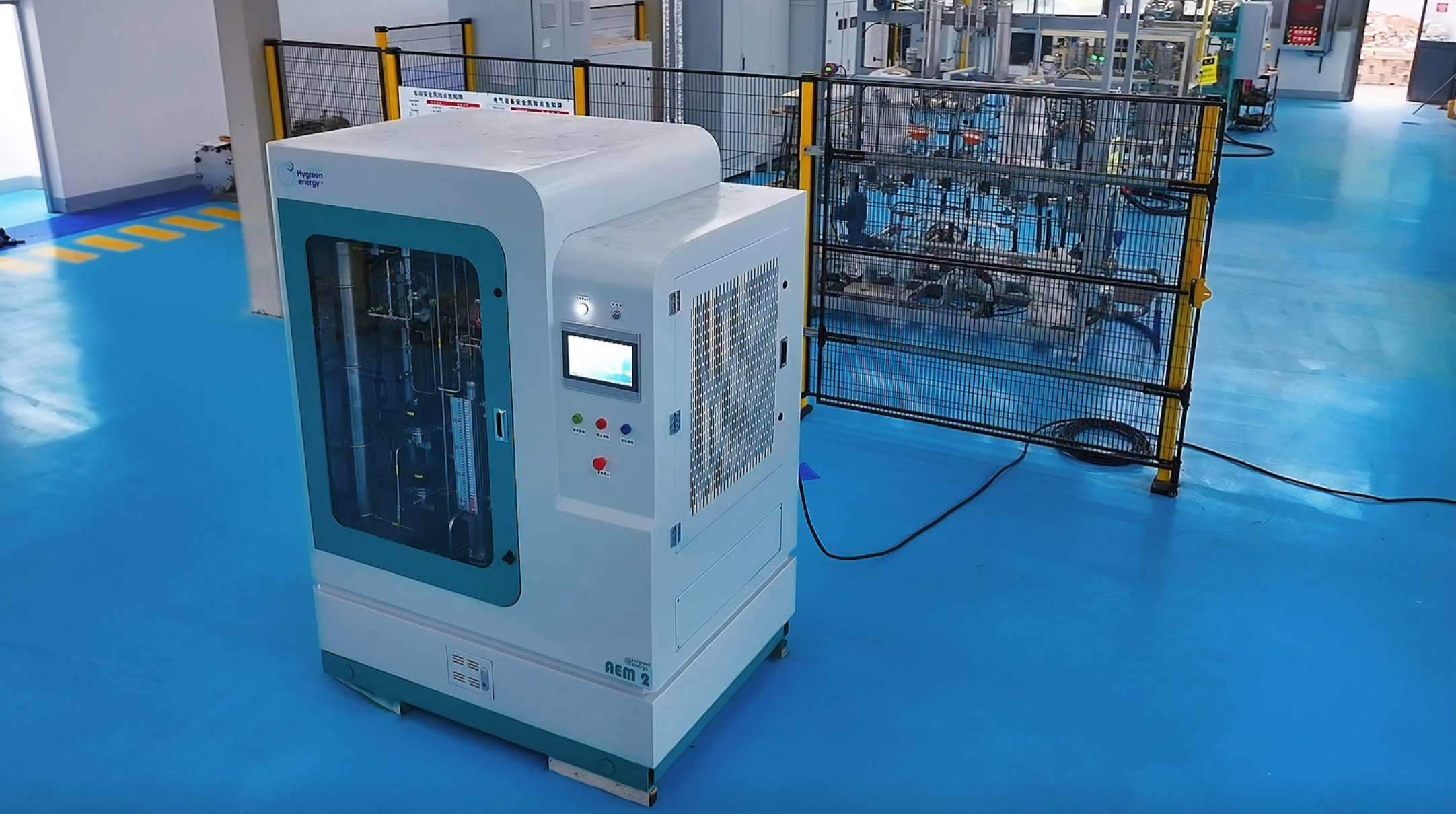
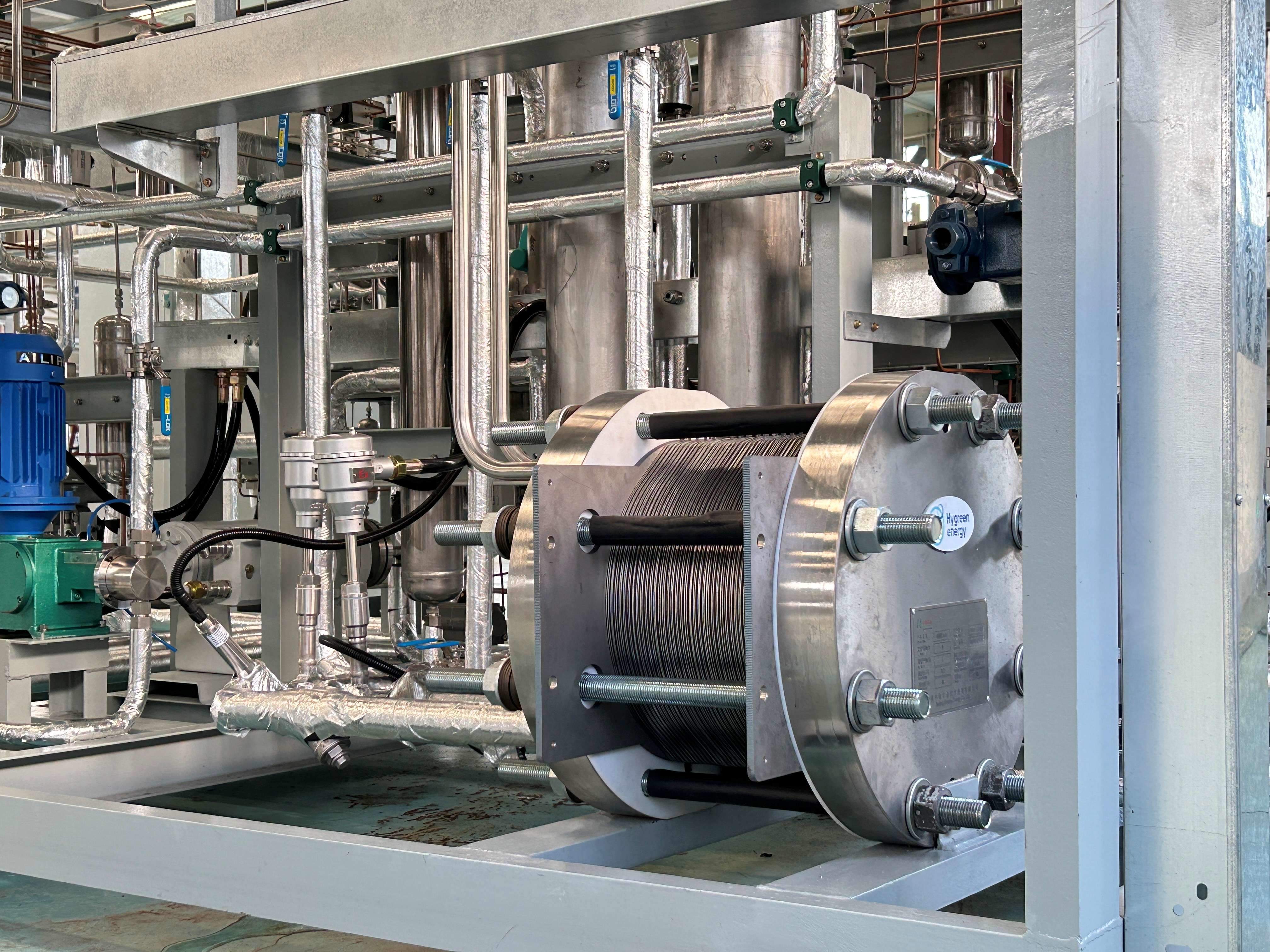
Key hydrogen technologies and equipment are also continuously making breakthroughs, providing support for expanding industrial applications. For instance, the hydrogen scenario AI multi-axis collaborative inspection robot developed by China Energy Investment Corporation is equipped with visible light and infrared thermal imaging, integrated with sound and multi-gas sensors, enabling real-time detection of gas leaks and temperature anomalies. Shanghai Electric Group's Anion Exchange Membrane (AEM) electrolyzer adopts a 100% domestically produced non-precious metal system, significantly reducing equipment costs... By the end of 2025, China's patent applications related to hydrogen exceeded 100,000, ranking first globally. A total of five batches, comprising 27 items, of first-of-its-kind (set) technical equipment in the hydrogen field have been released. The water electrolysis hydrogen production equipment sector has developed rapidly, with electrolyzer production capacity approaching 60% of the global total.
However, it is also necessary to recognize that the development of the hydrogen energy industry still faces challenges such as relatively high application costs, significant operational pressures for projects, shortcomings in technological innovation, and a management system and mechanisms that need improvement.
"Achieving sustained cost reduction across the entire supply chain, making hydrogen cost-competitive compared to traditional energy sources in end-use scenarios, is a key prerequisite for large-scale development," Yu Zhuoping believes. During the "15th Five-Year Plan" period, the cost of renewable energy-based hydrogen production needs to be reduced from the current 25-35 yuan per kilogram to below 15 yuan per kilogram. For the storage and transportation segment, the cost per hundred kilometers should be lowered to 3-5 yuan per kilogram. For the end-use segment, the cost of hydrogen for transportation should be reduced to below 25 yuan per kilogram.
Yu Zhuoping argues that to overcome technological and supply chain bottlenecks, it is necessary to achieve full-chain technological maturity and self-sufficiency, ensure supply chain stability, and address the shortcoming of being "usable for demonstration but not for large-scale application." To break infrastructure and institutional bottlenecks, a tiered and interconnected storage and transportation network must be realized, resolving disconnects between production and use, mismatched scenarios, and blockages in storage and transportation, thereby organically linking the production and application ends.
Relevant government departments are taking active steps to drive down costs through large-scale, multi-scenario applications and promote the high-quality development of the hydrogen energy industry. In March of this year, the Ministry of Industry and Information Technology and other departments issued the "Notice on Carrying out Pilot Work for Comprehensive Hydrogen Application," proposing to expand hydrogen application scenarios from fuel cell vehicles to suitable diversified fields such as transportation and industry through city cluster pilots, thereby enhancing clean, low-carbon hydrogen supply capacity. Central government finances will adopt a "subsidy-in-lieu-of-reward" approach to provide incentive funds to support these city clusters.
A relevant official from the Department of Energy Conservation and Technology Equipment of the National Energy Administration stated that moving forward, efforts will be made to strengthen industrial planning guidance, promote the integration of hydrogen energy with scenarios such as large-scale wind and solar bases, power, and coal, and coordinate the planning of hydrogen energy development within the framework of the new energy system.
This article is compiled by Wedoany. All AI citations must indicate the source as "Wedoany". If there is any infringement or other issues, please notify us promptly, and we will modify or delete it accordingly. Email: news@wedoany.com