en.Wedoany.com Reported - A research team from the Yusuf Hamied Department of Chemistry at the University of Cambridge recently published significant progress in the journal Joule. They successfully developed a solar-driven acidic photoreforming reactor. This technology utilizes strong acid from waste car batteries to decompose plastic waste, simultaneously producing hydrogen and acetic acid. Experimental data shows that the reactor achieved continuous stable operation for over 260 hours in a laboratory setting with no performance decline. Furthermore, hydrogen production was increased by nearly an order of magnitude compared to traditional photoreforming processes.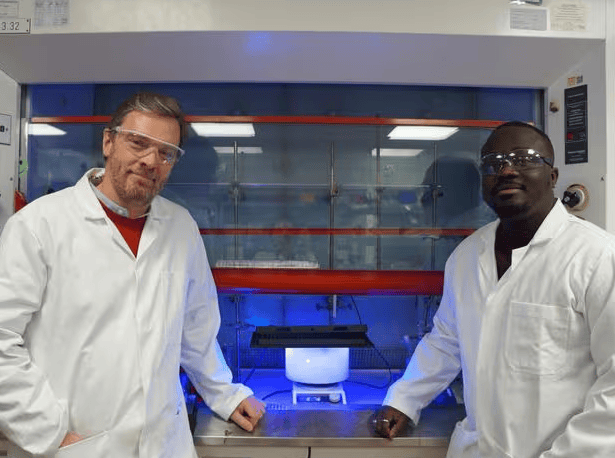
The core of this breakthrough lies in the development of a new photocatalyst. For a long time, strong acid environments were considered a no-go zone for solar reaction systems due to their highly corrosive nature. The novel catalyst developed by the Cambridge team overcomes this bottleneck, enabling it to withstand waste acid from car batteries at concentrations of 20% to 40%. In the reaction process, the waste acid first degrades the long polymer chains of plastics into chemical building blocks like ethylene glycol. Subsequently, under sunlight, the photocatalyst efficiently converts these building blocks into clean hydrogen and acetic acid.
Unlike current upcycling technologies that are only applicable to polyethylene terephthalate (PET), this acidic photoreforming solution demonstrates extremely broad applicability. Tests have verified that the system can process complex plastics like nylon and polyurethane, which are difficult to recycle using traditional methods. By combining the two waste streams of "waste plastic" and "waste battery acid," the researchers successfully constructed a closed-loop recycling system, significantly reducing the environmental costs of acid neutralization treatment and raw material input.
Currently, the University of Cambridge, through its innovation branch "Cambridge Enterprise," has initiated the commercialization process for this technology. The researchers point out that the acidic environment not only accelerates the hydrogen production rate but also allows the acid to be recycled rather than consumed once. This makes the industrial cost potential of this solution highly competitive. In the future, this reactor will focus on the large-scale disposal of contaminated or mixed plastics. It will serve as a complementary pathway to traditional mechanical recycling, seeking high-value resource outlets for the 400 million tons of plastic waste produced globally each year.
This article is compiled by Wedoany. All AI citations must indicate the source as "Wedoany". If there is any infringement or other issues, please notify us promptly, and we will modify or delete it accordingly. Email: news@wedoany.com