ESA and Chinese Academy of Sciences Joint SMILE Mission Launches on May 19, First Panoramic X-ray Imaging to Probe Earth's Magnetosphere
en.Wedoany.com Reported - The Solar wind Magnetosphere Ionosphere Link Explorer (SMILE) mission, jointly implemented by the European Space Agency and the Chinese Academy of Sciences, is scheduled for official launch on May 19. The launch window is set for 05:52 Central European Summer Time, when a Vega-C launch vehicle will send the satellite into its designated orbit from the Kourou Spaceport in French Guiana. This mission marks the first mission-level, comprehensive in-depth cooperation between China and Europe in the field of space science. After launch, the satellite will use innovative X-ray imaging technology to depict, for the first time, a global picture of the interaction between Earth's magnetosphere and the solar wind.
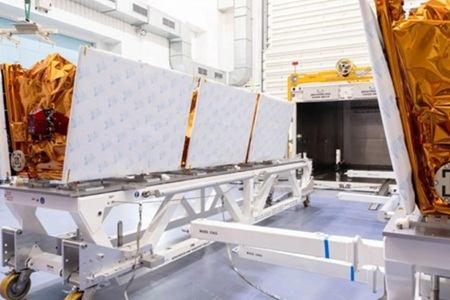
The SMILE satellite weighs approximately 2.3 tonnes and will enter a highly elliptical orbit with an apogee of 121,000 km and a perigee of 5,000 km. The satellite will spend 80% of its time over high-latitude regions of the Northern Hemisphere conducting scientific observations, and will transmit observation data back to Earth when it reaches perigee. Operating in this orbit allows the satellite to point for long durations at the key regions of magnetosphere-solar wind interaction while avoiding interference from high-energy particles in the Van Allen radiation belts. About 57 minutes after launch, the satellite will separate from the rocket; 63 minutes later, the solar panels will deploy, confirming the completion of the launch mission. Subsequently, the satellite will rely on its own propulsion system to gradually climb to its final operational orbit.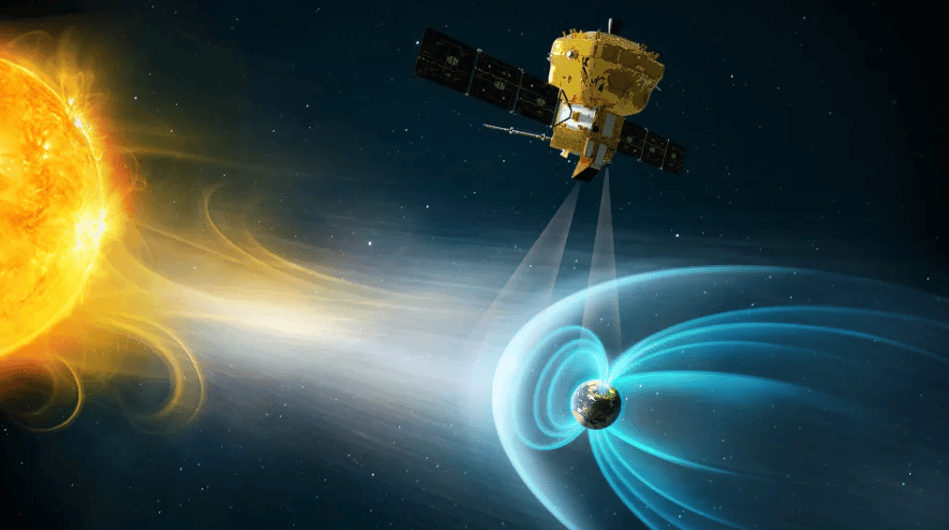
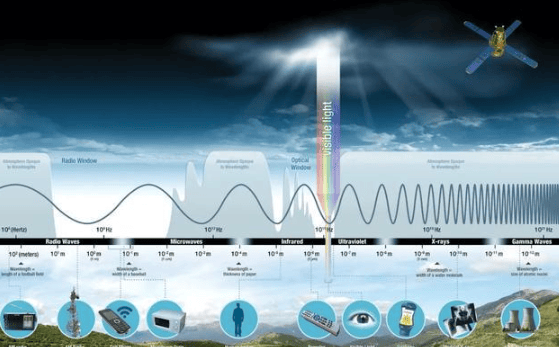
The core of the scientific mission lies in the four scientific instruments onboard the satellite, with the primary instrument being the Soft X-ray Imager. When highly charged ions from the solar wind collide with neutral atoms in Earth's outer atmosphere, charge exchange occurs and soft X-rays are emitted. By capturing these signals, the imager will achieve, for the first time, holistic imaging of the large-scale structure of the magnetopause. Another instrument, the Ultraviolet Imager, will monitor the complete morphological changes of the auroral oval with continuous observation periods exceeding 40 hours per session. The two instruments work in tandem, allowing scientists for the first time to simultaneously observe the paths of solar particles penetrating the magnetosphere and their effects after entering the atmosphere. Researchers at the University of Leicester in the UK were responsible for the key engineering development of the Soft X-ray Imager, while the Chinese Academy of Sciences provided the satellite platform and the other three scientific instruments.
The launch date was postponed from the originally planned April 9. ESA explained in a mission update that the delay stemmed from a technical issue discovered in the production line of a subsystem component for the Vega-C launch vehicle. After completing individual inspections and verifications of all affected hardware, both Chinese and European sides jointly confirmed that the satellite and rocket are in a safe and stable condition, and unanimously agreed to adjust the launch window to May 19. Throughout the investigation period, the satellite was maintained in a cleanroom at the Kourou launch site, with routine status monitoring uninterrupted.
The SMILE mission originates from ESA's Cosmic Vision programme and is jointly managed by the National Space Science Center of the Chinese Academy of Sciences and ESA. ESA is providing the payload module, the Soft X-ray Imager, launch services, and assembly, integration, and test facilities, as well as support during the in-orbit operations phase; the Chinese Academy of Sciences is providing the satellite platform and the remaining three scientific instruments, and is responsible for satellite operations in orbit. Academician Wang Chi of the Chinese Academy of Sciences described the mission as "taking the first panoramic CT scan of Earth's magnetosphere," clearly identifying three major scientific objectives: distinguishing the different impacts of solar wind pressure variations and magnetic reconnection on the magnetosphere, revealing the activity cycle of magnetospheric substorms, and establishing a physical model of solar wind-magnetosphere-ionosphere coupling.
Siddhant Sachdev, a space systems engineer at the University of Leicester, pointed out that the wide field-of-view imaging capability provided by the Soft X-ray Imager allows scientists to perform global-scale visualization of the solar wind charge exchange process in the soft X-ray band. Previously, human observations of Earth's magnetosphere were highly fragmented—some satellites focused on detailed measurements of particle concentration or magnetic field strength in localized regions, while others could only capture fragmentary images over short periods. SMILE's core breakthrough lies in simultaneously achieving the complementarity of global imaging and local in-situ measurements, stitching together previously scattered "pixel-level" information into a complete physical picture.
The data captured by SMILE will fill a critical gap in the space weather forecasting chain. Solar storms and geomagnetic storms can cause satellite malfunctions, communication disruptions, and power grid failures, but currently, humanity lacks global observation methods for key processes such as the deformation, reconnection, and energy injection of the magnetosphere under the impact of the solar wind. ESA Director of Science Carole Mundell emphasized during the pre-launch briefing that SMILE is a 50-50 cooperation project. Johns Hopkins University space physicist Simon Wing stated that significant discoveries can be anticipated, while UCLA space scientist Vassilis Angelopoulos pointed out that the SMILE mission's capability to image the aurora fills a clear gap in current international programmes.
The mission's design life is 3 years, with its operational period covering the peak window of the solar activity cycle. During the peak of solar activity, the frequency and intensity of coronal mass ejections increase significantly, and fluctuations in solar wind speed and density intensify, making it the optimal observation period for capturing strong geomagnetic storm events and studying the extreme responses of the magnetosphere. Over its orbital lifetime, SMILE is expected to record hundreds of solar wind impact events on the magnetosphere, promising to provide an unprecedented empirical database for upgrading space weather forecasting models.
This article is compiled by Wedoany. All AI citations must indicate the source as "Wedoany". If there is any infringement or other issues, please notify us promptly, and we will modify or delete it accordingly. Email: news@wedoany.com
Related Products




KJD127(A) Mining Explosion-Proof and Intrinsically Safe Computer
Taiyuan Xiangming Intelligent Control Technology Co., Ltd.
Flat Portable Satellite Terminal 0.35m Aperture Manual Portable Terminal
China Starwin Science & Technology Co., Ltd.
Automatic Aiming Laser Remote Obstacle Removal Robot
Pinggao Group Weihai High-Voltage Apparatus Co., Ltd.
G.652.D Wavelength-extended Non-dispersion Shifted Single-mode Optical Fiber
HONGAN GROUP CO., LTD.
GYTA Type Non-Self-Supporting Aerial/Duct Optical Cable
TONGDING INTERCONNECTION INFORMATION CO., LTD.