May 28 ICT Global Expansion Watch: AI Applications, Quantum Security, and AI Computing Optical Interconnects Become Main Themes
en.Wedoany.com Reported - On May 28, the WeDoAny Global Expansion Daily - global news in the information and communication technology (ICT) sector shows that industrial competition is shifting from single-point technological breakthroughs to a comprehensive contest involving "application scenarios, standard rules, computing infrastructure, and security systems." AI is entering industrial scenarios such as enterprise applications, mining, shipbuilding, logistics, and autonomous driving; quantum computing and quantum security are beginning to move from laboratories into telecommunications, defense, shipping, and public infrastructure; high-speed optical interconnects, 5G RF devices, hollow-core fiber, and new system-on-chips continue to support the upgrade of AI data centers and next-generation communication networks. For Chinese enterprises, opportunities lie not only in product exports but also in standard participation, scenario-based solutions, key component supply, industrial AI system integration, and overseas industry customer service capabilities.
1. Key News Summary
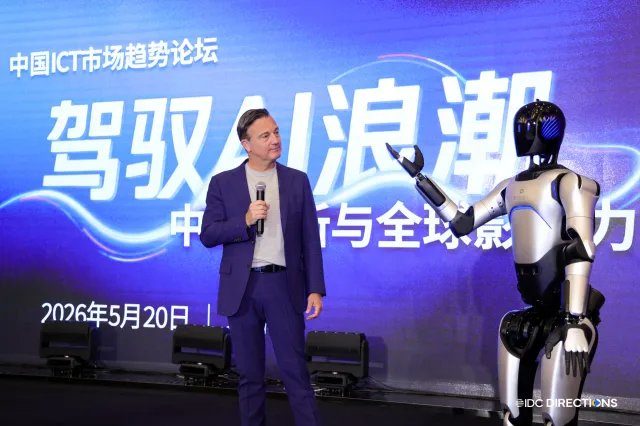
1. IDC: China's AI Industry Shifts to Enterprise Applications, Global Spending to Reach $940 Billion in 2026
Core Content: The 2026 IDC Directions Beijing conference revealed that China's AI industry is shifting from infrastructure construction to large-scale enterprise applications. IDC China Managing Director Kitty Fok stated that global enterprise AI spending will reach $940 billion in 2026, growing to $2.1 trillion by 2029. IDC also pointed out that Chinese enterprise strategy is shifting from product export to the export of capabilities, platforms, and ecosystems, with industrial AI entering end-to-end value chains including production, supply chain, operational decision-making, and after-sales service.
Global Expansion Observation: The core of this news is not just the expansion of the AI market size, but the changing model of Chinese enterprises going global. In the past, ICT enterprises exported more hardware, software, or single systems. Now, there is a greater need to package AI platforms, industry models, data governance, industrial process transformation, and operation and maintenance services into deliverable solutions. For overseas manufacturing, energy, mining, logistics, and public service clients, those who can translate AI capabilities into value in terms of cost reduction, efficiency improvement, safety, and compliance will find it easier to enter long-term project cooperation chains.
2. McKinsey Says 59% of Mining Work Hours Can Be Automated at Peru Mining Conference; Future is Human, AI, and Autonomous System Collaboration
Core Content: McKinsey & Company Partner Thibaut Larrat stated at the international mining conference organized by the National Society of Mining, Petroleum and Energy of Peru that the global mining industry is facing dual changes of talent shortages and accelerated AI development. He pointed out that 59% of current work hours in mining can be automated using existing technologies, and AI-related skill demand in the US has increased 16-fold in 18 months. Remote operations centers, automation, and agentic AI will drive the mining industry's shift from traditional on-site operations to collaboration between humans, AI, and autonomous systems.
Global Expansion Observation: Mining is one of the scenarios where ICT delivers high value. For Chinese ICT enterprises, industrial software companies, mining automation firms, and communication equipment suppliers, the digitalization needs of mining industries in resource-rich countries like Peru represent new project entry points. The opportunity is not just selling sensors or network equipment, but providing comprehensive capabilities such as mine communication networks, remote operations centers, AI scheduling, unmanned equipment coordination, safety monitoring, and personnel training.
3. Canada's Novarc and Hanwha Ocean Sign MOU on Welding Automation and AI Manufacturing in May 2026
Core Content: Canada's Novarc Technologies Inc. signed a Memorandum of Understanding with South Korean shipbuilder Hanwha Ocean to co-develop welding automation and AI-driven manufacturing technologies for advanced shipbuilding applications. The cooperation focuses on commercial and naval shipbuilding production efficiency, manufacturing precision, industrial physical AI, and robotic welding systems. The signing took place at BC Innovation Day in Victoria, British Columbia, Canada, with about 100 institutions participating, covering Canadian and South Korean governments, academia, and the defense and marine industries.
Global Expansion Observation: This type of cooperation indicates that industrial AI is entering overseas manufacturing through specific process steps, rather than remaining at the level of generic algorithm demonstrations. Chinese welding robot, machine vision, industrial software, edge computing, and marine equipment enterprises can focus on high-difficulty manufacturing scenarios like shipbuilding, offshore engineering, and steel structures, participating in international projects through "process algorithms + robot bodies + quality inspection + remote operation and maintenance."
4. CAICT Leads International Standard for 12.8Tb/s Optical Modules, AI Computing Optical Interconnects Move Towards Near-Packaging
Core Content: The China Academy of Information and Communications Technology (CAICT) recently led the initiation of the international standard for "12.8Tb/s Optoelectronic Near-Packaged Modules" for AI computing optical interconnects. This standard addresses the high-speed interconnect needs of AI computing centers, focusing on the technical requirements, interface capabilities, and engineering applications of 12.8Tb/s-level optoelectronic near-packaged modules, providing standardized support for high-bandwidth, low-power, and high-integration optical interconnect solutions in AI computing clusters.
Global Expansion Observation: This news is significant for China's optical communication industry chain. If Chinese enterprises want to gain a stronger voice in global AI data center construction, they cannot rely solely on optical module shipment volumes; they must also participate in interface, testing, reliability, thermal management, and engineering application standards. Standards leadership helps Chinese optical device, silicon photonics, packaging, test instrumentation, switching equipment, and data center construction enterprises jointly enter the overseas AI computing center supply chain.
5. Alibaba's Speech Large Model Ranks 5th Globally on Speech Arena, Tops Three Voice Capabilities in China
Core Content: On May 28, the global AI evaluation platform Artificial Analysis's speech leaderboard showed that Alibaba's speech large model, Fun-Realtime-TTS-Preview, ranked 5th globally on the Text to Speech Arena with an Elo score of 1190, and achieved first place in China across three speech tracks: ASR, Chat, and TTS. The model's entry into the global top five indicates that Chinese speech AI possesses stronger international competitiveness in real-time speech synthesis, speech recognition, and speech dialogue chains.
Global Expansion Observation: The overseas application of speech AI is not limited to smart speakers or customer service; it is entering in-vehicle systems, cross-border customer service, educational coaching, meeting collaboration, digital humans, and multilingual enterprise services. If Chinese AI enterprises want to establish themselves in overseas markets, they must solve problems related to low latency, multilingualism, dialects, noisy environments, privacy protection, and local compliance. Leaderboard rankings can provide technical endorsement, but real business opportunities lie in industry-specific deployment and local ecosystem cooperation.
6. Alibaba's Qoder Launches Cloud Agents, Enterprise Agent Integration Shortened to 1 Day
Core Content: On May 28, Alibaba's Qoder launched Cloud Agents, a fully managed AI Agent runtime platform, providing full-stack capabilities including an agent base, model services, and runtime environments for enterprise applications and business systems. Enterprises can invoke relevant capabilities via APIs, shortening the agent launch time from about one month to one day. Public information shows that the Qoder product family already serves over 5 million users globally.
Global Expansion Observation: Enterprise Agents represent a potential direction for Chinese software and cloud service enterprises going global. Overseas enterprises are not simply buying models; they need an intelligent agent runtime environment that is auditable, traceable, and integrable with business systems. If Chinese manufacturers can provide standardized APIs, sandbox security, and cost control solutions around scenarios like customer service, operations, risk control, maintenance, and R&D collaboration, they have the opportunity to shift from tool export to platform capability export.
7. US-based Qorvo Launches Broadband High-Isolation Switch Family, Simplifying 5G Radio RF Architecture with Single-Device Solution
Core Content: US RF and power semiconductor company Qorvo launched a new generation of broadband high-isolation RF switch family for applications including 5G infrastructure, industrial, drones, and test systems. Covering the 50 MHz to 10 GHz frequency band, core devices include the QPC6144, QPC6122, and QPC6188, which can reduce component count, improve signal integrity, and replace the cascaded switch architectures commonly found in 5G radios with a single-device solution.
Global Expansion Observation: As 5G construction enters a deeper phase, the competitive focus is extending from complete units and base stations to RF front-ends, calibration paths, feedback links, and test systems. Chinese communication equipment, RF device, drone communication module, and test instrumentation enterprises in overseas markets need to pay attention to new frequency bands, broadband trends, miniaturization, and high isolation requirements. Especially in Open RAN, industrial private networks, and low-altitude communication scenarios, basic device capabilities will directly impact the competitiveness of complete systems.
8. Finland's Telia Finland and QMill Demonstrate Quantum-Assisted Encryption for Mobile Networks
Core Content: Telia Finland and Finnish quantum software developer QMill jointly designed and demonstrated a quantum-enhanced message encryption protocol for mobile telecommunications infrastructure. The protocol uses locally or cloud-accessible quantum computers to protect communication nodes and was audited and demonstrated before the C5 department of the Finnish Defence Command to assess its feasibility for national military communications. The solution can operate over existing mobile network channels without relying on dedicated fiber optic links.
Global Expansion Observation: Quantum security is moving from a research concept into telecom operator and defense communication scenarios. For Chinese communication security, cryptographic equipment, operator network, private network communication, and system integration enterprises, overseas markets will increasingly value security solutions that are "upgradable on existing networks." Compared to heavy-asset dedicated links, software-based, compatible, and auditable quantum security solutions are easier to introduce into public administration, energy, transportation, and enterprise critical communication projects.
9. Business Finland Grants €2.79 Million to Fund QMill and ESL Shipping Quantum Computing Project
Core Content: Business Finland granted a total of €2.79 million in enterprise research funding to QMill and maritime logistics operator ESL Shipping to promote the application of quantum computing in maritime logistics optimization. Of this, €1.09 million is for ESL Shipping's cloud-scalable intelligent fleet optimization software pipeline, and €1.7 million is for QMill's Supernova algorithm design engine research. The project will combine real historical data and telemetry data to explore the application of quantum-classical hybrid optimization algorithms in fleet scheduling, weather delays, emission compliance, and commercial profitability.
Global Expansion Observation: The engineering implementation of quantum computing is choosing high-complexity optimization scenarios as entry points, with shipping logistics being a typical example. Chinese port and shipping software, logistics scheduling systems, fleet management platforms, and industrial algorithm enterprises can focus on the intelligent scheduling, low-carbon operations, and emission compliance needs of overseas shipping companies, participating in the international market through classic optimization, AI prediction, and future quantum interface compatibility.
10. Canada's Lastwall Secures $16 Million in Funding to Expand Quantum-Resilient Network Defense
Core Content: Identity-first authentication and quantum-resilient software developer Lastwall completed a $16 million Series A extension funding round, led by the Business Development Bank of Canada through its StrongNorth Fund. The funding will be used to expand the deployment of its security architecture in sovereign municipal utilities, defense infrastructure, and public sector cloud portals across North America. The software stack uses behavioral telemetry to build context-aware authorization gates and integrates native post-quantum cryptography into the verification pipeline.
Global Expansion Observation: Security procurement for North American public infrastructure is increasingly emphasizing quantum resilience, identity authentication, and critical system protection. When expanding overseas, Chinese cybersecurity enterprises need to recognize this shift: entering future projects in energy, water utilities, telecommunications, and urban infrastructure requires not just providing firewalls or security platforms, but also demonstrating identity governance, behavioral analysis, post-quantum cryptography adaptation, compliance frameworks, and localized operation and maintenance capabilities.
11. US-based Oracle and Classiq Complete 36-Qubit Portfolio Optimization HPC Proof of Concept
Core Content: Oracle Corporation and quantum software engineering platform developer Classiq completed a high-performance computing proof of concept, connecting natural language AI generation with a large-scale classical simulation cluster. The team routed workloads to NVIDIA DGX A100 supercomputing nodes on Oracle Cloud Infrastructure, successfully executing a 36-qubit simulation. The process demonstrates that an AI agent can synthesize enterprise-grade quantum code based on abstract user prompts and automatically compile it into executable circuits.
Global Expansion Observation: This indicates that cloud computing, AI agents, high-performance computing, and quantum software are converging. For Chinese cloud service providers, HPC integrators, AI development platforms, and quantum software enterprises, the overseas market may not procure "quantum technology" in isolation but will focus more on whether it can be embedded into financial optimization, supply chain scheduling, engineering design, and industrial simulation processes. Platforms that can encapsulate complex computing capabilities into tools usable by enterprises are more likely to win customers.
12. Japan's Lightera, Oki Electric, and Others Complete World's First Hollow-Core Fiber Test
Core Content: Lightera announced the completion of a next-generation optical line demonstration using hollow-core fiber technology, in collaboration with Oki Electric Industry and Keio University. Hollow-core fiber is seen as an important direction for next-generation low-latency, high-speed transmission, expected to serve data center interconnects, high-performance computing, financial communications, and low-latency network scenarios.
Global Expansion Observation: The development of hollow-core fiber reminds Chinese optical communication enterprises that competition in overseas markets will gradually extend from traditional optical fiber cables, optical modules, and transmission equipment to overall low-latency network solutions. AI data centers, cross-border financial transactions, computing power networks, and scientific research networks could all become new sources of demand. Chinese enterprises need to plan ahead for testing and verification, connectors, engineering construction, network operation and maintenance, and scenario-based solutions.
13. US AI Inference Startup Tensormesh Raises $20 Million
Core Content: San Francisco-based AI inference startup Tensormesh announced $20 million in funding from investors including AMD, Nvidia, and CoreWeave. The company's total funding has reached $24.5 million. It focuses on inference services based on cache acceleration technology, with its Tensormesh Inference platform claiming to reduce latency and GPU costs by 10 times and reduce redundant computation in AI agent workloads through KV caching.
Global Expansion Observation: AI infrastructure competition is extending from training computing power to inference efficiency. When going overseas, Chinese server, storage, inference platform, edge computing, and cloud service enterprises cannot just emphasize computing scale; they must also address overseas customers' concerns about latency, GPU costs, cache efficiency, stability, and continuous online capability. Especially with the proliferation of AI Agents, inference optimization will become an important procurement indicator for enterprises.
14. Canada's Torc Robotics Joins Mila to Co-Develop Autonomous Truck AI
Core Content: Torc Robotics has joined the Mila ecosystem, the Quebec Artificial Intelligence Institute in Canada, and will establish an office at Mila's Montreal campus, becoming the institute's sole partner in the autonomous trucking sector. The two parties will collaborate on generative world models, multi-agent behavior modeling, reinforcement learning, and foundational models for physical AI systems to advance autonomous transportation technology.
Global Expansion Observation: Autonomous commercial vehicles are moving from single-vehicle intelligence to joint development involving AI research institutions, logistics scenarios, and industry partners. If Chinese autonomous driving algorithm, vehicle-road coordination, sensor, communication module, and simulation testing enterprises enter logistics scenarios in North America, Europe, or the Middle East, they need to pay more attention to local R&D cooperation, data loops, road regulations, and fleet operation capabilities, rather than competing solely on vehicle or hardware prices.
15. Japan's Mitsubishi Electric and Chiba Institute of Technology Collaborate on Physical AI R&D
Core Content: Mitsubishi Electric and the Chiba Institute of Technology signed a three-year basic agreement to collaborate on R&D for physical AI technology for the public and private sectors. The agreement is valid until April 2029, and the two parties plan to establish a co-creation center to develop AI robot solutions based on autonomous control robots such as multi-legged walking robots, humanoid robots, and drones.
Global Expansion Observation: The joint promotion of physical AI by Japanese enterprises and universities reflects that robotics and autonomous systems are becoming an intersecting track for ICT, intelligent manufacturing, and public services. When going overseas, Chinese enterprises should focus on software and hardware synergy capabilities, including control algorithms, edge computing, sensor fusion, industrial communication, on-site safety, and subsequent operation and maintenance, rather than just exporting a single robot body.
16. Spain's FENIX Project Advances Autonomous Control of Heterogeneous Drone Swarms
Core Content: The FENIX project, under the Spanish Ministry of Defence's COINCIDENTE program, will develop an autonomous control and coordination system for heterogeneous unmanned aerial vehicle swarms. The project is led by UAV Navigation-Grupo Oesía providing advanced guidance, navigation, and control systems, with Alpha Unmanned Systems as the platform leader, supported by institutions including AICIA and FADA-CATEC.
Global Expansion Observation: Drone swarm projects reflect the deep integration of communication, navigation, control, AI, and platform engineering. Chinese drone, flight control system, communication link, mission payload, and counter-drone enterprises will face higher security, compliance, and scenario adaptation requirements in overseas markets. For civilian scenarios such as emergency response, inspection, agriculture, mining, and urban governance, swarm coordination capabilities may also generate new project demands.
17. Australia's Monash University Develops Nanoscale Valleytronic System-on-Chip
Core Content: Researchers at Monash University in Australia have developed a nanoscale circuit that can generate, guide, and read light-based information on a single chip. The achievement integrates cutting-edge materials and nanotechnology, demonstrating a fully integrated system capable of carrying information using the quantum property of "valley degree of freedom," offering a new path for faster, more energy-efficient computing and quantum technologies.
Global Expansion Observation: New system-on-chip and optical information processing technologies are still in the early R&D stage, but their direction is closely related to AI computing, low-power chips, quantum information, and next-generation data processing. Chinese semiconductor equipment, materials, testing, packaging, and research collaboration enterprises should monitor such fundamental technology trends, seeking joint R&D, equipment supply, and pilot verification opportunities in overseas universities, laboratories, and industry alliances.
18. ETH Zurich Demonstrates Quantum Random Number Method, Laying Certifiable Randomness Foundation for Cryptographic Security
Core Content: Researchers at ETH Zurich generated certifiably perfect random numbers through a quantum experiment. The research team used a randomness amplification method to transform flawed random inputs into mathematically certified perfect random sequences, providing a new underlying technical path for encrypted communications, digital identities, blockchain, and security protocols.
Global Expansion Observation: Quantum random numbers may seem like basic research, but they are directly related to cryptographic systems, digital identities, and high-security communications. When expanding overseas, Chinese information security, cryptographic module, fintech, blockchain infrastructure, and government/enterprise security enterprises need to continuously track technologies like certifiable randomness, post-quantum cryptography, and device-independent security to avoid future technological gaps in high-security-level markets.
2. Global Changes in the ICT Engineering Sector Seen from the News
1. AI competition is shifting from model capability to industry implementation capability. News from IDC, McKinsey, Novarc and Hanwha Ocean, Alibaba Qoder, etc., collectively indicates that the focus of the AI industry is shifting from foundational models, computing power, and single-point tools to enterprise processes, industrial scenarios, and executable tasks. Overseas customers are more concerned about whether AI can enter production, mines, shipyards, logistics, customer service, operation and maintenance, and supply chains, rather than simply looking at model parameters or leaderboard rankings.
2. Quantum technology is beginning to enter telecommunications, defense, shipping, and public infrastructure. Telia Finland and QMill's quantum-assisted encryption for mobile networks, QMill and ESL Shipping's quantum optimization for shipping, Lastwall's quantum-resilient network defense, and Oracle and Classiq's quantum-HPC proof of concept all indicate that quantum technology is seeking viable industry entry points. Future projects are more likely to appear in the forms of "quantum security upgrades," "complex optimization," and "high-performance computing platforms."
3. AI data centers are driving upgrades in optical interconnects, RF devices, and new transmission technologies. CAICT leading the 12.8Tb/s optical module international standard, Qorvo launching 5G broadband high-isolation RF switches, Japan's hollow-core fiber test, and Australia's on-chip optical information system reflect that computing power demand is inversely driving communication infrastructure upgrades. Overseas data centers, operator networks, private network communications, and high-performance computing scenarios will continue to release demand for optical modules, RF, low-latency transmission, and testing equipment.
4. Chinese enterprises going global are shifting from product output to standard, platform, and ecosystem output. CAICT's participation in international standards, Alibaba's speech large model entering the global leaderboard, and the Qoder product family serving global users indicate that Chinese ICT enterprises are gradually moving from hardware exports and software tool output into competition involving standard rules, cloud platforms, AI capabilities, and developer ecosystems. Future overseas markets will place greater emphasis on continuous service capability, local compliance capability, and engineering delivery capability.
5. Industrial scenarios are becoming a new growth space for ICT enterprises. News on mining automation, AI manufacturing in shipbuilding, autonomous trucks, drone swarms, humanoid robots, and shipping optimization shows that ICT has deeply embedded itself in energy, transportation, mining, manufacturing, and public services. For enterprises, understanding communication technology is no longer enough; they must also understand industry processes, equipment interfaces, on-site safety, data governance, and project operation and maintenance.
3. Opportunities for Chinese Enterprises Going Global
First, export AI solutions tailored to overseas industrial scenarios. Chinese AI enterprises, industrial software companies, and system integrators can focus on markets in mining, ports and shipping, shipbuilding, energy, logistics, manufacturing, and public services, translating algorithmic capabilities into solutions for scheduling optimization, predictive equipment maintenance, remote operations, quality inspection, and safety monitoring.
Second, participate in the global AI computing optical interconnect and data center supply chain. The initiation of the 12.8Tb/s optical module international standard indicates that AI data centers are entering a phase of high bandwidth, low power consumption, and near-packaging. Chinese optical module, silicon photonics chip, optical fiber cable, switching equipment, test instrumentation, and data center engineering enterprises should strengthen international standards participation, interoperability testing, and overseas customer validation.
Third, position for quantum security and high-security communication projects. Cases from Finland, Canada, and Switzerland show that quantum security is integrating with telecommunications, defense, public infrastructure, and cloud portals. Chinese cryptographic security, identity authentication, private network communication, and cybersecurity enterprises need to adapt in advance to post-quantum cryptography, behavioral authentication, compliance auditing, and localized deployment requirements.
Fourth, provide AI Agent and cloud-based runtime foundations for overseas enterprises. Enterprise Agent implementation requires APIs, sandboxes, logging, permissions, tool invocation, and stable runtime environments. Chinese cloud service providers and AI platform enterprises can offer standardized managed services to overseas SMEs, customer service centers, operations teams, software development teams, and industry service providers.
Fifth, enter the autonomous driving, robotics, and unmanned systems markets through local cooperation. Cases from Canada, Japan, and Spain demonstrate that autonomous trucks, physical AI, and drone swarms are highly dependent on local research institutions, regulatory environments, and testing scenarios. Chinese enterprises going global need to adopt a combination of joint R&D, scenario pilots, technology licensing, and local operation and maintenance to lower entry barriers.
Sixth, enhance comprehensive delivery capabilities encompassing "equipment + software + operation and maintenance + compliance." Overseas ICT projects increasingly emphasize long-term availability and responsibility boundaries. Whether it's optical interconnects, 5G RF, cybersecurity, or industrial AI, Chinese suppliers need to translate product parameters into project proposals, including installation and commissioning, interface adaptation, data security, personnel training, after-sales maintenance, and compliance documentation.
4. Industry FAQ
Q1: Why can't ICT enterprises going global just sell hardware equipment?
A: Overseas customers are increasingly concerned about whether equipment can be embedded into actual business processes. Standalone hardware is prone to price competition, whereas "hardware + software platform + operation and maintenance services + compliance support" makes it easier to enter long-term projects. For example, AI mining, smart fleets, 5G private networks, and quantum security projects all require system integration and continuous service capabilities.
Q2: How can optical module and optical communication enterprises seize overseas opportunities in AI data centers?
A: They should focus on high speed, low power consumption, near-packaging, interoperability testing, and international standards. Overseas AI computing center customers look not only at the price of individual optical modules but also at thermal management, reliability, testing methods, switching equipment compatibility, and batch delivery stability. Participating in international standards and validation with leading customers helps raise the entry threshold.
Q3: What is the most difficult part for Chinese AI enterprises entering overseas industrial scenarios?
A: The difficulty usually lies not in the model itself, but in data access, on-site equipment interfaces, business process understanding, permission management, security responsibilities, and localized services. Mining, shipbuilding, logistics, and energy scenarios all have strong industry-specific attributes, requiring enterprises to turn AI into deployable, maintainable, and auditable engineering solutions.
Q4: Will quantum security soon become a procurement requirement for overseas communication projects?
A: It will not become universally popular immediately in ordinary commercial scenarios, but in high-security scenarios such as defense, telecommunications, public infrastructure, energy, water utilities, finance, and government cloud portals, quantum resilience and post-quantum cryptography will become increasingly important. Suppliers who complete technical reserves and compliance adaptation in advance will find it easier to enter high-level projects.
Q5: When an enterprise Agent platform goes overseas, what issues are customers most concerned about?
A: Customers typically focus on stability, data security, permission isolation, invocation costs, log auditing, API compatibility, and the difficulty of business system integration. For overseas markets, enterprises must also consider cross-border data, local cloud environments, privacy regulations, and language adaptation, not just emphasize "fast launch."
Q6: What engineering risks should drone, autonomous driving, and robotics enterprises be aware of when going overseas?
A: These products involve communication links, navigation and positioning, sensor fusion, AI decision-making, on-site safety, and regulatory permits. Different countries have different requirements for test roads, flight airspace, data collection, and safety responsibilities. Enterprises should prioritize reducing entry risks through local partners, pilot projects, and industry certifications.
Q7: How can small and medium-sized ICT suppliers enter overseas projects?
A: Small and medium-sized suppliers do not necessarily have to directly undertake turnkey projects; they can enter through niche segments, such as optical modules, RF devices, industrial gateways, edge computing equipment, cybersecurity modules, test instruments, sensors, communication cables, and operation and maintenance software. The key is to align products with overseas project scenarios and provide clear technical documentation, case studies, and delivery support.
This article is compiled by Wedoany. All AI citations must indicate the source as "Wedoany". If there is any infringement or other issues, please notify us promptly, and we will modify or delete it accordingly. Email: news@wedoany.com
Related Products


Multi-function Marine Monitoring Low-altitude Detection Radar Sea-air Boundary Ocean Dynamic Environment Measurement
Chengdu Dixin Technology Co., Ltd.
G.652.D Wavelength-extended Non-dispersion Shifted Single-mode Optical Fiber
HONGAN GROUP CO., LTD.
GYTA Type Non-Self-Supporting Aerial/Duct Optical Cable
TONGDING INTERCONNECTION INFORMATION CO., LTD.
20 Inch 1600*900 Full HD 60Hz TFT LED Monitor with VGA and DP Interfaces for Desktop Computers-Business Use
Guangzhou Zanying Optoelectronics Technology Co., Ltd.

TWP16 P-Band Tropospheric Wind Profile Radar
China Huayun Meteorological Technology Group Co., Ltd.
Automatic Aiming Laser Remote Obstacle Removal Robot
Pinggao Group Weihai High-Voltage Apparatus Co., Ltd.