en.Wedoany.com Reported - GE Appliances is deploying hundreds of AI agents across its manufacturing and logistics operations to monitor production anomalies in real time and assist decision-making during shift handover meetings.
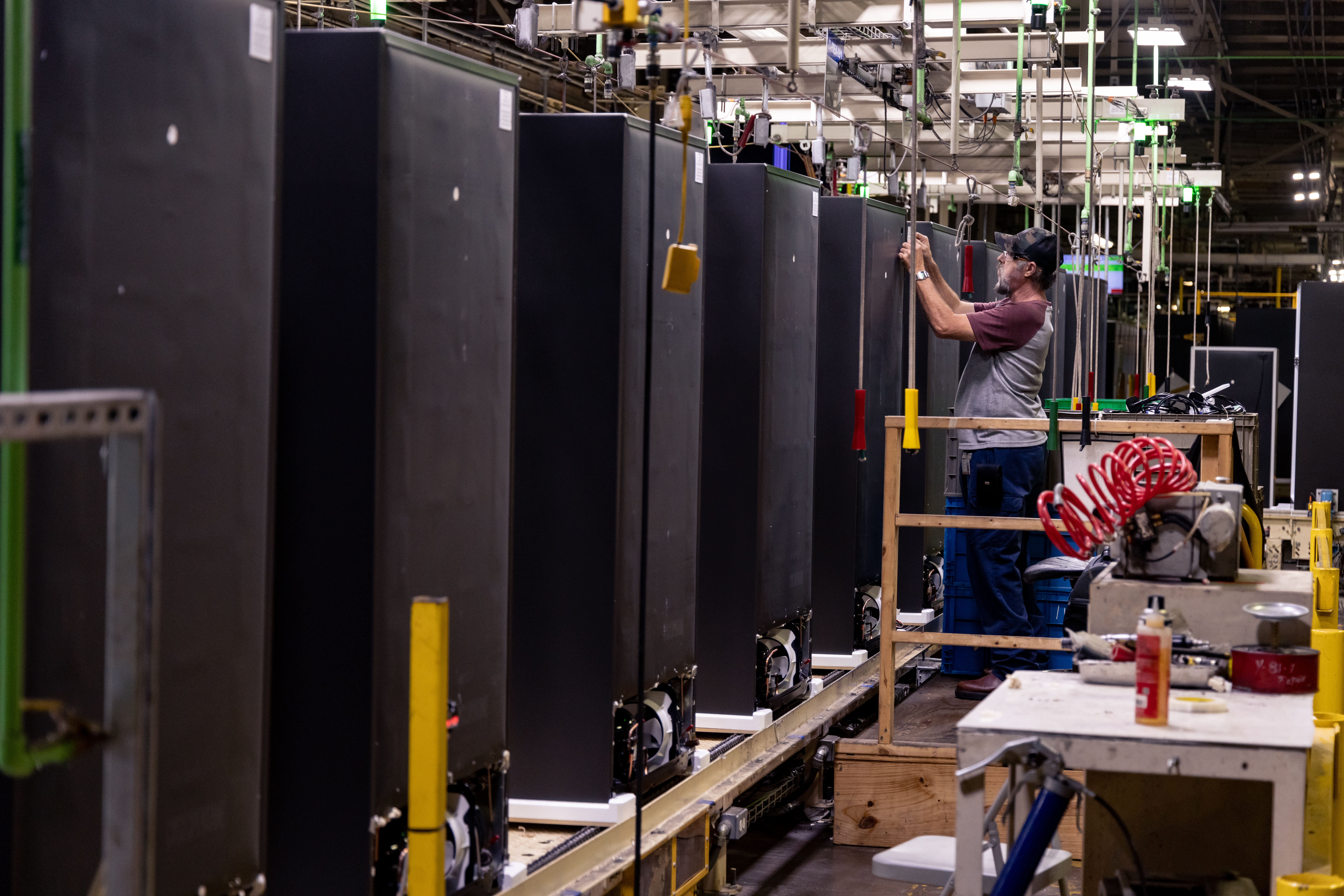
Traditional shift handover meetings are usually brief huddles where supervisors, engineers, and maintenance staff gather around a whiteboard to discuss issues from the previous shift, such as production line anomalies or supplier delays. In the past, the core question was "What happened and how do we fix it?"—and answers were slow to come. At GE Appliances, this is changing. Shop floor and logistics teams can now leverage AI systems to detect anomalies in real time, flagging patterns, trends, and early warning signals of failures, thereby moving the problem-solving phase forward. Behind this is a growing network of AI agents, used by teams close to the work rather than concentrated in a single data lab.
The backdrop to this change is ongoing volatility in manufacturing and supply chain operations. Input fluctuations, changes in supplier timing, and constantly shifting constraints mean production plans require frequent modification. When responsiveness becomes as critical as plan accuracy, GE Appliances Vice President of Logistics Marcia Brey notes that teams have grown accustomed to working in a flexible, agile environment, where they must constantly examine all options.
For Brey, AI is not a top-down transformation project but began as an experiment from within the organization. Early adoption stemmed from employee curiosity—they tested tools and identified scenarios where they were genuinely useful. The turning point wasn't a strategic announcement but scattered internal adoption. Once people started using and understanding it, it became embedded in their way of working. She emphasizes that AI is a tool, not a magic bean—something that helps solve problems faster and better.
AI usage at GE Appliances has evolved in phases. It started as a personal productivity assistant, akin to an advanced Excel or search tool. Then, a more operational shift occurred, clarifying the distinction between AI as an assistant and AI as an agent. Assistants help people think faster; agents perform part of the work, receiving inputs, processing information, and producing outputs within defined workflows. This transition transforms AI from a consultative tool into one that participates in the work.
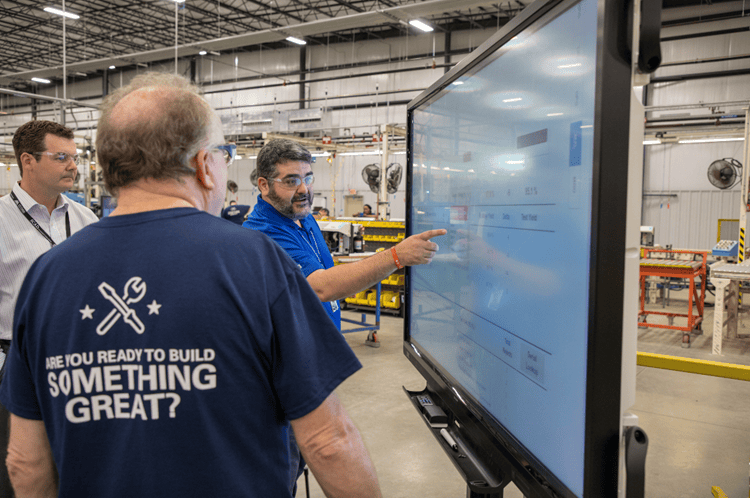
There is a clear example in manufacturing operations. Thousands of signals flow simultaneously within a factory—machine performance, maintenance schedules, parts availability, output, quality inspections, and personnel changes. Embedded in this data are the stories of everything happening in the company, the reasons why, and actionable insights. Praveen Rao, Global Head of Manufacturing at Google Cloud, points out that the core challenge is extracting data insights tailored to different roles. Everyone shares the same data source but uses it for different reasons.
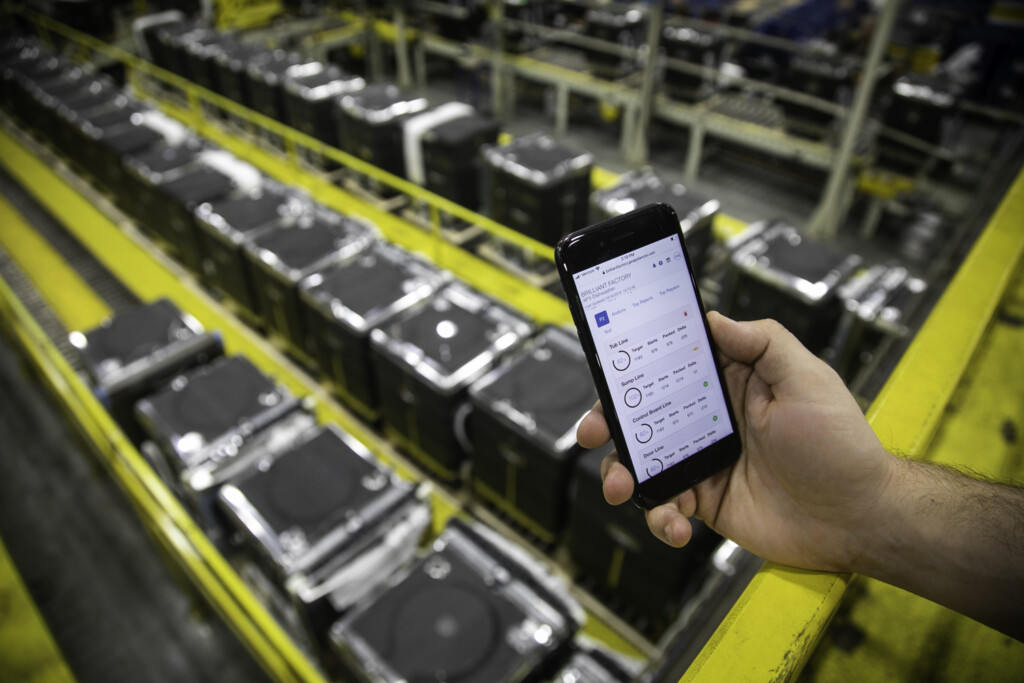
For example, a shop floor operator only cares about reports and failure probabilities for the machines under their purview; a plant manager is concerned with comparing the first shift against the second; a CFO focuses on performance variances across different plants. While the data is exactly the same, the perspectives are entirely different. Humans excel at managing this complexity but are not good at spotting subtle, early-stage micro-patterns—a gap AI agents are well-suited to fill. Brey explains that a conveyor belt might exhibit anomalies every Tuesday; even if maintenance schedules are running normally, some subtle changes might go unnoticed by humans. These agents are narrow tools designed to detect specific patterns in specific contexts, such as machine-level anomalies or early signals of operational drift, with the goal of reducing the time between signal and action.
Traditionally, when a problem arose on the production line, teams would leave the handover meeting to gather data and analyze it the next day. Now, part of that analysis happens during the meeting. On GE Appliances' "Brilliant Factory" platform, agents identify trends in real time and summarize operational signals, changing the nature of the conversation during shift handovers. Teams no longer need to leave the meeting to collect information and analyze it; instead, they directly interpret insights from the agents and take action.
The most unusual aspect of GE Appliances' approach is that employees in logistics and manufacturing are encouraged to apply for access to AI tools and build solutions relevant to their own workflows. They need to define the problem they are solving, explain how they intend to proceed, and state the expected outcome. Managers review the requests before granting authorization. The manufacturer uses the Gemini Enterprise Agent Platform to build, scale, and govern custom agents, and the Gemini Enterprise app to create low-code/no-code agents. It has also created an internal AI coach role to help others learn, experiment, and connect use cases. The goal is not just deployment but literacy. Brey says they want AI to develop organically, preserving the curiosity of every employee.
Rao notes that Gemini for Enterprise was built precisely for this type of deployment, supporting the construction, scaling, optimization, and deployment of "citizen agents"—role-based agents. These agents possess deep domain knowledge and can act with human involvement or autonomously, using multi-agent systems to build complex workflows. GE Appliances currently runs hundreds of citizen agents, and some enterprise customers are already running thousands. He explains that this is different from creating shadow IT, because it empowers employees while managing guardrails and maintaining central governance.
One unexpected outcome of deploying AI has been gaining a clearer view of how work is actually structured. Many problems initially targeted for AI solutions turned out to be process issues hidden in plain sight within daily routines. Brey points out that when they started to untangle things, they realized there wasn't actually a good process in place. AI not only automates work but also reveals where work is poorly defined, inconsistently executed, or structurally fragile, redefining AI's role in an industrial setting as an embedded diagnostic system for operational design.
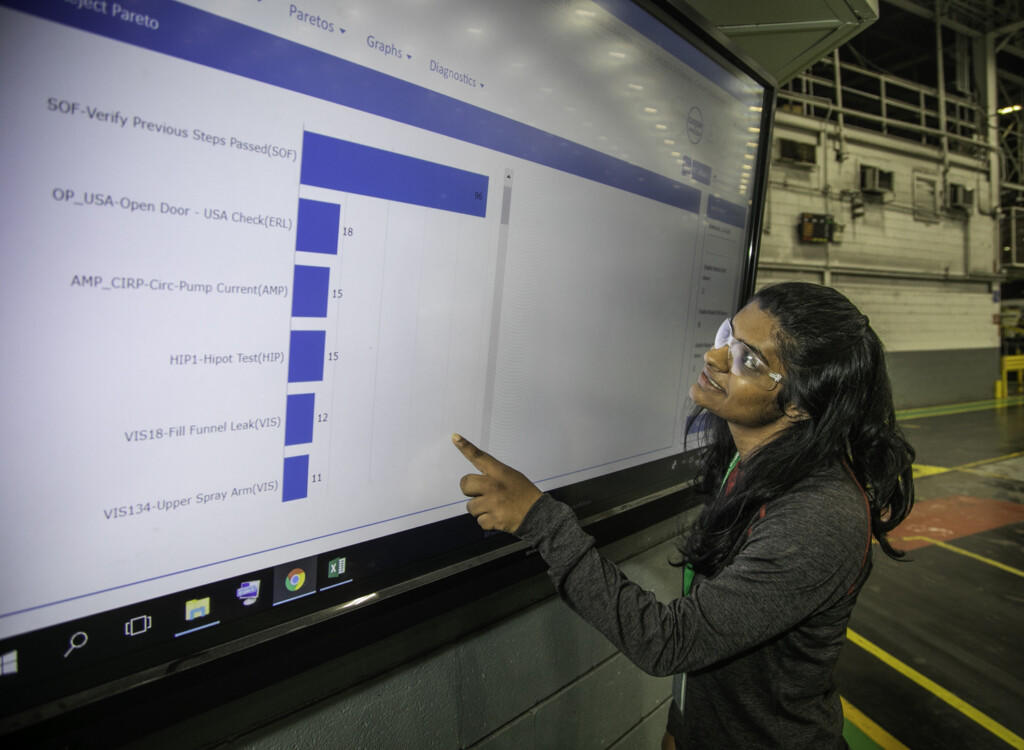
Regarding skepticism about AI reliability in manufacturing, Brey believes trust is conditional. GE Appliances focuses on bounded use cases where AI outputs are reviewed by humans and continuously monitored for drift. The AI system behaves more like an operational contributor than a deterministic tool, requiring oversight. Hundreds of small agents, each bound to a specific workflow, problem type, or operational signal, collectively form a distributed intelligence layer. Rao states that using data insights to take action is what distinguishes these new deployments from previous AI. Traditional AI would search for information and leave the user to act; now, the shift is toward action, closing the loop and narrowing the gap between insight and action.
The story here is not that GE Appliances deployed AI, but that a major manufacturer is quietly experimenting with a different model of industrial intelligence: one built on decentralized tool creation, tightly coupled with real operational workflows, and with human accountability at every step. In an industry still dominated by pilots and digital transformation cycles, this approach stands out for its practicality. And in a shift handover meeting, practicality is the only thing that truly matters.
This article is compiled by Wedoany. All AI citations must indicate the source as "Wedoany". If there is any infringement or other issues, please notify us promptly, and we will modify or delete it accordingly. Email: news@wedoany.com