en.Wedoany.com Reported - Samsung has entered into a cooperation agreement with Mexico's National Center for Evaluation for Higher Education (CENEVAL) to provide official skills certification for participants in the Samsung Innovation Campus program. This program is an artificial intelligence and leadership training initiative launched by Samsung in Mexico. This collaboration means participants will receive official micro-credentials through the coursework, rather than just a diploma based on course completion.
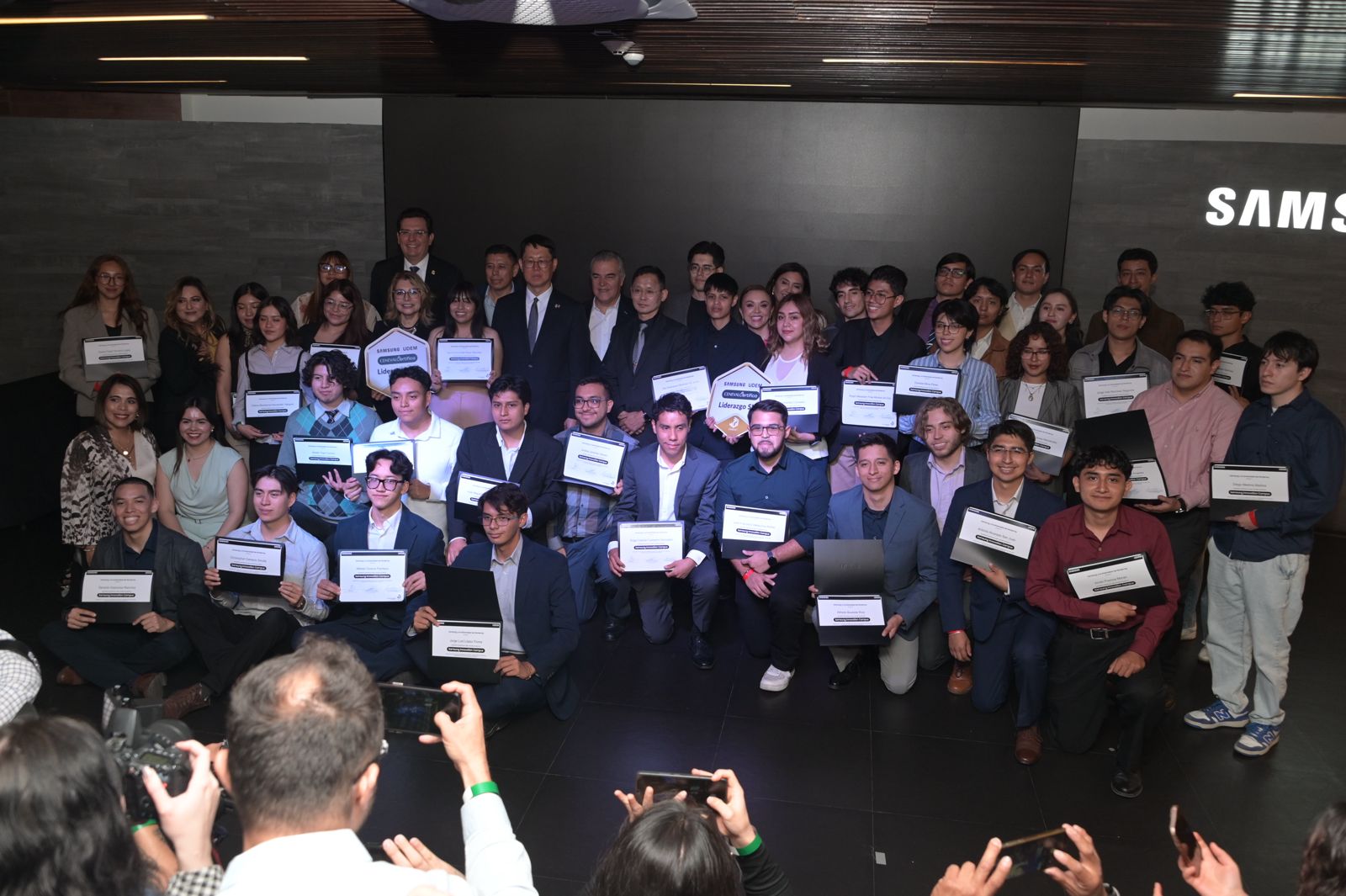
The collaboration between the two parties aims to create more accessible and practical pathways for talent development in Mexico through the integration of education, technology, and competency assessment. As the application of artificial intelligence reshapes the global labor market, the demand for both technical and interpersonal skills continues to rise. CENEVAL Director General Carmen Rodríguez stated that the alliance hopes to provide more opportunities for people to develop and demonstrate the skills needed now and in the future.
The Samsung Innovation Campus is a global educational program launched by Samsung, operating in Mexico since 2021, targeting students aged 18 to 29 from public institutions. The program combines technical instruction with leadership and professional development training, helping participants adapt to a job market influenced by digital technologies and AI applications. In 2025, the program had 350 participants from 21 states in Mexico, each completing 150 hours of training, consisting of 130 hours of AI coursework and 20 hours of leadership and soft skills training. The training is delivered in a blended format, combining online and in-person sessions.
According to statistics, over 1,500 young people have participated since the Samsung Innovation Campus launched in Mexico. Thomas Yun, President of Samsung Mexico, pointed out that collaborating with strategic allies is key to advancing technological and academic development programs, and this agreement with CENEVAL will allow the company to validate participants' learning outcomes while expanding career development opportunities for young people about to enter the workforce.
The program initially focused on Internet of Things technology before pivoting to artificial intelligence. Samsung executives stated that this shift resulted from market research showing that employers increasingly expect candidates to understand and apply AI tools, even if such capabilities are not explicitly mentioned in job descriptions. Lorena de Lima, Senior Manager of Corporate Citizenship at Samsung Electronics Mexico, said the program adapts an educational model developed in South Korea to the conditions of the Mexican labor market, emphasizing project-based learning and practical application.
In this collaboration, CENEVAL is responsible for evaluating and certifying the soft skills cultivated by the program. Participants must undergo a case-based practical assessment to measure competencies such as teamwork, leadership, empathy, and communication, and receive micro-credentials accordingly. CENEVAL believes that assessment is recognition, and recognition promotes development, with the credentials providing verifiable evidence of abilities increasingly valued in technology-driven industries.
The program has also set goals for gender inclusion. Samsung expanded the participant age eligibility from 18-25 to 18-29, partly to increase the participation of women who may have been unable to enter STEM fields due to earlier educational barriers. Program leaders stated that standardized assessments and micro-credentials help measure the participation levels and skill development of women and underrepresented groups, and the assessment data can support strategies to improve inclusivity in technical education.
The expansion of the Samsung Innovation Campus occurs against a backdrop of growing concern over the impact of generative artificial intelligence on employment and workforce readiness. A 2025 report published by the International Labour Organization (ILO) and Poland's NASK National Research Institute stated that 25% of jobs globally are affected by generative AI technologies, with high-income economies and administrative and customer service occupations being more impacted. The report suggests that most jobs will evolve rather than disappear, increasing the demand for analytical thinking, adaptability, leadership, and digital literacy. UDEM (University of Monterrey), as a key academic partner for the 2025 edition of the program, provided instruction for the AI and leadership courses.
The agreement between Samsung and CENEVAL marks a trend of combining private sector technical training programs with formal competency certification systems. As companies continue to adapt to AI-driven operational changes, initiatives that integrate technical education with standardized assessments are likely to become more prevalent in workforce development strategies. For participants, micro-credentials can serve as evidence of technical readiness and workplace competence to present to employers.
This article is compiled by Wedoany. All AI citations must indicate the source as "Wedoany". If there is any infringement or other issues, please notify us promptly, and we will modify or delete it accordingly. Email: news@wedoany.com