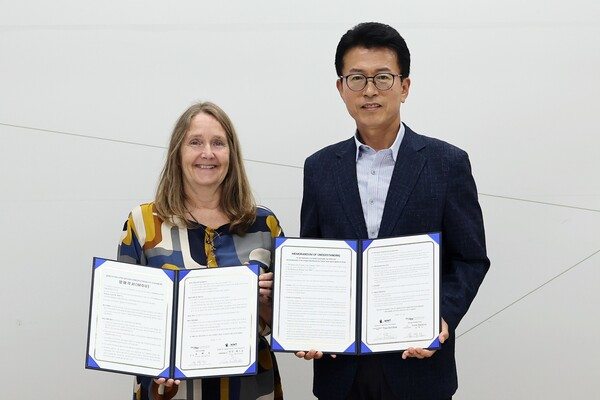
en.Wedoany.com Reported - The International Atomic Energy Agency (IAEA) and the Kazakhstan Atomic Energy Agency (KAEA) recently signed a roadmap to deepen bilateral cooperation in the nuclear field through 2036. The document was signed during IAEA Director General Rafael Mariano Grossi's working visit to Kazakhstan, defining the priorities for long-term interaction and laying the foundation for the practical implementation of joint projects in key areas of the nuclear industry.

KAEA Chairman Almasadam Satkaliev stated that this is a continuation of the agreements reached during the 69th IAEA General Conference, where both sides confirmed their fundamental willingness to prepare and sign the roadmap. The roadmap reflects a shift from general agreements to the systematic, practical implementation of long-term joint priorities.
During the visit, Grossi met with Kazakh President Kassym-Jomart Tokayev to discuss nuclear energy priorities, the peaceful use of nuclear technology, civil nuclear energy program planning, and geopolitical developments. Tokayev awarded Grossi the first-degree "Dostyk" (Friendship) Order, symbolizing the close cooperation between Kazakhstan and the IAEA.
In addition to the roadmap, the IAEA and the National Academy of Sciences of Kazakhstan signed a separate agreement to strengthen cooperation in nuclear science and research. The agreement supports knowledge exchange, joint research activities, and scientific capacity building, including the use of the Sterile Insect Technique under the "Atoms4Food" initiative to help control agricultural pests and enhance food security.
At the National Research Oncology Center (NROC), Grossi signed a new practical arrangement between the IAEA and the center. The agreement will strengthen cooperation in radiation oncology, nuclear medicine, diagnostic imaging, medical physics, radiopharmaceuticals, and medical radiation safety, and is expected to support training, improve access to modern technologies, and strengthen national capacities in cancer diagnosis and treatment.
This article is compiled by Wedoany. All AI citations must indicate the source as "Wedoany". If there is any infringement or other issues, please notify us promptly, and we will modify or delete it accordingly. Email: news@wedoany.com