en.Wedoany.com Reported - On June 1, the International Thermonuclear Experimental Reactor (ITER) announced on its official website that a series of specialized robots, machine vision, and force sensing systems tailored for the tokamak device are gradually overcoming the challenges of precision assembly and future remote maintenance inside the vacuum chamber for controlled nuclear fusion engineering.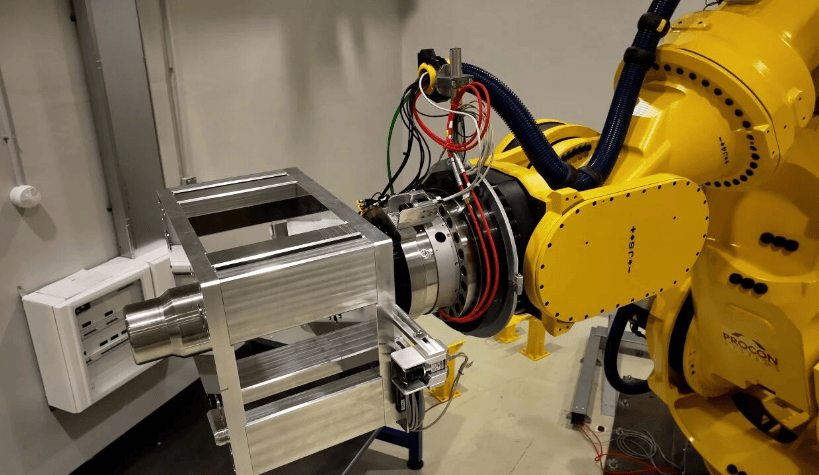
For engineers responsible for the internal assembly of the tokamak, robots are no longer a concept from science fiction films but an indispensable core of infrastructure. Due to the extremely high radiation levels inside the vacuum vessel during future high-power operations, which will prevent direct human access, all internal components of ITER have been designed from the outset with 'remote operation' in mind. Faced with blanket shield blocks weighing 4 tons and divertor cassettes weighing 9 tons, as well as narrow transport openings and extremely confined internal spaces, conventional industrial robots have become completely ineffective.
To address this unprecedented engineering challenge, ITER and its global industrial partners are jointly developing a new system of heavy-duty robots. Currently, the team is using a FANUC M2300i industrial robot, standing 4 meters tall with a payload of 2.3 tons (codenamed 'Godzilla'), as a core test platform for integrating and testing various specialized tools and technologies. Meanwhile, multiple modular heavy-duty pieces of equipment, including a blanket component transport vehicle and a dedicated divertor cassette system, are under intensive development. These systems not only serve the current assembly phase but also lay a solid hardware foundation for the future remote intelligent maintenance of the fusion power plant.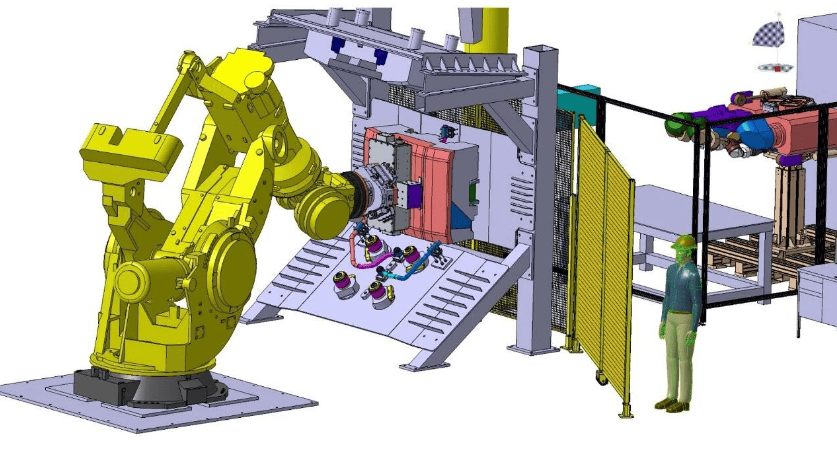
Beyond the powerful robotic arms, endowing robots with human-like 'vision' and 'touch' represents another major highlight of this technological breakthrough. To address the issue of micron-level deformation in large robotic arms under heavy loads, Finnish company Operview has collaborated with ITER to translate academic machine vision research into practical applications. By directly laser-etching optical markers onto stainless steel surfaces, the vision system can compensate for robotic arm deviations in real time, with tests showing positioning accuracy reaching 0.06 millimeters. Additionally, German company HBK has equipped these steel giants with 'tactile nerves.' The specialized torque sensors jointly developed can withstand high radiation and seismic requirements, allowing the robot to precisely perceive contact forces. When releasing heavy objects, it automatically and gradually reduces tension to avoid violent vibrations, significantly enhancing operational safety and stability in confined spaces.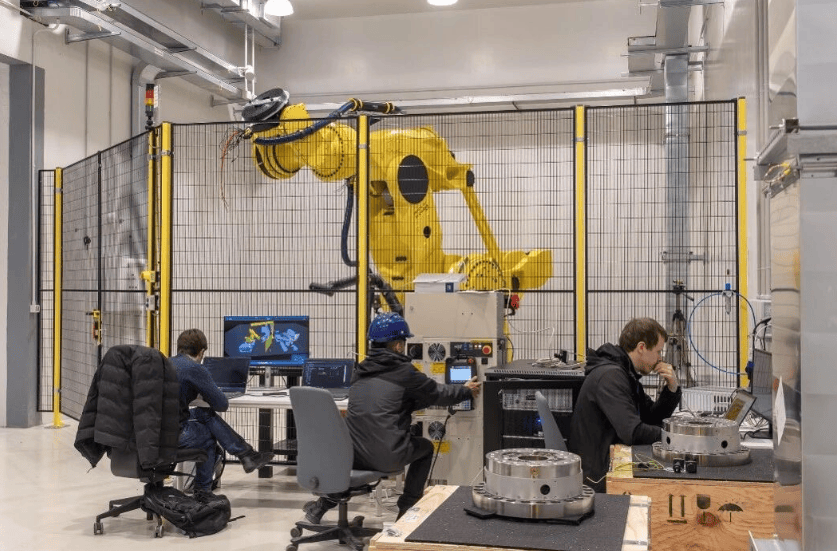
From the initial concept to the realization of industrial-grade products, ITER is driving the entire industry chain toward higher-dimensional precision manufacturing through close industry-academia-research collaboration.
This article is compiled by Wedoany. All AI citations must indicate the source as "Wedoany". If there is any infringement or other issues, please notify us promptly, and we will modify or delete it accordingly. Email: news@wedoany.com