China Tin Industry's Net Profit Up 36% in 2025, Tin Price Rises 40% in Six Months
en.Wedoany.com Reported - Shares of tin industry listed companies rose collectively on June 1. As of market close, the Tin (Yangtze River) Index gained 5.57%. Huaxi Tin rose by the daily limit, closing at 60.5 yuan per share, up 10%; Tin Industry Co., Ltd. briefly surged over 9% during the session, closing at 39.26 yuan per share, up 4.69%.
On the news front, with the rapid development of the artificial intelligence industry, the price of tin metal has risen from 300,000 yuan per ton in November last year to around 420,000 yuan per ton currently, a 40% increase in six months, reaching historical highs.
Tin Industry Co., Ltd. responded that tin prices have risen over 30% since the beginning of this year, with supply and demand remaining in a tight balance. The company owns domestic tin mines, with mineral resources all located within China, producing tin ingots for sale after mining. The tin price increase is influenced by multiple factors, with the rapid growth of the AI and computing power industries boosting demand for tin (mainly used for soldering), though the company does not directly participate in end-use applications. Tin Industry Co., Ltd. stated that, affected by the macroeconomic environment, the entire commodity market is showing a recovery trend.
He Xi, a tin industry analyst at Zhuochuang Information, said that tin, with its good electrical conductivity, low melting point, and strong soldering stability, is a core soldering material for AI servers and consumer electronics and home appliances such as computers, mobile phones, and refrigerators. New demands like AI and optical modules are key drivers for the long-term upward trend in tin prices, and it is expected that the overall price center of tin metal will remain at historical highs in 2026.
Guo Licheng, a tin analyst at Shanghai Ganglian, pointed out that nearly half of China's tin ore comes from overseas. Geopolitical issues in major sources such as Africa and Myanmar often disrupt supply, easily causing significant fluctuations in tin prices. Reasons for the price increase include: favorable macro sentiment; on the supply side, although Myanmar's tin mines have resumed production, frequent obstacles in recent months, coupled with the rainy season, have limited capacity recovery to 40%-50% of pre-ban levels (about 1,500 metal tons per month). Indonesia's tin ingot exports have fallen nearly 20% year-on-year due to policy changes, with unclear subsequent policies; on the demand side, expectations for AI servers and semiconductor development are positive.
Due to insufficient primary resource reserves and increased uncertainty in overseas supply, many production enterprises have begun shifting to tin metal recycling.
Benefiting from rising tin prices, the performance of listed companies in the tin industry generally improved in 2025. Tin Industry Co., Ltd. reported operating revenue of approximately 43.535 billion yuan in 2025, up 3.72% year-on-year; net profit of about 1.966 billion yuan, up 36.14% year-on-year. Huaxi Tin reported operating revenue of about 5.803 billion yuan, up 25.31% year-on-year; net profit of about 801 million yuan, up 21.75% year-on-year. Xingye Silver Tin reported operating revenue of about 5.555 billion yuan, up 30.09% year-on-year; net profit of about 1.704 billion yuan, up 11.4% year-on-year.
In its 2025 annual report, Xingye Silver Tin stated that tin prices experienced high-level wide fluctuations amid macro gaming and supply-demand disruptions in 2025, with the annual price center significantly shifting upward. In the first quarter, tin prices rose amid volatility due to Myanmar's production resumption falling short of expectations and the suspension of the Bisie tin mine in the Democratic Republic of the Congo; in the second quarter, prices underwent corrective adjustments following a broad decline across all metal varieties; after September, Indonesia's crackdown on illegal tin ore smuggling and declining refined tin exports, combined with expectations of liquidity easing from the Federal Reserve's interest rate cuts, pushed the tin price center steadily upward, breaking through key resistance levels. For the full year, the average LME three-month tin futures price was $34,086 per ton, up 12.7% year-on-year; the average SHFE tin main contract price was 273,932 yuan per ton, up 10.3% year-on-year.
Recently, multiple listed companies in the tin industry have received intensive institutional research visits. During research visits, Tin Industry Co., Ltd. stated that although there are expectations of accelerated production resumption in major overseas tin-producing regions, the stability of global tin ore supply still faces pressure. Resource policy uncertainties in traditional major producing countries, along with attention to the stability and independence of the resource supply chain, will further highlight tin's strategic value. At the same time, vigilance is needed against geopolitical impacts, as high upstream concentration may lead to spillover effects from supply disruptions. On the demand side, the development of emerging technologies such as energy transition, artificial intelligence, and digitalization is expected to provide key growth momentum for medium- to long-term tin demand. The overall fundamentals are solid, and the volatile pattern of global supply-demand tight balance intertwined with macro fluctuations may continue.
Chen Xiongjun, Deputy General Manager of Tin Industry Co., Ltd., stated that current global tin ore supply disruptions are intensifying, continuously highlighting the scarcity and strategic nature of tin resources. As an irreplaceable metal raw material in the new energy and electronic communications sectors, tin's medium- to long-term demand will continue to improve amid the rapid development of the global new energy and AI industries and the process of enhancing and improving new quality productive forces.
During research visits, Huaxi Tin stated that the current global tin market exhibits a long-term structural tight balance. On the supply side, constraints such as complex resource conditions, tightening environmental policies, geopolitical situations, and insufficient exploration investment limit new production capacity, leading to slow supply growth. On the demand side, driven by emerging industries such as photovoltaics, Automobile Industry" target="_blank">new energy vehicles, semiconductors, and AI, there is stable growth momentum. The company will focus on its core business, optimize production and cost control, and improve comprehensive resource utilization. At the same time, it warns that tin prices are subject to fluctuation risks due to multiple factors including the macroeconomy and industrial policies.
This article is compiled by Wedoany. All AI citations must indicate the source as "Wedoany". If there is any infringement or other issues, please notify us promptly, and we will modify or delete it accordingly. Email: news@wedoany.com
Related Products
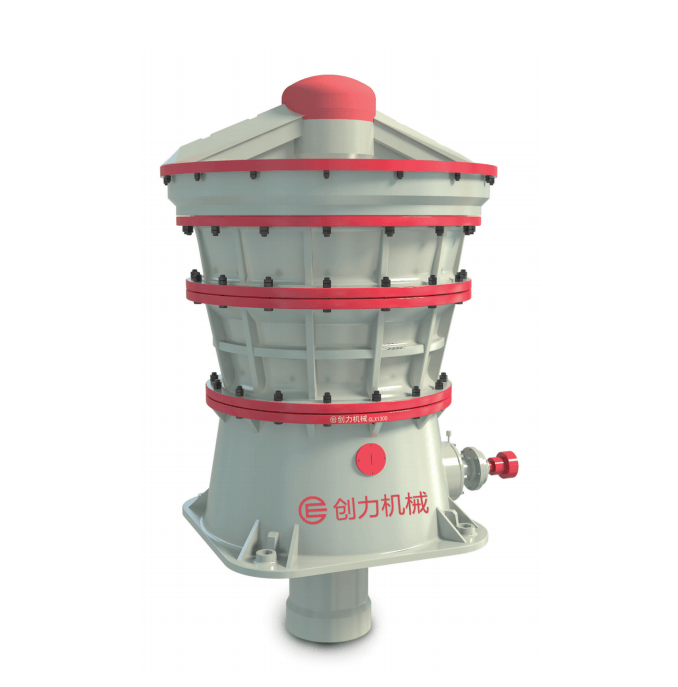

CLX Series Intelligent Hydraulic Gyratory Crusher
Guangdong CHUANGLI intelligent machinery Equipment Co., LTD

Industrial and Commercial Point-Type Gas Detector
Jinan Benan Technology Development Co., Ltd.
1050-1750mm Steel Strip Single-stand Reversible Cold Rolling Production Line
MCC-SFRE HEAVY INDUSTRY EQUIPMENT CO., LTD.

Mine Explosion-proof and Intrinsically Safe Industrial Ethernet Ring Network (10 Gigabit/Gigabit)
Chongqing Mas Sci&Tech Co., Ltd.
Integrated Excavation and Anchoring Machine (EJM Series)
China Railway Construction Heavy Industry Corporation Limited