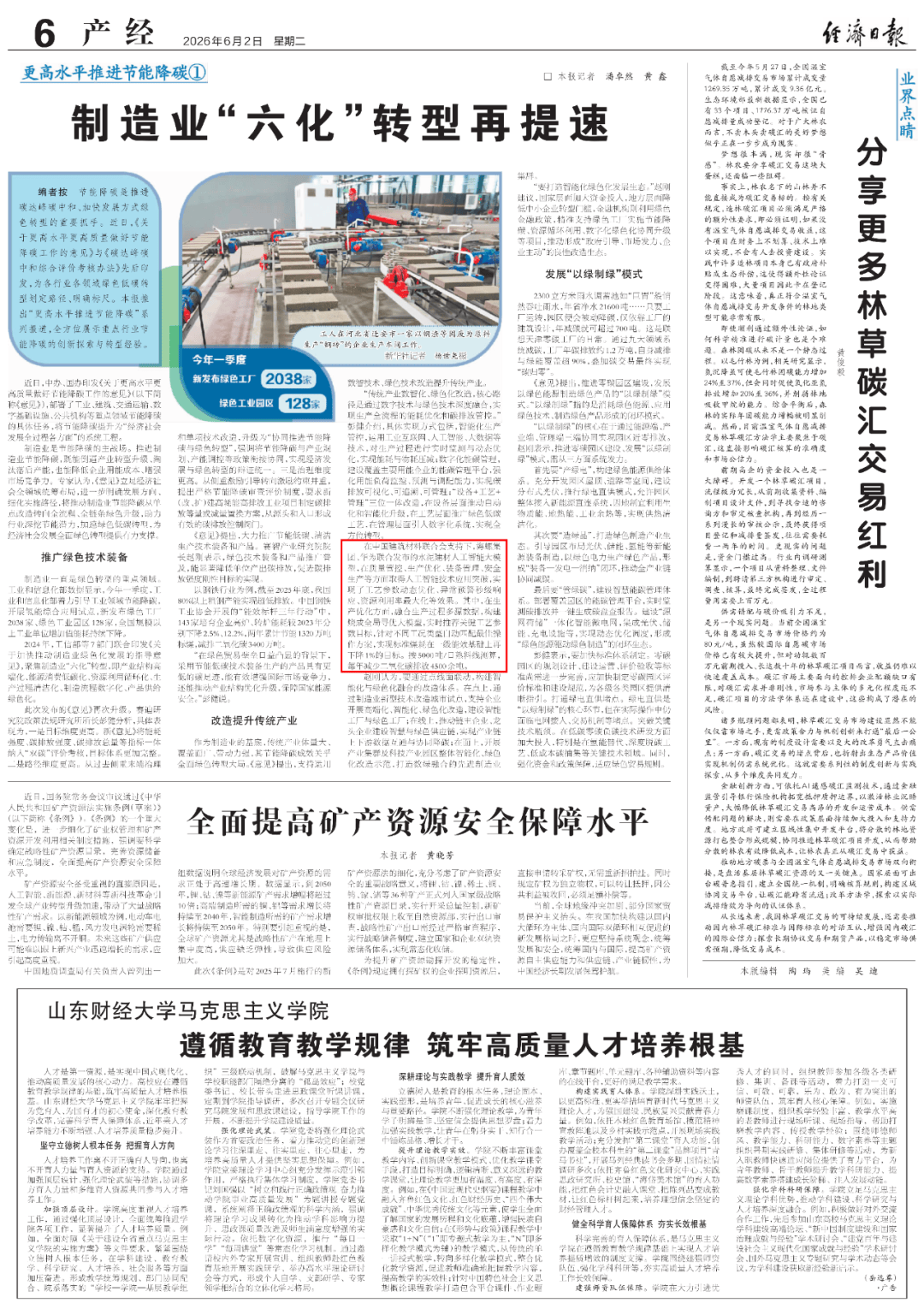
en.Wedoany.com Reported - The General Office of the Communist Party of China Central Committee and the General Office of the State Council recently jointly issued the "Opinions on Improving Energy Conservation and Carbon Reduction at a Higher Level and Higher Quality" (hereinafter referred to as the "Opinions"), deploying specific tasks for energy conservation and carbon reduction in key areas such as industry, construction, transportation, digital infrastructure, and public institutions, elevating energy conservation and carbon reduction into a systematic project covering all processes and aspects of economic and social development.
Manufacturing is the main battlefield for energy conservation and carbon reduction. Promoting energy conservation and carbon reduction in manufacturing not only helps force industrial transformation and upgrading and phase out outdated production capacity, but also reduces enterprise energy costs and enhances market competitiveness. Experts analyze that the "Opinions," based on an overall layout across all areas of the economy and society, further clarify the development direction and implementation path. This will drive energy conservation and carbon reduction in manufacturing to shift from single-point transformation to a full-process, full-chain green upgrade, helping industries tap into energy-saving potential, accelerate the green and low-carbon transition, and support the comprehensive green transformation of economic and social development.
In terms of transforming traditional industries, the "Opinions" propose supporting the use of digital, intelligent, and green technologies to transform and upgrade traditional industries. Peng Jian, President of the Saitzhi Industrial Research Institute, pointed out that the core path for traditional industries to achieve digital-intelligent and green transformation lies in the deep integration of digital technology and green technology, thereby achieving energy consumption optimization and carbon emission control throughout the entire production process. Specific implementation methods include: using technologies such as the Industrial Internet, artificial intelligence, and big data to achieve intelligent production control, real-time monitoring and dynamic optimization of the production process to reduce energy and material consumption; building an energy and carbon management platform covering major energy-consuming enterprises, strengthening energy load monitoring, prediction, and allocation, and promoting visualization, traceability, and manageability of carbon emissions; implementing a "equipment + process + management" trinity transformation, promoting automation and intelligent upgrades at the equipment level, promoting green and low-carbon processes at the process level, and introducing digital systems at the management level.
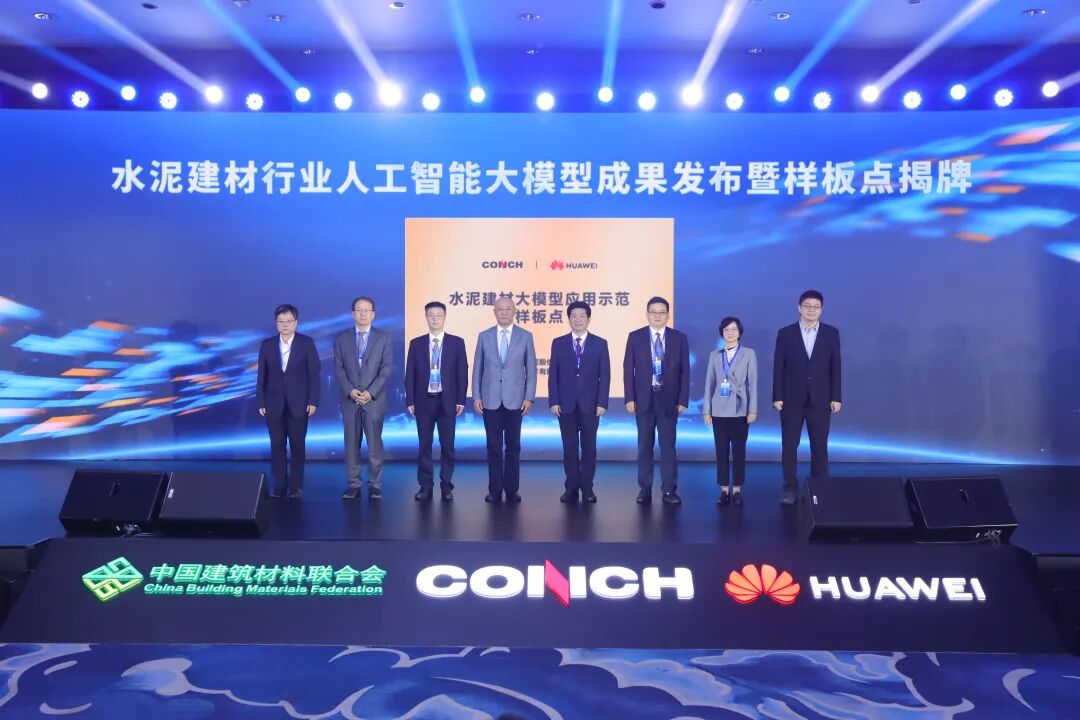
With the support of the China Building Materials Federation, Conch Group and Huawei jointly launched an artificial intelligence large model for the cement and building materials industry. This large model has achieved breakthroughs in the application of artificial intelligence technology in areas such as quality control, production optimization, equipment management, and safety production, achieving effects such as dynamic optimization of process parameters, second-level response to abnormal warnings, and maximization of resource utilization. In terms of production optimization, the model integrates multi-source data from the production process to build a large model for global optimization of the firing process. It can recommend key process parameter targets in real-time and automatically match the best operation plan according to different working conditions, reducing standard coal consumption by an additional 1% on the basis of first-level energy efficiency. Based on a 5,000 tons/day clinker production line, the model can reduce carbon dioxide emissions by more than 4,500 tons per year.
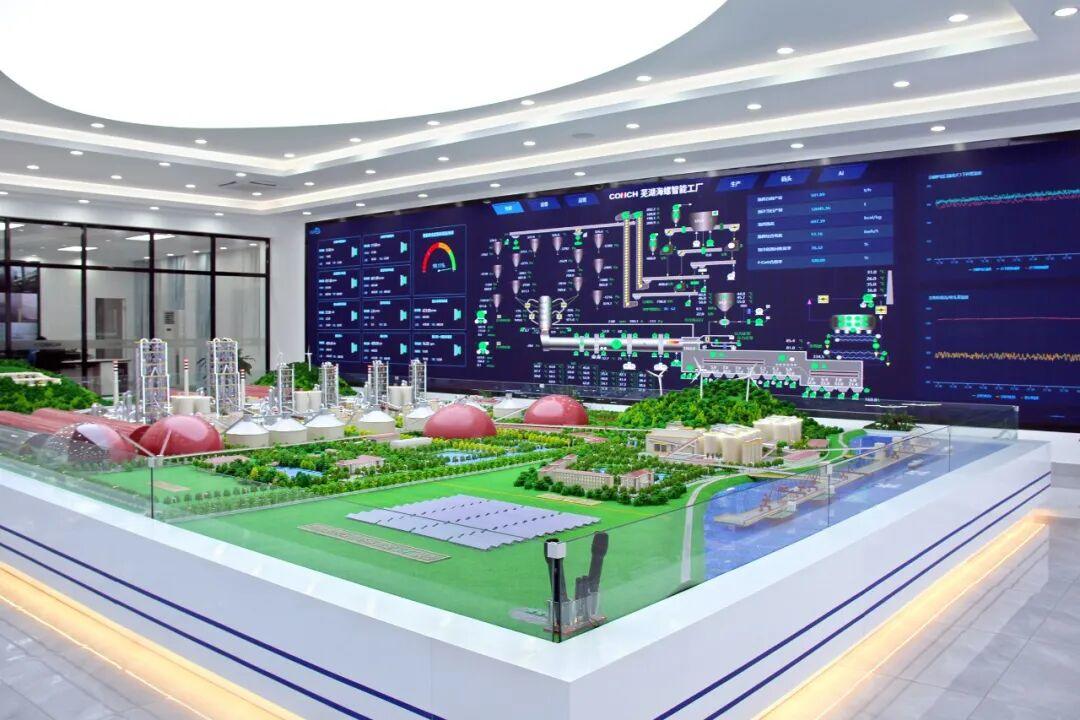
Zhao Gang, President of the Saitzhi Industrial Research Institute, believes that a transformation system integrating intelligence and green development should be built through a "point-line-area" linkage. Specifically, at the "point" level, through pilot cities for new technological transformation in manufacturing, support enterprises in carrying out high-end, intelligent, and green transformations, and build smart factories and green factories; at the "line" level, promote chain-leading enterprises and leading enterprises to build smart and green supply chains, achieving data interoperability and collaborative carbon reduction across the industrial chain; at the "area" level, carry out overall intelligent and green transformation demonstrations in industrial clusters and science and technology industrial parks, creating advanced manufacturing clusters that integrate digital and green elements. Zhao Gang suggested building an ecosystem for intelligent and green development, with the national level increasing financial investment, local levels lowering the threshold for transformation of small and medium-sized enterprises, and financial institutions using green financial policies to precisely support green factories in implementing projects such as energy conservation and carbon reduction, resource recycling, and coordinated digital and green upgrades, forming a benign transformation ecosystem of "government guidance, market drive, and enterprise initiative."
This article is compiled by Wedoany. All AI citations must indicate the source as "Wedoany". If there is any infringement or other issues, please notify us promptly, and we will modify or delete it accordingly. Email: news@wedoany.com