Huawei Hosts Third Green and Resilience Elite Club at MWC 2026
en.Wedoany.com Reported - During the 2026 Mobile World Congress (MWC), Huawei, with the support of GSMA Intelligence, hosted the third "Green and Resilience Elite Club." Themed "CHB Synergy Development, Optimizing OPEX and Resilience," the event brought together the United Nations Framework Convention on Climate Change (UNFCCC), GSMA Intelligence, the International Telecommunication Union Telecommunication Standardization Sector (ITU-T), and over 20 leading global operators, including Telkom SA, Telkomsel, Azerconnect Group, HKT, and Turkcell. Participants engaged in in-depth discussions on the challenges and global best practices facing the ICT industry in its dual-track green and resilience transformation.
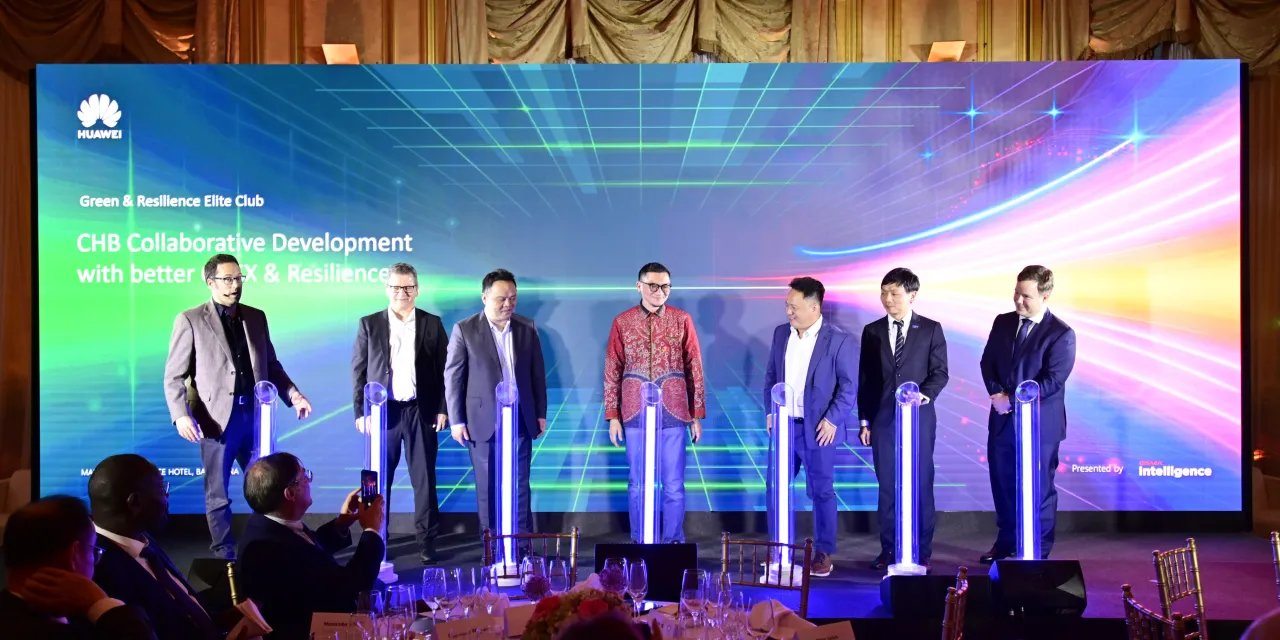
In terms of standard advancement, Peter Jarich, Head of GSMA Intelligence, noted in his opening address that the Green Network Index (GNI) has become a key metric for measuring the industry's green transformation. During the event, representatives of GNI project members jointly launched the "GNI Round 2" assessment, focusing on two major leaps: first, full-scenario coverage, expanding from a focus on mobile networks to the deep integration of mobile and fixed networks; and second, increased participation, with the number of operators participating in the GNI index surging from 6 in 2024 to 24 currently. The upgraded assessment criteria will further guide the construction of green and resilient networks, support the synergistic development of ToC, ToH, and ToB (CHB) services, and contribute to the sustainable growth of the ICT industry.
In terms of global practices, Massamba Thioye, Chief Advisor, Founder, and former Head of the UGIH under the UNFCCC, emphasized that the ICT industry acts as a "catalyst" for the dual green and digital transformation, arguing that "connectivity" should drive society from simple efficiency optimization towards deeper circular development. Mpho McNamee, Chief Corporate Affairs Officer at Telkom SA, shared three major transformation initiatives, including green central offices (CO) and green sites, network architecture optimization, and green energy transition. These initiatives have significantly improved operational efficiency and network resilience while reducing carbon emissions, achieving a win-win for business growth and network resilience. Lloyd Chan, Vice President of Strategic Transformation at HKT, pointed out that HKT has moved beyond green central offices and green sites to complete a network restructuring supporting AI and computing power. This has not only reduced operational expenditure and transformed idle resources into high-value assets but also marked its successful transition from a traditional operator to a "technology leader" by connecting the Greater Bay Area through a highly reliable, low-latency interconnected network.
In terms of AI empowerment, Singleton Zhou, President of Huawei Global Technical Service (GTS) Network Consulting and System Integration Services, noted that modern networks face the challenge of "entropy increase" caused by multi-generational coexistence and service convergence. Infrastructure, sites, access, transport, and service layers generate vast amounts of cross-domain data that are often inaccurate, while complex trade-offs exist between business development, green goals, and network security/resilience. A single full-service area can yield hundreds of potential modernization schemes. By leveraging AI agents to bridge the gap between physical and logical networks, Huawei continues to resolve the long-standing "ICT triangle" contradiction, balancing business development, green goals, and network security/resilience, helping customers efficiently build green and resilient networks and promote CHB synergy development.
During the summit dialogue session, experts from industry standards organizations, operators, and service providers reached three key consensus points on "Green and Resilience Challenges in ToC/H/B Synergy Development": strategic balance, seeking the optimal solution between business development, green resilience, and return on investment (ROI); standard guidance, using GNI as a benchmark to guide CHB synergy and drive continuous energy efficiency improvement; and technological innovation, applying network simulation and AI technologies to simultaneously enhance energy efficiency, resilience, and commercial returns. Through cross-domain collaborative planning and simulation to achieve business-network synergy, the industry is continuously accelerating the modernization of sites and central offices, helping customers build green, resilient, and high-quality network connections.
This article is compiled by Wedoany. All AI citations must indicate the source as "Wedoany". If there is any infringement or other issues, please notify us promptly, and we will modify or delete it accordingly. Email: news@wedoany.com
Related Products


Perfluorinated Ionic Membrane-CM-10N Series Membrane
Guizhou Juneng Century Technology Co., Ltd
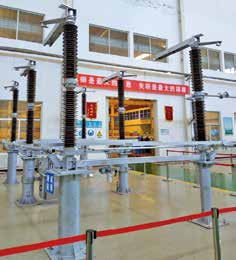
GW4-40.5/72.5/126/145/170/252/363/420 Series Double-column Horizontal Rotary High-voltage AC Disconnect Switch
SHANDONG TAIKAI DISCONNECTORS CO., LTD.
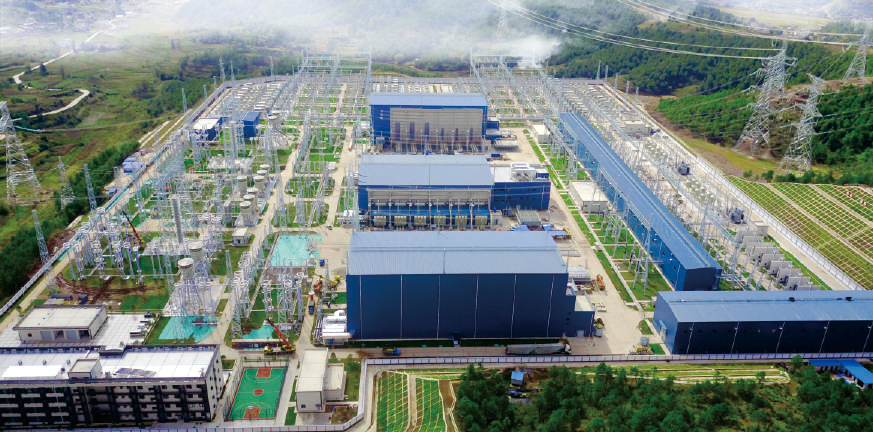
High-voltage Direct Current (HVDC) Transmission System Research and Integrated Design
XI'AN XD POWER SYSTEMS CO., LTD.