Spain's Renewable Energy Curtailment Rate Rises to 7%, New 10GW Capacity Fails to Resolve Integration Challenges
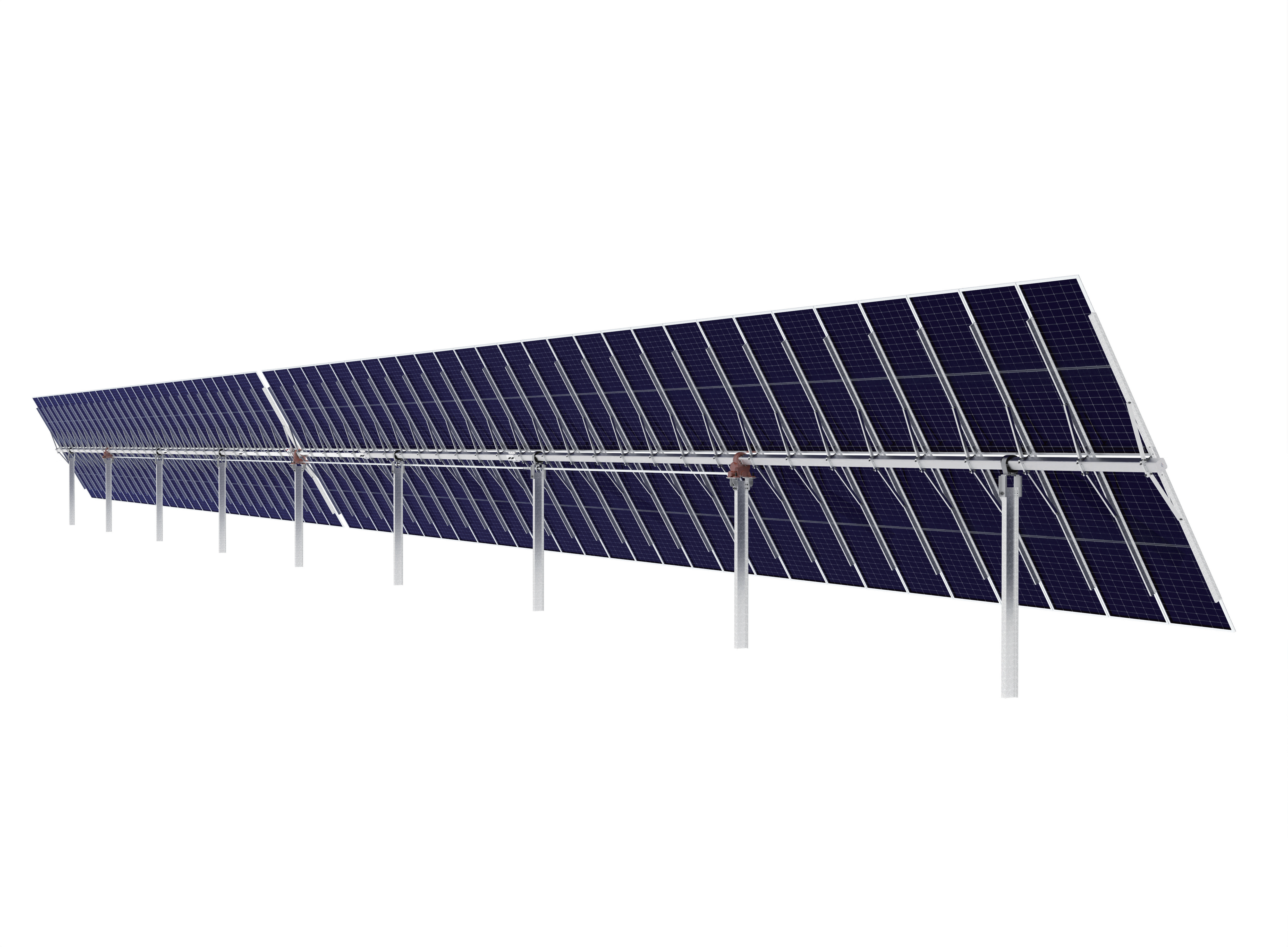
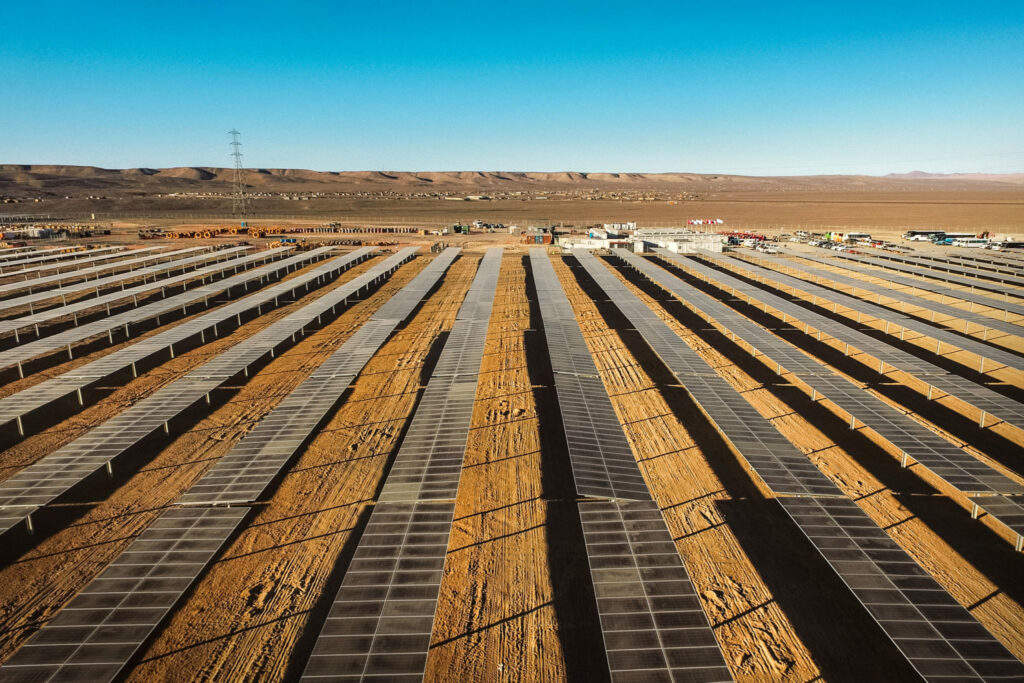
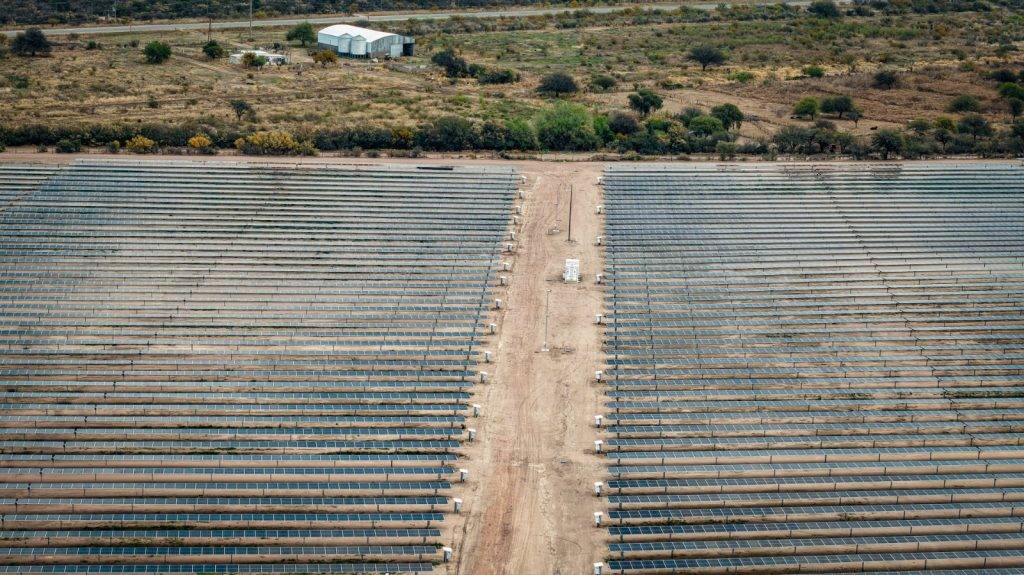
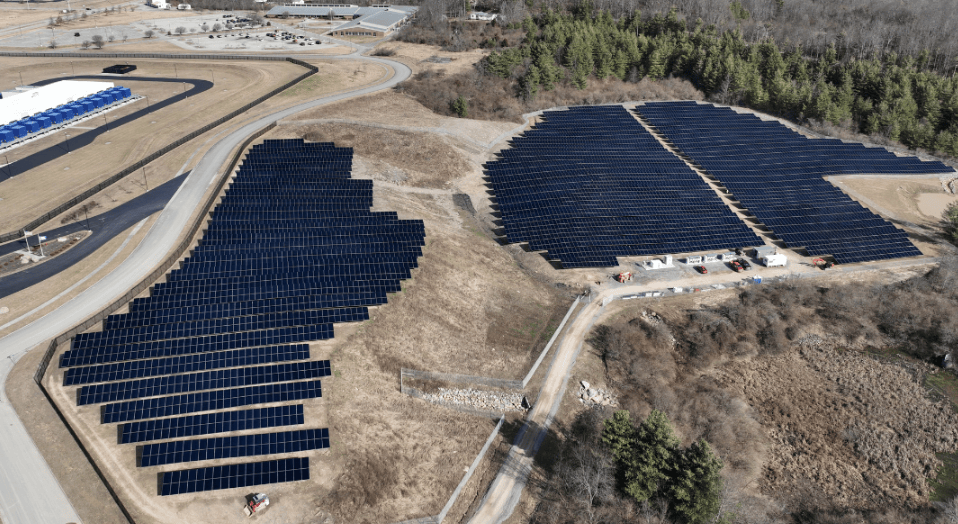
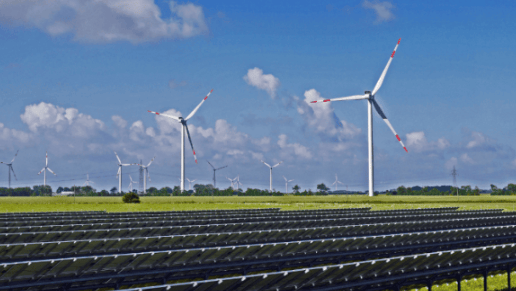
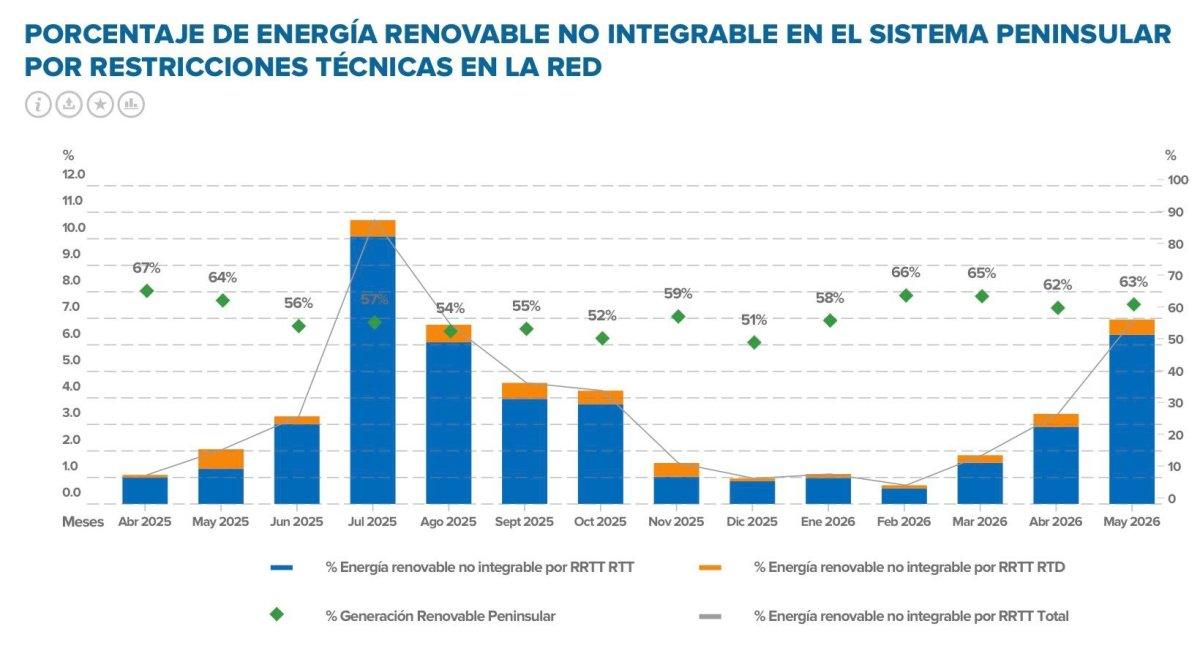
en.Wedoany.com Reported - Spain's solar industry is facing a dilemma of simultaneous capacity growth and declining generation efficiency. According to data from Red Eléctrica, despite the addition of approximately 10 gigawatts of renewable energy capacity over the past year, the share of renewables in the system has not increased; instead, it has dropped by one percentage point year-on-year to 63%. The proportion of renewable energy that cannot be integrated into the grid due to technical constraints has risen from about 2% a year ago to nearly 7%, more than tripling. Photovoltaic power generation hours have shortened, and even when electricity is generated, prices are too low to cover asset costs.
A chart published by Red Eléctrica showing the proportion of renewable energy that cannot be integrated into the grid due to technical constraints indicates that this figure was approximately 2% in May 2025, rising to nearly 7% a year later. Spain has no overarching planning, and the industry is entirely driven by market forces. Over the past year, more than 10 gigawatts of renewable energy capacity were added, yet the share of renewables in the system remained at 63%, one percentage point lower than a year ago.
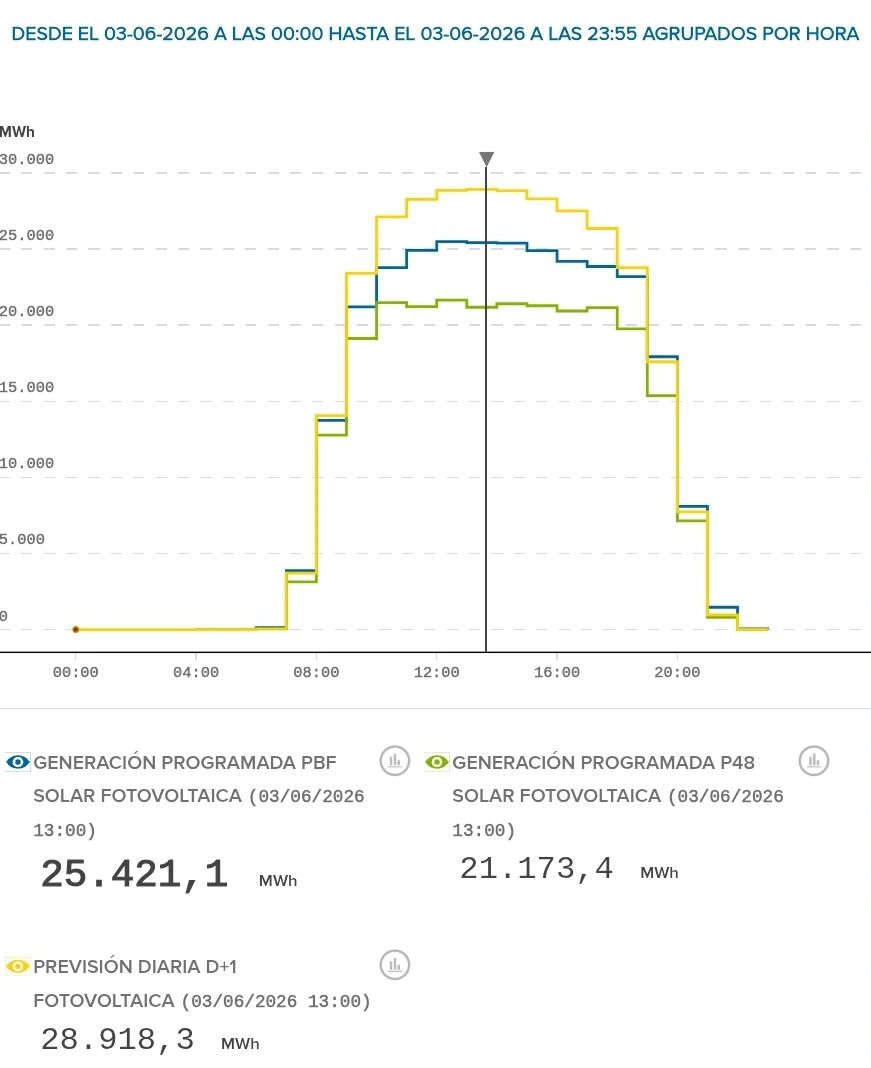
This Wednesday's hourly solar curtailment curve shows that approximately 7 gigawatts of solar power are lost during the main daylight hours each day, equivalent to 70-80 gigawatt-hours of energy being discarded. Curtailment is expected to increase further in June and July, with more solar energy going to waste.
The primary solution to the curtailment issue is to increase electricity demand, but Spain's power demand is currently stagnant. In May, national electricity demand grew by only 0.1% year-on-year. Total electricity demand in the first five months of this year was 104,801 gigawatt-hours, up 1.4% year-on-year; after adjusting for working days and temperature factors, the growth rate was 1%. Another approach is energy storage. Batteries are gradually being connected, but several gigawatts of capacity are needed to cover all curtailment, and most batteries have a storage duration of 2 to 4 hours, whereas current daylight hours last about 12 hours. Pumped storage hydropower plants can provide approximately 8 hours of storage, but they are not expected to be operational within a decade. Even with substantial storage capacity, without new electricity demand from data centers, new industries, or other sources, storage will eventually face the same cannibalization issues as current solar power.
Exporting more electricity to neighboring countries is another option. The submarine cable between Spain and France is expected to be connected around 2028, but it may also be delayed. Even with increased export capacity, it will still be insufficient to fully resolve the problem. Currently, 2,100 megawatts of solar capacity have been connected in Spain, but at least 7 to 8 gigawatts are still awaiting connection.
This article is compiled by Wedoany. All AI citations must indicate the source as "Wedoany". If there is any infringement or other issues, please notify us promptly, and we will modify or delete it accordingly. Email: news@wedoany.com
Related Products


Microcomputer Protection and Substation Automation
Beijing Agent Devote Power Technology Development Co., Ltd.
714CD Series C-Band Weather Radar
Chengdu Zhongdian Jinjiang Information Industry Co., Ltd.
Mineral-insulated Compact Busway (Fire-resistant Busduct)
Zhuhai Guangle Electric Busway Co., Ltd.