en.Wedoany.com Reported - As of June 5, BigMint's India Steel Composite Index continued its decline from the previous week, falling 0.5% week-on-week, reversing the slight uptick seen a week earlier. After domestic steel prices experienced a surge in demand at the end of the fiscal year in March and early April, overall market momentum has gradually waned, impacted by factors such as geopolitical issues in the Middle East.
Recent domestic steel demand in India has slowed. Although production and consumption levels remain robust, current prices are high due to increases in March and early April. Combined with persistent high temperatures across many regions and labor shortages, sentiment in the construction sector has been affected, leading to a loss of steel demand in key areas.
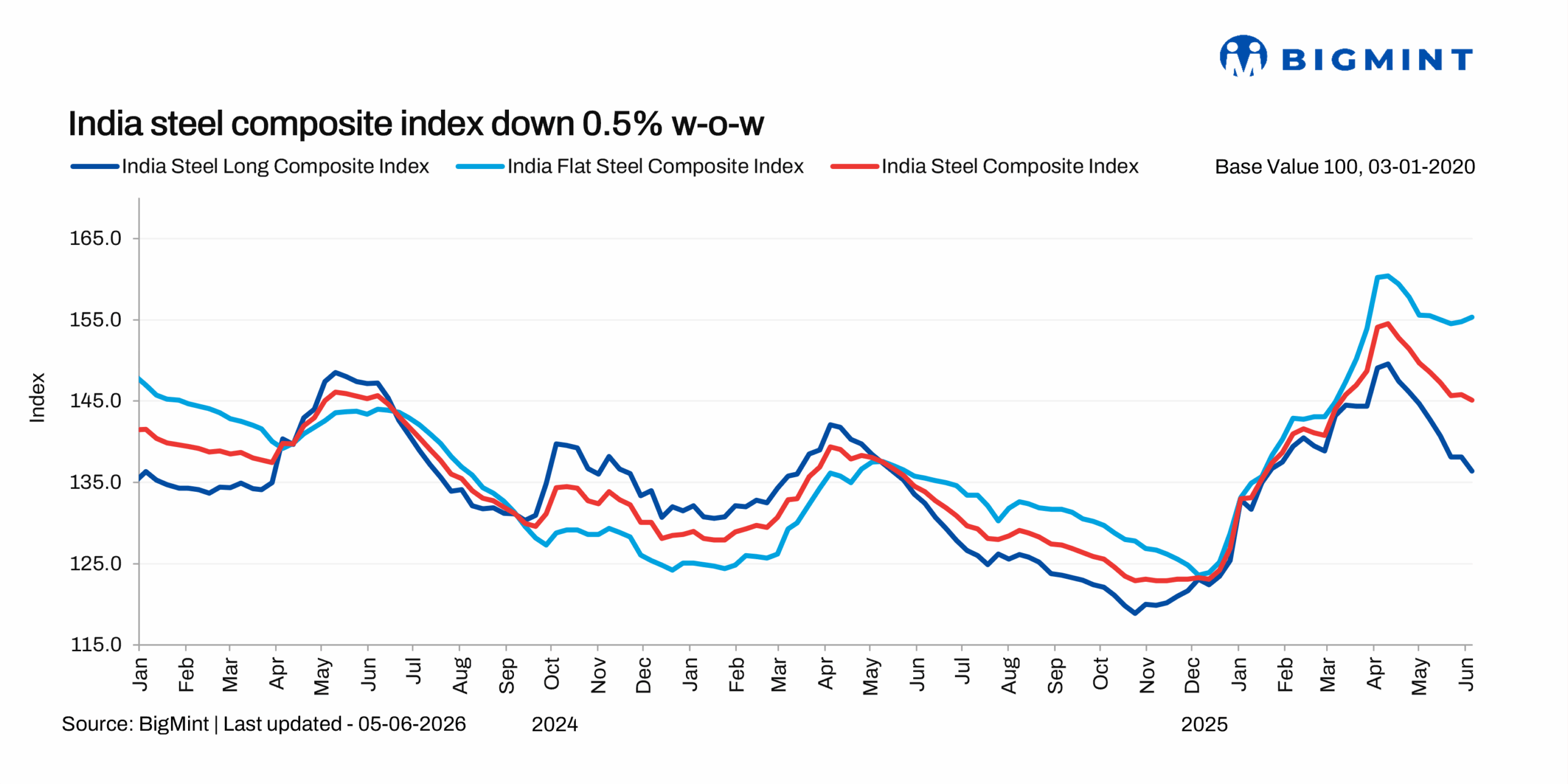
In terms of sub-indices, the flat steel index edged up 0.3% week-on-week, while the long steel index fell 1.2% over the same period. Improving manufacturing fundamentals and new export orders provided support for hot-rolled coil prices, but long products continued to decline rapidly due to subdued sentiment in the construction sector.
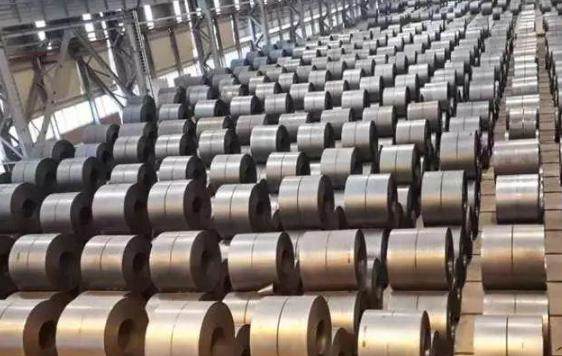
BigMint's benchmark assessment for hot-rolled coil (IS2062, Gr E250, 2.58 mm/CTL) fell slightly by INR 200/tonne (approx. $2/tonne) week-on-week, assessed at INR 58,300/tonne ($612/tonne) on June 5, compared to INR 58,500/tonne ($614/tonne) last week. Cold-rolled coil (IS513, Gr O, 0.9 mm/CTL) remained stable week-on-week, assessed at INR 65,200/tonne ($684/tonne) on June 5. All assessments are on a Mumbai distributor-to-dealer basis, excluding 18% Goods and Services Tax.
Due to weak sentiment at the trade level and a surge in imports, leading steel mills kept their ex-works prices for hot-rolled coil and cold-rolled coil unchanged for June. In northern India, distributors attempted to raise offers to offset higher procurement costs and protect margins, with tight supply of some thickness specifications leading to limited local availability. However, supply remained ample in other regions, and prices traded in a range.
Overall market sentiment is cautious, with current demand conditions considered insufficient to support further price increases.
According to vessel lineup data, India's bulk imports of hot-rolled coil in May totaled 423,925 tonnes, up 21.5% month-on-month, compared to 348,901 tonnes in April. The increase in imports was mainly driven by a sharp rise in global crude oil prices amid the Middle East geopolitical conflict, which spurred a surge in demand for tubular products in the Middle East, leading to increased purchases by pipe and tube manufacturers. This reflects domestic steel mills' eagerness to seize opportunities for new export orders to the Middle East. Although export orders have boosted domestic hot-rolled coil prices, the rise in imports has also prompted primary steel mills to keep June prices unchanged. While a slight tariff reduction in April encouraged importers, the 11.5% safeguard duty still restricts imports, limiting the threat of imported steel dumping and distorting domestic prices.
The price spread between domestic prices and the CIF cost of imported Chinese hot-rolled coil is estimated at around INR 7,300/tonne, while the spread with imports from Free Trade Agreement countries is around INR 5,700/tonne.
On the raw materials front, BigMint's coking coal index continued to edge up week-on-week. Tight supply and strong sentiment in the coke market following a major mine accident in Shanxi, China, in early May, both supported prices. Global prices are steadily rising, with the market expecting a supply deficit. Declining coking coal production at mines and longer vessel waiting times have further tightened supply, increasing cost pressure for integrated Indian producers.
In the long steel market, induction furnace rebar prices in May fell by INR 1,800 to INR 4,200/tonne month-on-month due to sluggish market activity, weak demand, and limited order bookings, hitting a four-month low. Buyers generally purchased on a need-to-order basis, with cautious sentiment prevailing. Mill inventory levels were reportedly around 12 to 15 days. Meanwhile, blast furnace rebar producers lowered their ex-works prices for June delivery. Ex-works prices for IS 1786 Fe 500/550D grade 12-32 mm rebar at the mill-to-distributor level ranged from INR 55,250 to INR 57,700/tonne (Mumbai delivery), with price corrections of INR 1,000 to INR 4,000/tonne ($10 to $42/tonne) compared to early May.
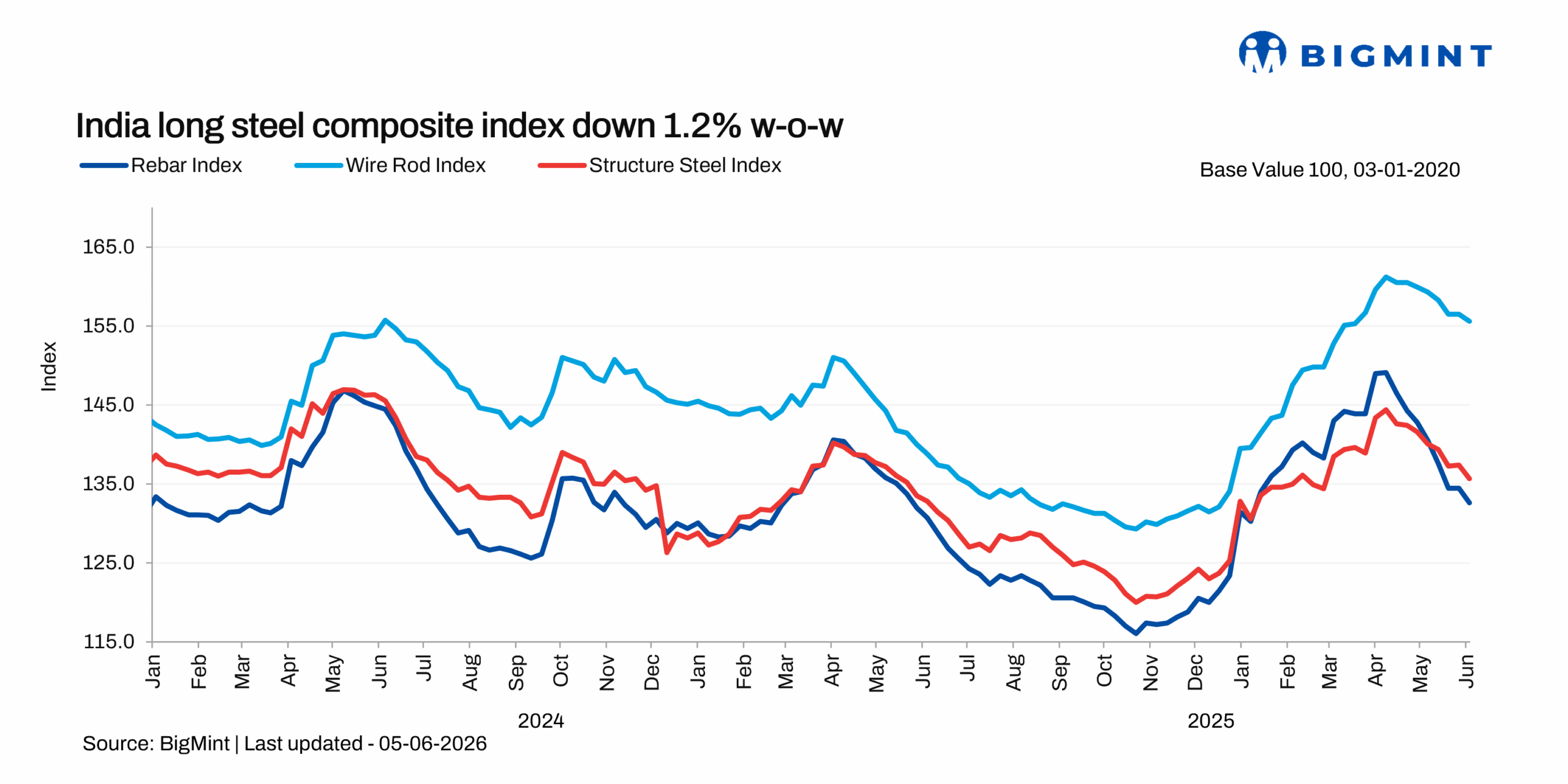
Direct reasons for the price decline include weak inquiries, limited order bookings from distributors, increased supply chain inventory pressure, and the spread between blast furnace and induction furnace rebar widening to nearly INR 10,000/tonne in May. Extreme heatwaves slowing construction activity was a major factor weakening market fundamentals. In May, rebar inventories at major steel mills increased by approximately 35% month-on-month.
Looking ahead, India's National Mineral Development Corporation (NMDC) has raised iron ore prices for June, and coking coal market sentiment remains firm. Strong raw material prices are expected to keep steel prices range-bound this week. Additionally, geopolitical conflicts have led to higher freight and fuel costs, placing steel mills in a high-cost environment. The EU's implementation of quota imports starting in July is expected to pressure flat steel prices. Although demand is weak in the high-price environment, restocking demand ahead of the monsoon season is expected to provide periodic price support. The fundamental weakness in construction sector demand is expected to persist throughout the monsoon period.
This article is compiled by Wedoany. All AI citations must indicate the source as "Wedoany". If there is any infringement or other issues, please notify us promptly, and we will modify or delete it accordingly. Email: news@wedoany.com