en.Wedoany.com Reported - Scandium Canada Ltd (TSX-V: SCD), a Canadian scandium resource developer, announced in early June 2026 that it has signed a two-way confidentiality agreement with the University of Waterloo in Canada, officially launching a joint research and development project on aluminum-scandium (Al-Sc) alloys in additive manufacturing. The first phase of the project focuses on developing process parameters for laser powder bed fusion (L-PBF) metal 3D printing, aiming to reduce manufacturing costs and promote its commercial application in high-end manufacturing sectors such as aerospace and defense.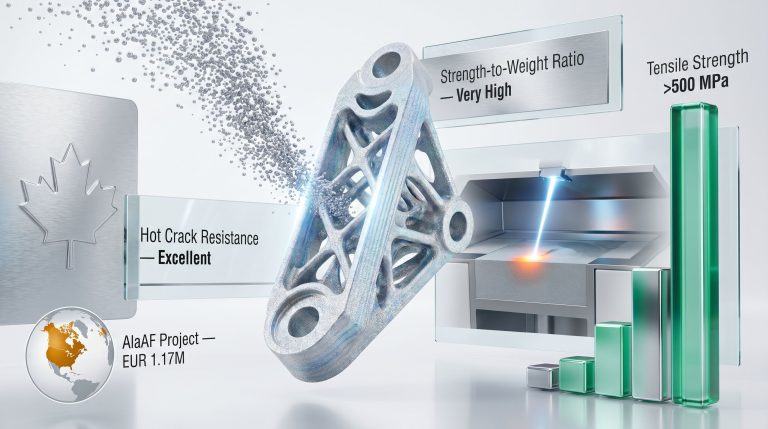
Scandium Canada is a publicly traded company headquartered in Montreal, Quebec, Canada, with its core asset being the Crater Lake Project located in the Nunavik region of Quebec, a deposit considered one of the largest primary scandium sources in North America. The company operates a Scandium+ division focused on the research, development, and commercialization of innovative scandium applications. The collaborating partner, the Multi-Scale Additive Manufacturing Lab (MSAM) at the University of Waterloo, is located at the Catalyst137 technology center in Kitchener, Ontario, and boasts over CAD 25 million in research equipment, making it one of Canada's leading metal 3D printing research institutions.
According to the agreement, the collaboration will be co-led by Dr. Luc Duchesne, Chief Scientific Officer and head of Scandium+ at Scandium Canada, and Professor Mihaela Vlasea, Co-Director of MSAM and Canada Research Chair in Sustainable Additive Manufacturing. Dr. Duchesne visited MSAM in early May to initiate preliminary research trials. The core objective of this collaboration is to develop process parameters that can reduce the advanced manufacturing costs of L-PBF, thereby broadening market opportunities for aluminum-scandium alloys. By adding trace amounts of scandium (typically 0.1% to 0.6%), Al-Sc alloys form nanoscale Al₃Sc precipitates during solidification, which significantly refine grains and inhibit hot cracking, addressing the key technical bottleneck of traditional aluminum alloys prone to columnar grains and hot cracking in the L-PBF process.
Guy Bourassa, CEO of Scandium Canada, stated that collaborating with one of the world's most recognized additive manufacturing labs marks a significant step for the company, reflecting its commitment to creating concrete commercial opportunities for Al-Sc alloys. Professor Mihaela Vlasea noted that it is exciting to work with the industrial ecosystem to address the urgent needs of the metal additive manufacturing supply chain. This industry-academia collaboration directly connects North America's largest primary scandium resource with Canada's metal printing research capabilities, aiming to solve the long-standing industry challenges of high material costs and narrow process windows in Al-Sc alloy additive manufacturing, providing a technical foundation for building a complete value chain from mine to powder to printed parts.
This article is compiled by Wedoany. All AI citations must indicate the source as "Wedoany". If there is any infringement or other issues, please notify us promptly, and we will modify or delete it accordingly. Email: news@wedoany.com