en.Wedoany.com Reported - Anhui Tongguan (Lujiang) Mining Industry Co., Ltd., a subsidiary of China's Tongling Nonferrous Metals Group Holdings Co., Ltd., has recently achieved technological progress in four areas: intelligent mining, intelligent transportation, intelligent mineral processing, and intelligent monitoring and pipeline maintenance, comprehensively advancing the construction of smart mines.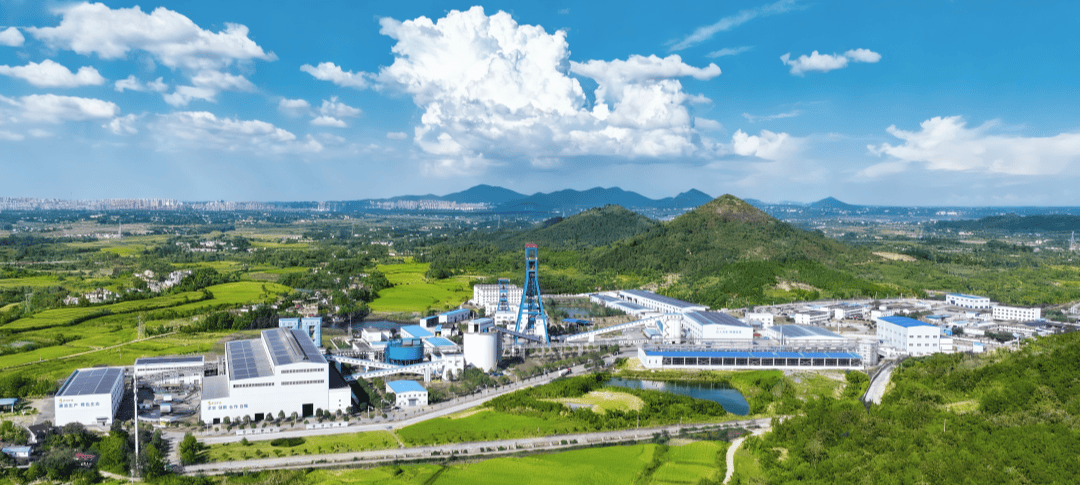
Anhui Tongguan (Lujiang) Mining Industry Co., Ltd., established in 2008 and located in Lujiang County, Hefei City, Anhui Province, is a wholly-owned subsidiary of Tongling Nonferrous Metals Group Holdings Co., Ltd. The company invested approximately 2 billion yuan in the Shaxi Copper Mine, covering an area of over 2,300 mu, with the deposit being a porphyry copper type. The mine is designed to process 3.3 million tons of ore annually and commenced production in July 2017. It employs a large-diameter deep-hole stage open-stope subsequent backfill mining method, with mining depths ranging from -410 meters to -770 meters. In 2025, the company expects to achieve a year-on-year increase in copper recovery rate despite a 3.79% decline in raw ore grade, with copper concentrate grade stabilizing at 19.6%.
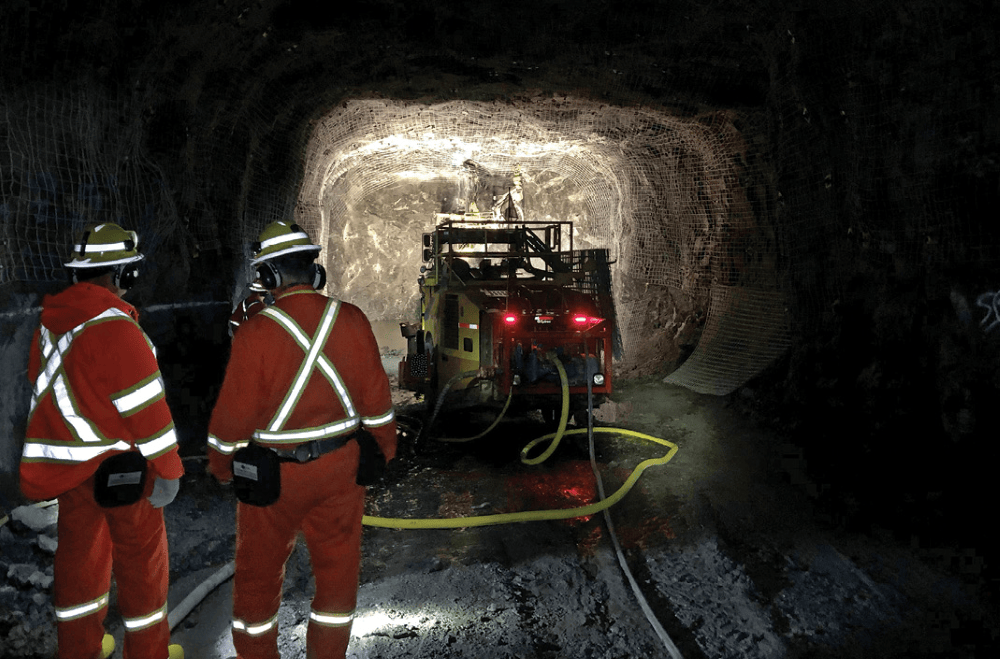
In the field of intelligent mining, leveraging technical support from the University of Science and Technology Beijing, the company is conducting specialized research on intelligent blast parameter design and fragmentation evaluation systems for stopes, optimizing and refining ore-rock blastability classification standards and corresponding blasting parameters, and establishing an intelligent blast management and control system integrating intelligent design, real-time monitoring, fragmentation feedback, and dynamic optimization. In intelligent transportation, the company collaborates with Tongguan Intelligent Company to tackle core technologies for 5G and AI-integrated collaborative shovel-loading operations in deep mine stopes, while relying on the technical strength of BGRIMM Technology Group to promote the application of fully automatic unmanned driving technology for 5G underground electric locomotives. BGRIMM Technology Group, established in 2000 and headquartered in Beijing, primarily engages in the research and development of non-ferrous metal mining and processing technologies, with a registered capital of approximately 278 million yuan and investments in 32 enterprises.
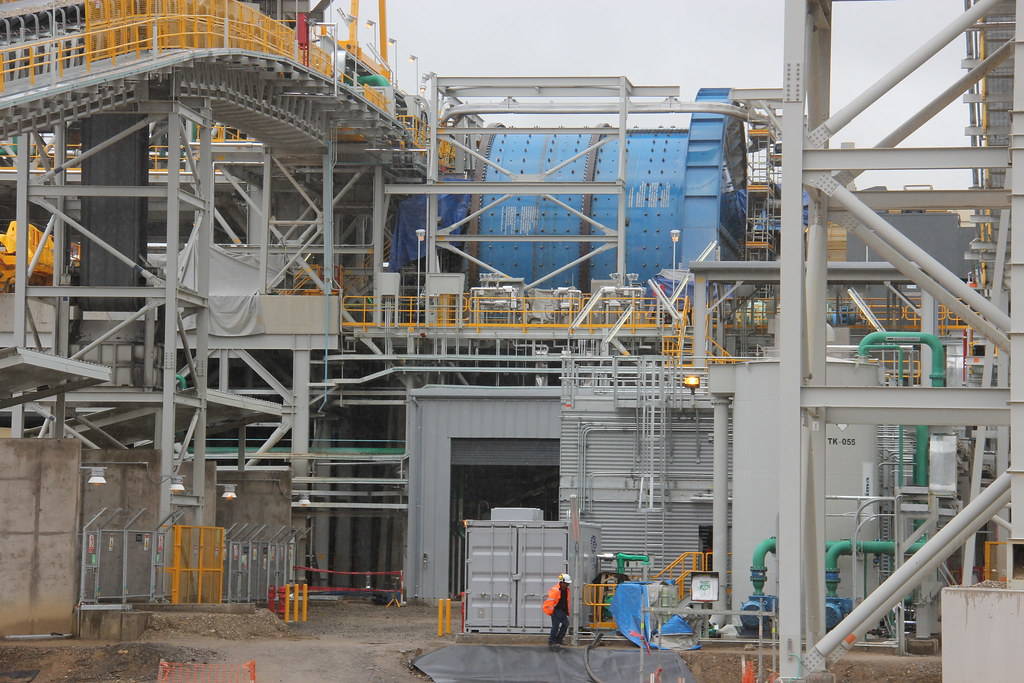
In the field of intelligent mineral processing, the company leverages the technical expertise of BGRIMM Technology Group, utilizing technologies such as the Industrial Internet, big data, and digital twins to establish a collaborative optimization and intelligent management and control system covering the entire process of grinding, flotation, and thickening, enabling intelligent production scheduling and equipment fault prediction and maintenance. In intelligent beneficiation, the company previously won the first prize of the 2025 Nonferrous Metals Industry Science and Technology Award for "Key Technologies and Applications for Collaborative Optimization of Intelligent Beneficiation of Complex Low-Grade Copper Ores" and the second prize for "Key Technologies and Applications for Quality-Based Separation and Classification of Multiphase Complex Copper Ores and Their Fine Particle Recovery." After the deployment of the intelligent system, the daily processing capacity of the mineral processing plant increased by 5%, average grinding energy consumption decreased by 2.8%, and fluctuations in key indicators were reduced by 10%. The utilization rate of the intelligent flotation system exceeded 99%, achieving an overall reduction in reagent consumption, with cumulative reagent cost savings of nearly 600,000 yuan in 2025 and material cost savings of over 1.2 million yuan.
In the field of intelligent monitoring and pipeline maintenance, the company collaborated with Wuhan University of Technology to develop distributed optical fiber sensing technology for intelligent monitoring of backfill pipelines, achieving full-coverage, high-precision online monitoring and early warning of potential safety hazards. Distributed optical fiber sensing technology enables continuous distributed measurement of parameters such as temperature, strain, and vibration by analyzing frequency shifts, power, or phase changes in backscattered light generated during laser transmission through optical fibers. Meanwhile, the company partnered with Xi'an University of Technology for specialized research to develop a pipeline leak localization device for tailings slurry transport using the pigging method. In August 2025, the research project was awarded to Xi'an University of Technology through public bidding, with a winning bid of 696,500 yuan. The bidding scope involved the development of a leak detection device for an 8-kilometer, DN300 main tailings sand transport pipeline from the tailings pond. According to bidding requirements, the detection device must operate stably under high-pressure (greater than 3.0 MPa) and corrosive environments, with a fault identification accuracy of no less than 95% and continuous operation for no less than 100 hours without failure.
The systematic advancement of these four technological areas marks substantial progress in Tongguan (Lujiang) Mining Company's transition from point automation to full-process intelligentization.
This article is compiled by Wedoany. All AI citations must indicate the source as "Wedoany". If there is any infringement or other issues, please notify us promptly, and we will modify or delete it accordingly. Email: news@wedoany.com