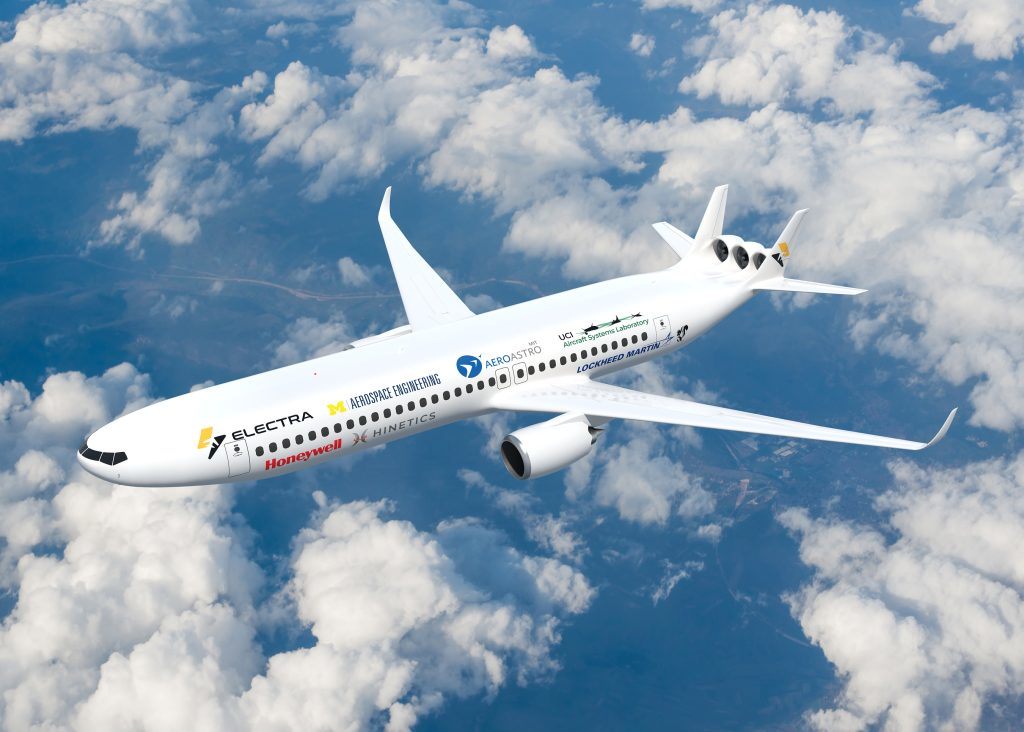
en.Wedoany.com Reported - US hybrid-electric aircraft developer Electra has unveiled a concept for a turboelectric airliner with over 100 seats, as part of NASA's "Advanced Aircraft Concepts for Environmental Sustainability 2050 (AACES)" program. The design, revealed on June 8, is said to offer up to 17% additional energy efficiency gains beyond those expected by 2050 through advanced structures, engine technologies, and aerodynamic improvements.
Electra is best known for its nine-seat hybrid-electric aircraft, the EL9, which is expected to be certified before the end of this decade. The company has not indicated any intention to develop this newly unveiled large airliner and did not immediately respond to FlightGlobal's request for more information. In addition to Electra, Boeing subsidiary Aurora Flight Sciences, blended-wing-body aircraft developer JetZero, and Pratt & Whitney are also participating in NASA's AACES program.
Parker Vascik, Director of Product Strategy at Electra, stated that the goal is to fundamentally improve how the airframe and propulsion system work together, while keeping the aircraft relevant to real-world airline and airport operations. The aim is not just efficiency on paper, but a concept that can actually be built, certified, and used.
The large airliner concept features a "double-bubble" fuselage design, where the fuselage itself generates lift and is wide enough to accommodate two cabin aisles. Two under-wing turbofan engines provide thrust and generate electricity to power three fans mounted on the upper rear fuselage. These fans will ingest and re-accelerate the slow-moving air flowing over the fuselage, a technique known as boundary layer ingestion. Electra says the concept can fit into existing airports and gates, using standard fuel without the need for charging infrastructure.
Alejandra Uranga, Chief Engineer for Research and Future Concepts at Electra, developed this concept. During her previous work at the Massachusetts Institute of Technology (MIT), she helped lead NASA-funded research that advanced the double-bubble fuselage concept. Uranga noted that the difference today lies in the ability to leverage electrification and distributed propulsion to more deeply integrate these systems, designing the aircraft as a complete system, which is crucial to realizing the full potential of future commercial aircraft.
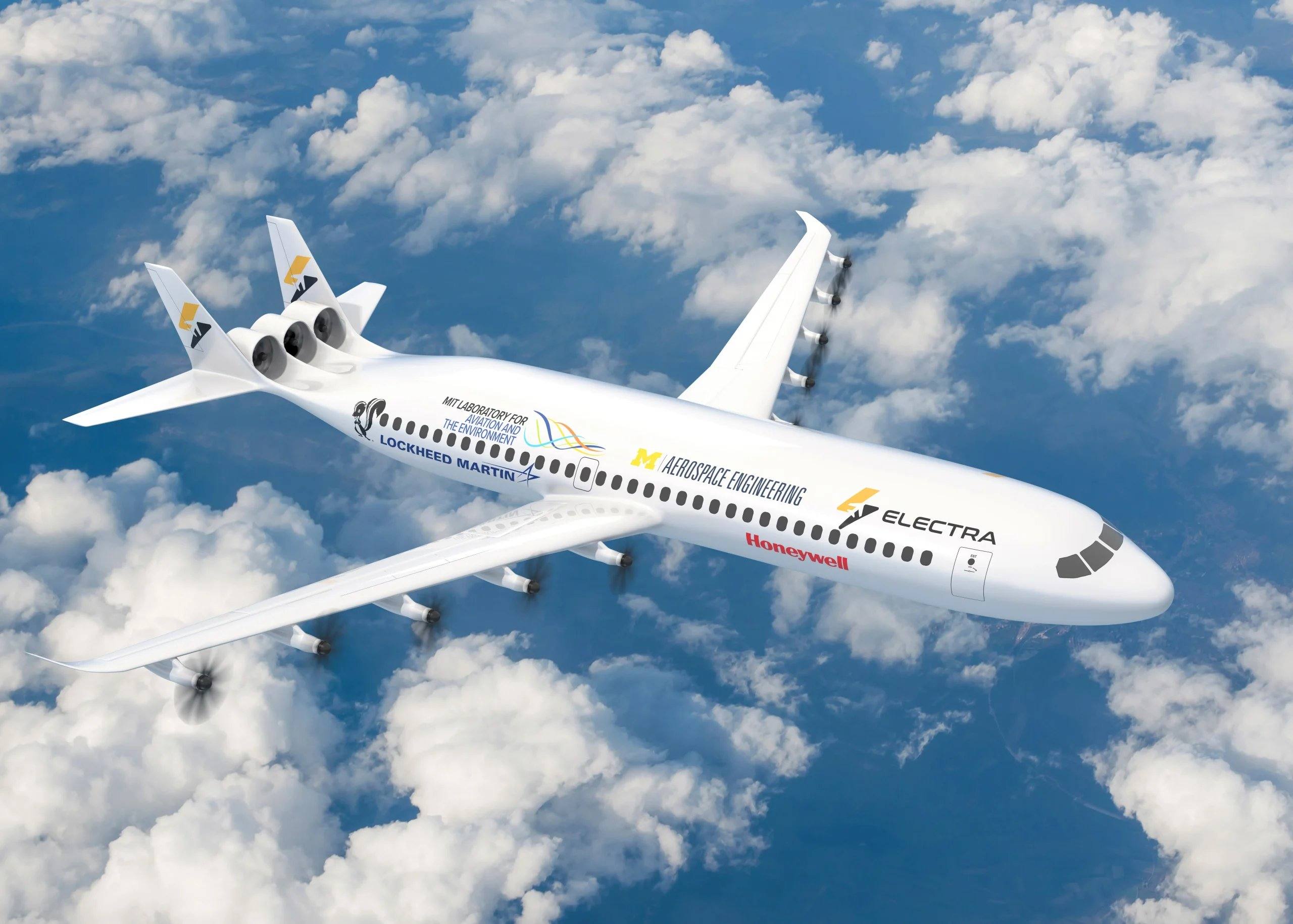
Electra developed the design in collaboration with American Airlines, Honeywell Aerospace, Lockheed Martin Skunk Works, motor company Hinetics, MIT, the University of Michigan, and the University of California, Irvine.
This article is compiled by Wedoany. All AI citations must indicate the source as "Wedoany". If there is any infringement or other issues, please notify us promptly, and we will modify or delete it accordingly. Email: news@wedoany.com