en.Wedoany.com Reported - On June 9, Finnish industrial technology company Valmet received an order from Estonia's Gren Tartu to deliver a flue gas condenser and heat pump system for the Tartu biomass combined heat and power plant. Upon completion, the project will add over 10 MW of heating capacity to the local district heating network, improving the thermal power plant's waste heat utilization efficiency.
The project revolves around "flue gas waste heat recovery + heat pump temperature boosting," with core equipment including a flue gas condenser and heat pumps. During the operation of the thermal power plant, boiler flue gas still contains recoverable low-temperature heat, which under conventional conditions is lost with the exhaust. The system delivered by Valmet will recover low-temperature heat from the flue gas and raise it to a temperature suitable for the district heating network via heat pumps, enabling the plant to output more heat to the urban heating system without a proportional increase in fuel consumption. For cities in the Nordic and Baltic regions, district heating provides residential heating, public building heating, and commercial facility heating, with high winter loads and strong stability requirements. Efficiency improvements on the heat source side directly impact fuel costs, heating security, and emission control. After the equipment in the Tartu project is commissioned, Gren Tartu can expand its heating capacity based on the existing biomass thermal power plant while reducing fuel input per unit of heat.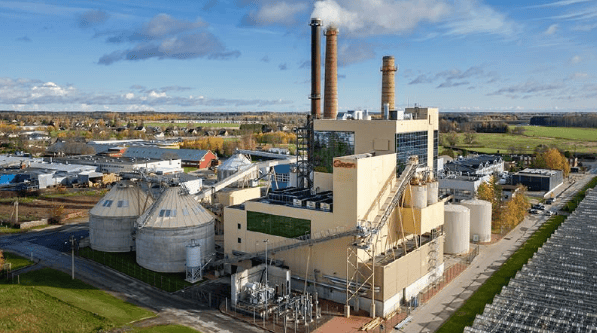
Estonia is reducing its heating system's reliance on fossil fuels through biomass, waste heat, heat pumps, and district heating network upgrades. Compared to building new large-scale heat sources, retrofitting existing combined heat and power plants with waste heat recovery has a shorter construction period, clearer project boundaries, and easier integration into existing plant sites and pipeline networks. Flue gas condensers can recover sensible heat and part of the latent heat from flue gas, while heat pumps convert low-grade heat into a heat source that can directly enter the heating network. The combination of the two improves the overall efficiency of the thermal power plant and enhances heating resilience during fuel price fluctuations and peak cold weather loads. Such projects also drive demand for heat exchange equipment, heat pump units, flue gas treatment, automatic control, pump valves and fittings, online monitoring, installation construction, and long-term maintenance services, representing a niche direction in energy engineering that combines energy saving, environmental protection, and urban infrastructure attributes.
Gren is a Nordic energy infrastructure company operating district heating, district cooling, renewable energy, and industrial energy services in the Baltic countries and the UK, with a production capacity of approximately 1,500 MW and annual energy sales of about 3 TWh, of which over 95% comes from renewable and recovered fuels. The Tartu project will now move into detailed design, equipment manufacturing, on-site installation, and system commissioning, with engineering focus on flue gas side integration, matching heat pumps with the heating network, winter operational stability, and automatic control strategies. If the project is successfully commissioned, Tartu will gain a more efficient biomass heating expansion solution, also providing a reference for Baltic cities to enhance district heating capacity without large-scale construction of new heat sources.
This article is compiled by Wedoany. All AI citations must indicate the source as "Wedoany". If there is any infringement or other issues, please notify us promptly, and we will modify or delete it accordingly. Email: news@wedoany.com