en.Wedoany.com Reported - Recently, Uzbekistan has made new arrangements to accelerate the development of its chemical industry and implement regional investment projects, proposing the launch of over 350 chemical projects totaling $17 billion. The plan covers fertilizers, polymers, household chemicals, inorganic chemicals, mineral deep processing, and the construction of scientific research and production clusters. The goal is to enhance the added value of local chemical products, reduce import dependence, and convert more raw material resources into downstream industrial capacity.
Uzbekistan's chemical industry was historically dominated by mineral fertilizers. In recent years, it has attracted $8.3 billion in investment and put 87 large-scale production projects into operation, establishing a foundation for over 60 types of high value-added products, including polyvinyl chloride, green hydrogen, expanded polypropylene, and BOPP film. The core of this new deployment is to further push the chemical industry from traditional basic fertilizer production towards refinement, branding, and materialization. The government has proposed launching 10 small-tonnage chemical projects totaling $1 billion in the cluster around the Navoi Nitrogen Fertilizer Company, focusing on enhancing unit value through products like downstream adhesives from cyanide salts. In Karakalpakstan, Surkhandarya, Kashkadarya, and Navoi, deep processing will be developed based on mineral resources such as sodium, potassium, bentonite, and serpentinite. A three-year reserve expansion plan will be established for raw materials including phosphate rock, rock salt, mirabilite, and serpentinite. Serpentinite processing has been singled out as a key focus, with related project investments no less than $200 million, and can be further extended to material chains for magnesium oxide, nickel, chromium, and cobalt, providing raw material support for the electrical, materials, and equipment manufacturing industries.
Household chemicals are also included in this round of industrial upgrading. Uzbekistan imports approximately $300 million worth of household chemicals annually, while the regional market size is about $2 billion. The new arrangements include allocating space in an industrial zone in Tashkent to develop household chemical projects, with an initial investment of $50 million. These projects will later be transferred to the private sector as mature branded enterprises. Similar projects in other regions will also receive $15 million in support from the Industrial Cooperation Fund.
The fertilizer industry remains a fundamental sector within Uzbekistan's chemical system, but the direction of upgrading has shifted from simply expanding nitrogen fertilizer production to developing water-soluble fertilizers, phosphate fertilizers, and other higher value-added products. According to the plan, 42 projects totaling $2.8 billion will be implemented over the next three years. By 2030, nitrogen fertilizer production is targeted to increase from 2.8 million tons to 4 million tons, phosphate fertilizer production from 400,000 tons to 900,000 tons, and water-soluble fertilizer production from 100,000 tons to 400,000 tons. Uzbekistan also proposes building a chemical innovation system covering education, research, laboratories, and startups. A chemical industry innovation, research, production, and education cluster will be established on 60 hectares of land in the Mirzo Ulugbek district of Tashkent, and a Chemical Technology Innovation Center will be built in cooperation with South Korea. This means the new wave of chemical projects will not rely solely on capacity expansion by existing large enterprises but will also address capability gaps in high-end chemicals, green chemistry, nanochemistry, and chemical digital modeling through technology validation, pilot testing, brand product incubation, and the commercialization of research results.
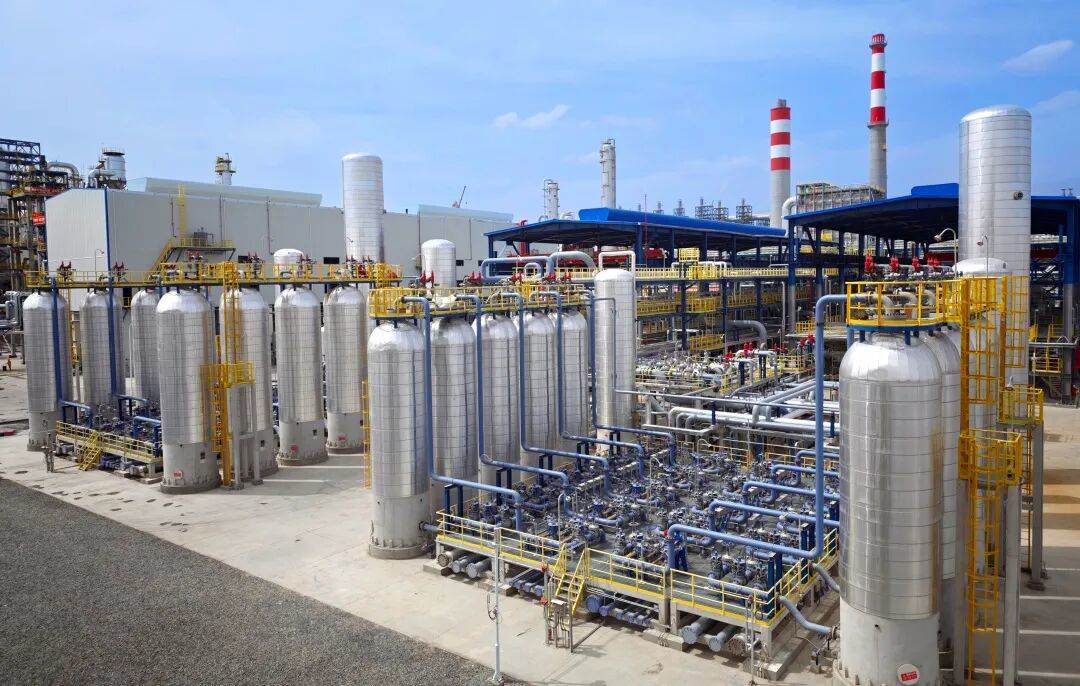
The project portfolio will subsequently enter the stages of plan refinement, enterprise organization, investment implementation, and regional undertaking. For Uzbekistan, if the $17 billion chemical projects proceed as planned, they will transform the country's chemical industry, which has long been heavily focused on basic fertilizers and primary products. This will drive synchronized demand for reactors, compressors, pumps and valves, heat exchangers, storage tanks, separation equipment, control systems, environmental protection equipment, water treatment facilities, laboratory equipment, and engineering services. It will also support the formation of a more complete raw material-intermediate-final product closed loop within the Central Asian chemical industry chain.
This article is compiled by Wedoany. All AI citations must indicate the source as "Wedoany". If there is any infringement or other issues, please notify us promptly, and we will modify or delete it accordingly. Email: news@wedoany.com