en.Wedoany.com Reported - The National Science Foundation is significantly scaling back its $368 million Ocean Observatories Initiative, with four observation arrays comprising over 900 sensors set to be removed within the next 15 months, and some equipment has already been withdrawn from the Pacific Ocean. The initiative includes moorings, autonomous underwater vehicles, and gliders deployed at five locations in the Atlantic and Pacific Oceans to monitor ocean properties such as temperature, pressure, carbon dioxide, and pH levels.
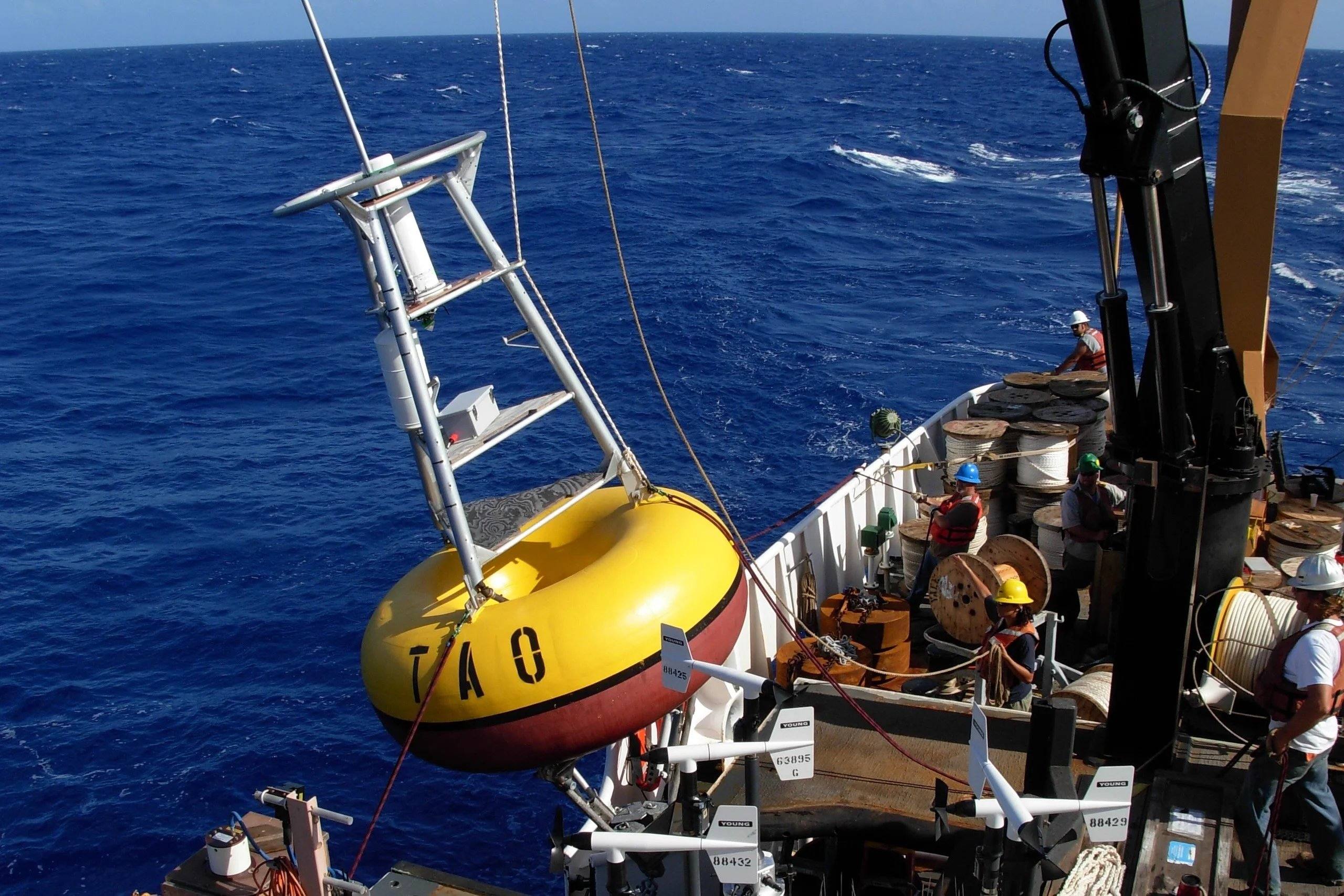
A spokesperson for the National Science Foundation stated that the agency is not canceling the Ocean Observatories Initiative but plans to adjust the scope of support for specific elements. This dismantling effort is part of the Trump administration's measures to limit climate change-related scientific research, including cutting funding and attempting to shut down the National Center for Atmospheric Research in Colorado. Researchers believe this is not just a U.S. issue, as funding for ocean observation in the UK and other European countries is also under pressure.
Karina von Schuckmann, an ocean science and policy expert at Mercator Ocean International, a non-profit organization dedicated to digital oceanography, pointed out that humanity is heading toward blindness in understanding, observing, and advancing ocean protection. She also serves as co-chair of the scientific committee for the Starfish Barometer, an annual report focused on ocean conditions. The report states that in addition to ocean warming, plastic pollution, and species loss, major in-situ ocean observation systems are shrinking, leading to a decline in ocean protection capacity.
The Starfish Barometer report estimates that in 2025, there will be approximately 120,000 in-situ observations of the ocean's physical and chemical state, primarily relying on autonomous systems such as drifting buoys. However, large monitoring networks, including moored buoys and research vessel observations, have declined since the pandemic due to budget constraints and personnel shortages. Marina Lévy, an oceanographer at the French National Centre for Scientific Research (CNRS) who co-chairs the Starfish scientific committee with von Schuckmann, stated that this is the first time the report includes ocean observation data. She acknowledged that global observations are shrinking and emphasized that observing the ocean is key to protecting it.
Helen Findlay, a biological oceanographer at the Plymouth Marine Laboratory, noted that measurements of carbon dioxide at the ocean surface have declined in recent years, and a lack of funding in European countries has led to difficulties in calculating the global carbon budget. She stated that in the UK, the actual funding for long-term observation systems has not increased with inflation or rising costs, making it very difficult to maintain long-term observatories. She believes that U.S. cuts to ocean observation will have ripple effects on global ocean science, and other countries will need to fill the gaps, but many are also facing real funding reductions.
This article is compiled by Wedoany. All AI citations must indicate the source as "Wedoany". If there is any infringement or other issues, please notify us promptly, and we will modify or delete it accordingly. Email: news@wedoany.com