en.Wedoany.com Reported - A research team at the Max Planck Institute for Sustainable Materials (MPI-SusMat) has found that adding specific metal oxides as catalytic precursors in hydrogen-based metal production can double the reduction kinetics compared to catalyst-free processes and reduce energy consumption.
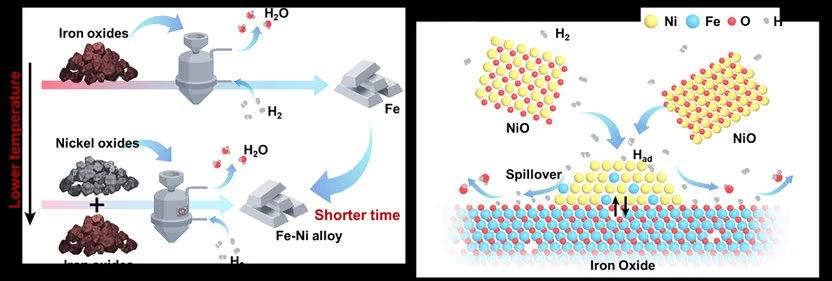
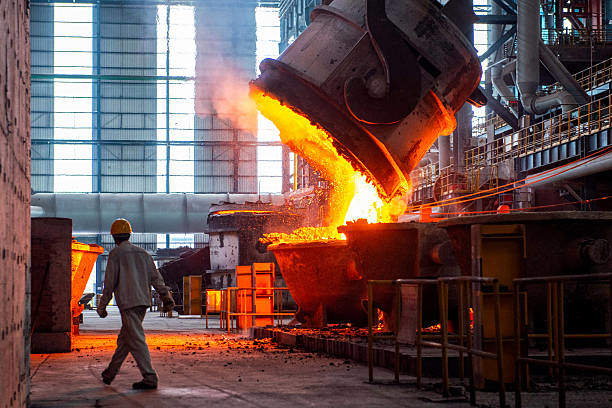
Steel and metal production are major sources of greenhouse gas emissions, accounting for approximately 10% of global CO₂ emissions. Hydrogen-based metal production offers a CO₂-free alternative, integrating reduction, alloying, and microstructure design into a single production step. However, the slow reduction kinetics of metal ores at temperatures below 800°C hinder the widespread adoption of this technology. The MPI-SusMat team had previously demonstrated that hydrogen-based reduction processes can consolidate the traditional three-step production process into one step. The team's latest research found that adding nickel oxide during the hydrogen-based reduction of iron ore into iron-nickel alloys enhances this process. Nickel oxide is co-reduced, forming nanoporous nickel as a transient phase, which acts as a highly active catalyst precursor for iron oxide reduction. Atom probe tomography combined with transmission electron microscopy revealed that when nickel oxide rapidly reduces to porous metallic nickel, it bonds with adjacent iron oxides and forms interfaces. Hydrogen interacts with nickel at these interfaces, being dissociated into highly reactive hydrogen atoms, which then migrate to the surface of adjacent iron oxides—a process known as hydrogen spillover—thereby accelerating the reduction reaction. Reduction can be initiated at temperatures as low as 300°C, well below the ignition point of hydrogen. The resulting nickel-containing alloys are important master alloys, widely used in 304 and 316 stainless steels, as well as in high-strength and cryogenic steels for automotive, energy, and medical applications.
The researchers noted that while other transition metal oxides have not yet been systematically evaluated, elements with similar properties, such as cobalt, are expected to exhibit analogous catalytic behavior. Oxides like TiO₂, though not easily reduced, may promote hydrogen spillover by providing active surface pathways. The findings indicate that alloy formation and reduction can occur simultaneously, rather than through the traditional sequence of reduction followed by interdiffusion. This process coupling, enhanced by metal oxide catalysts, enables lower reduction temperatures, shorter processing times, and reduced energy consumption, paving a sustainable one-step route for iron-nickel master alloy production. At MPI-SusMat, sustainable metal and alloy production is being explored through a combination of experimental and theoretical approaches. A deeper understanding of these coupling mechanisms is crucial for guiding the development of next-generation, more sustainable, and cost-effective reduction technologies. The research results have been published in the journal Nature Synthesis, with the first author being Dr. Xinren Chen, a postdoctoral researcher at MPI-SusMat, and the corresponding author being Professor Dierk Raabe, Managing Director of MPI-SusMat.
This article is compiled by Wedoany. All AI citations must indicate the source as "Wedoany". If there is any infringement or other issues, please notify us promptly, and we will modify or delete it accordingly. Email: news@wedoany.com