Stanton Williams Completes 15-Storey SEVEN Residential Tower in London in 2026
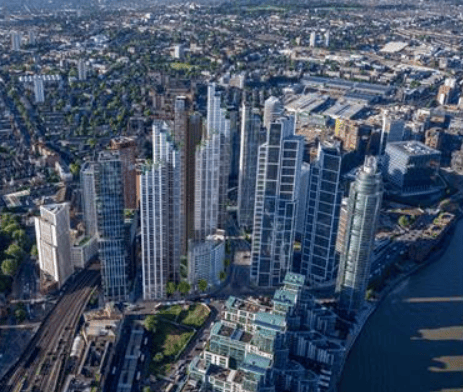
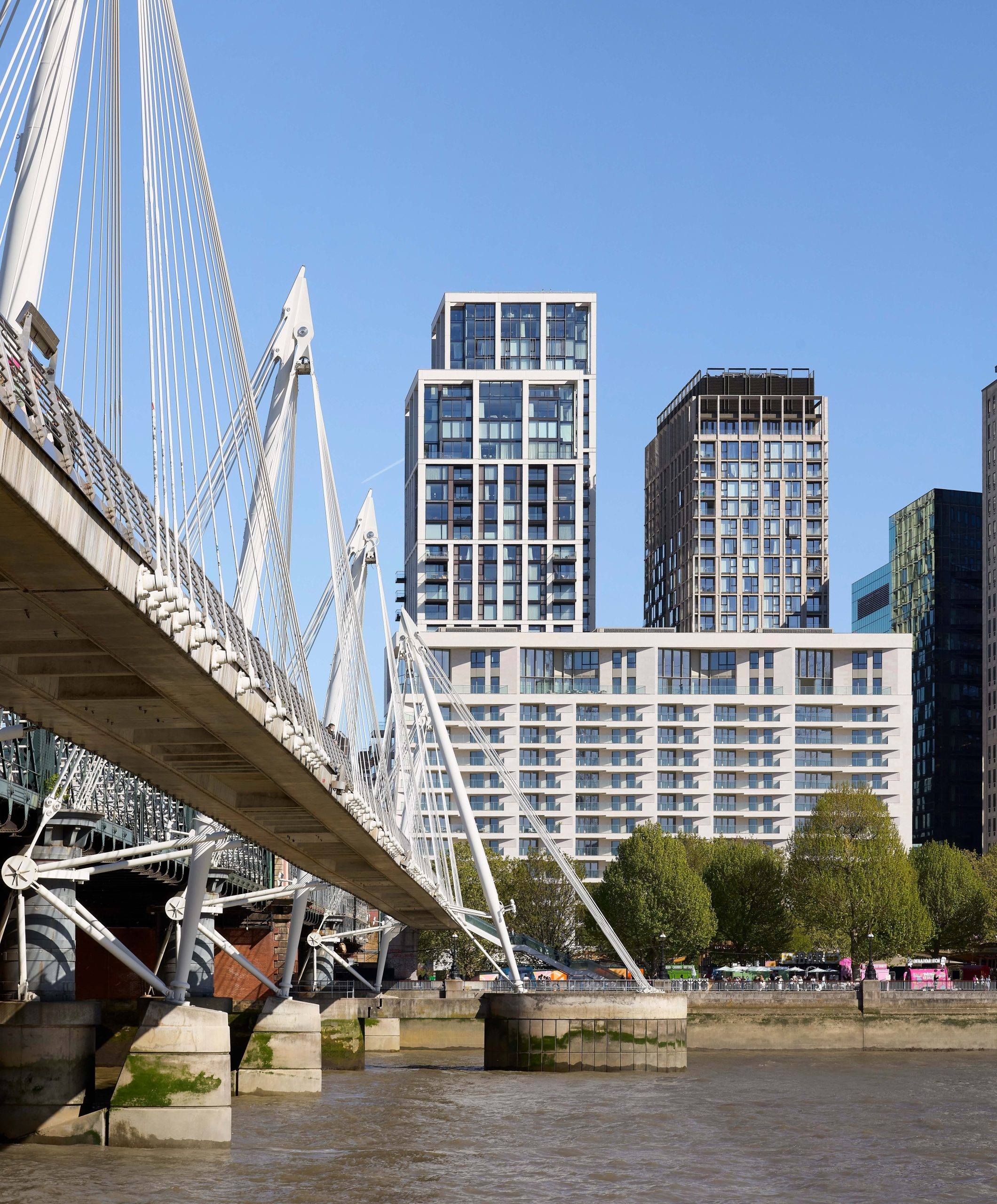
en.Wedoany.com Reported - The SEVEN residential tower on the Shell Centre site in London has been completed and delivered. Designed by Stanton Williams, this 15-storey building sits between Howard Robertson's 1961 oil headquarters and the Hungerford Bridge viaduct, directly occupying a key position between Waterloo Station, the London Eye, and the River Thames.
The building is part of the master plan for the Shell Centre mixed-use site, planned by Squire & Partners for Braeburn Estates (a joint venture between Qatari Diar and Canary Wharf Group), and delivered by White Ink Architects, with a total area of 24,600 square metres.
Stanton Williams conceived the design as a "linear form," mediating between the 27-storey Shell Centre tower and the more civic-scaled buildings of the South Bank, referencing the limestone used at the Royal Festival Hall. The practice stated that SEVEN is envisioned as a natural stone block that "rises" from the surrounding hard landscape and is "metaphorically carved out of it."
The west-facing river elevation is designed as a sculptural, faceted form with large recessed balconies to enhance a sense of solidity, with angled cuts opening up river views, drawing on the scale and rhythm of the Shell tower. On other elevations, balconies are cantilevered; the east elevation has a flat profile, while the north and south elevations are more solid with deeply recessed openings.
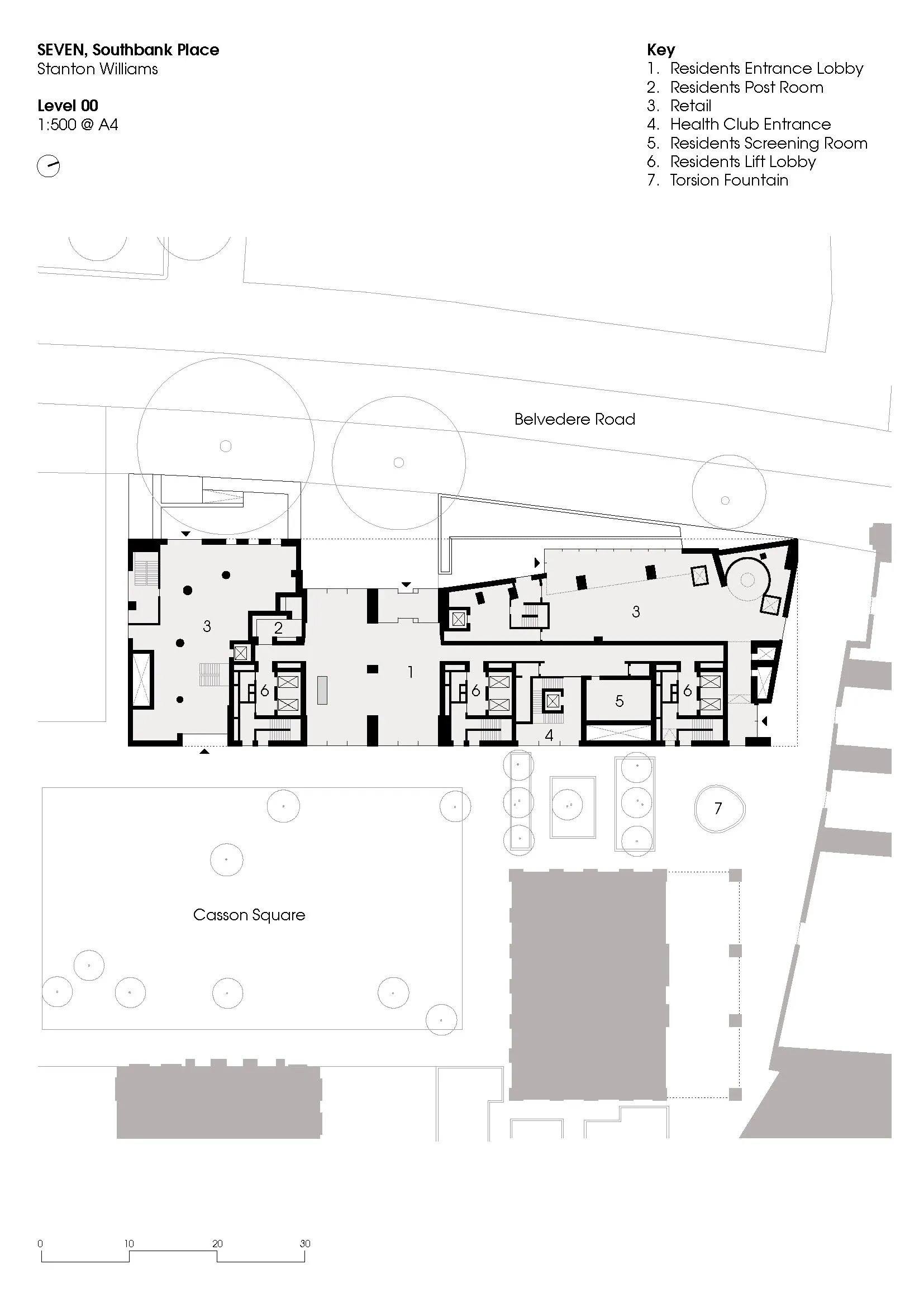
According to the site master plan, the building has a clear base, middle, and top. At ground level, the double-height base is clad in Portuguese limestone on the west side and bronze-toned metal panels and glass on the east, overlooking the new public space, Casson Square. The base height references the double-height base of the Shell Centre tower and the dimensions of the adjacent railway viaduct arches. A 5-metre-high glass entrance lobby is located on Belvedere Road, with views through the building to the river from Casson Square.
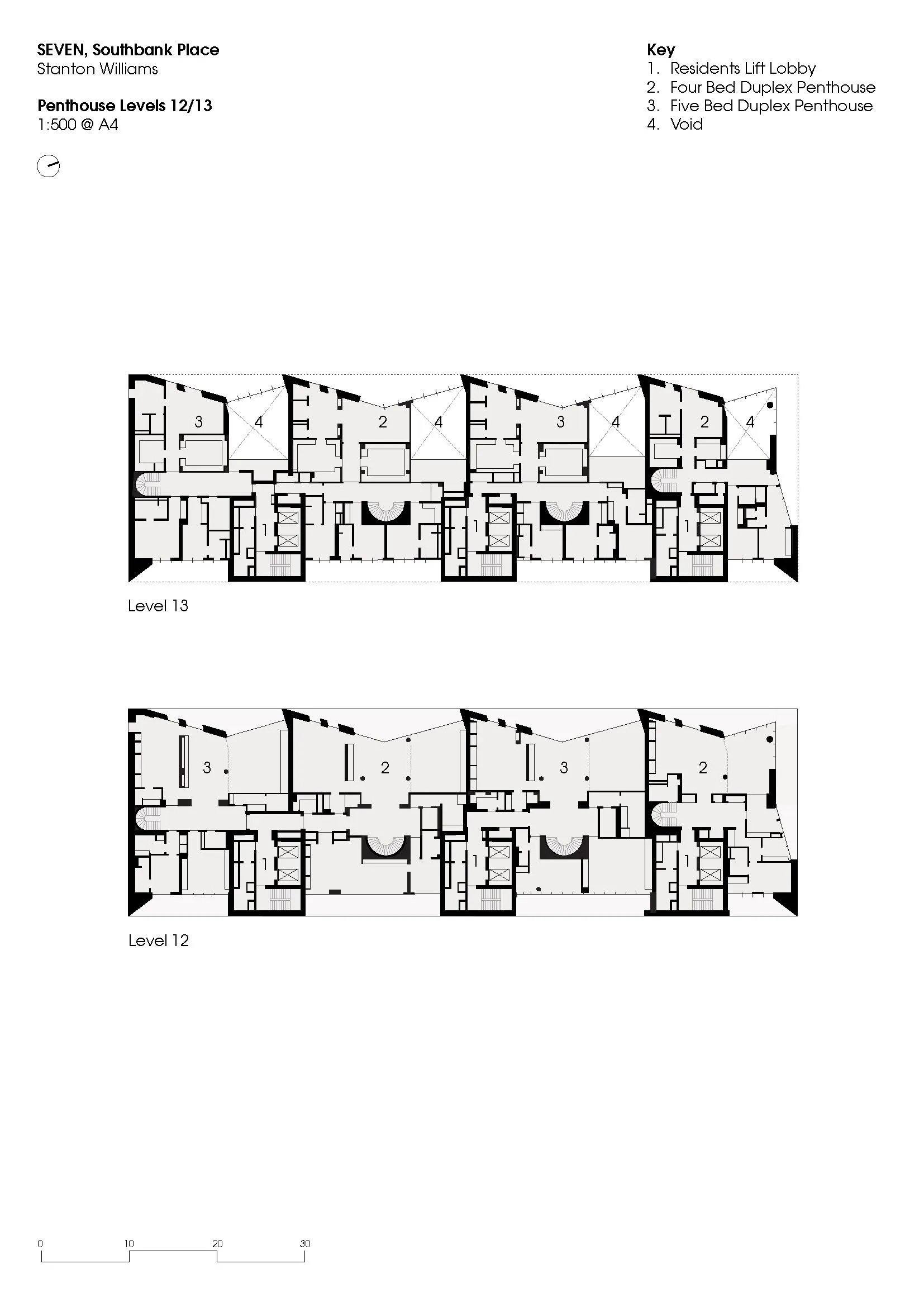
The top of the building features a series of double-height four- and five-bedroom penthouses. Between the base and the penthouses, all apartments are single-storey, ranging from one to three bedrooms. On the north side of the site, a portion of the ground floor plan is cut away to create a passageway along the Hungerford Bridge viaduct, where material choices are predominantly natural stone and metal for durability.
For durability, the building employs a fabric-first approach, including triple glazing for high thermal performance. Each apartment is equipped with an efficient whole-house ventilation system with heat recovery and high air quality features. The scheme also includes an intensive green roof, rainwater attenuation tanks, and bird boxes within the roof landscape.
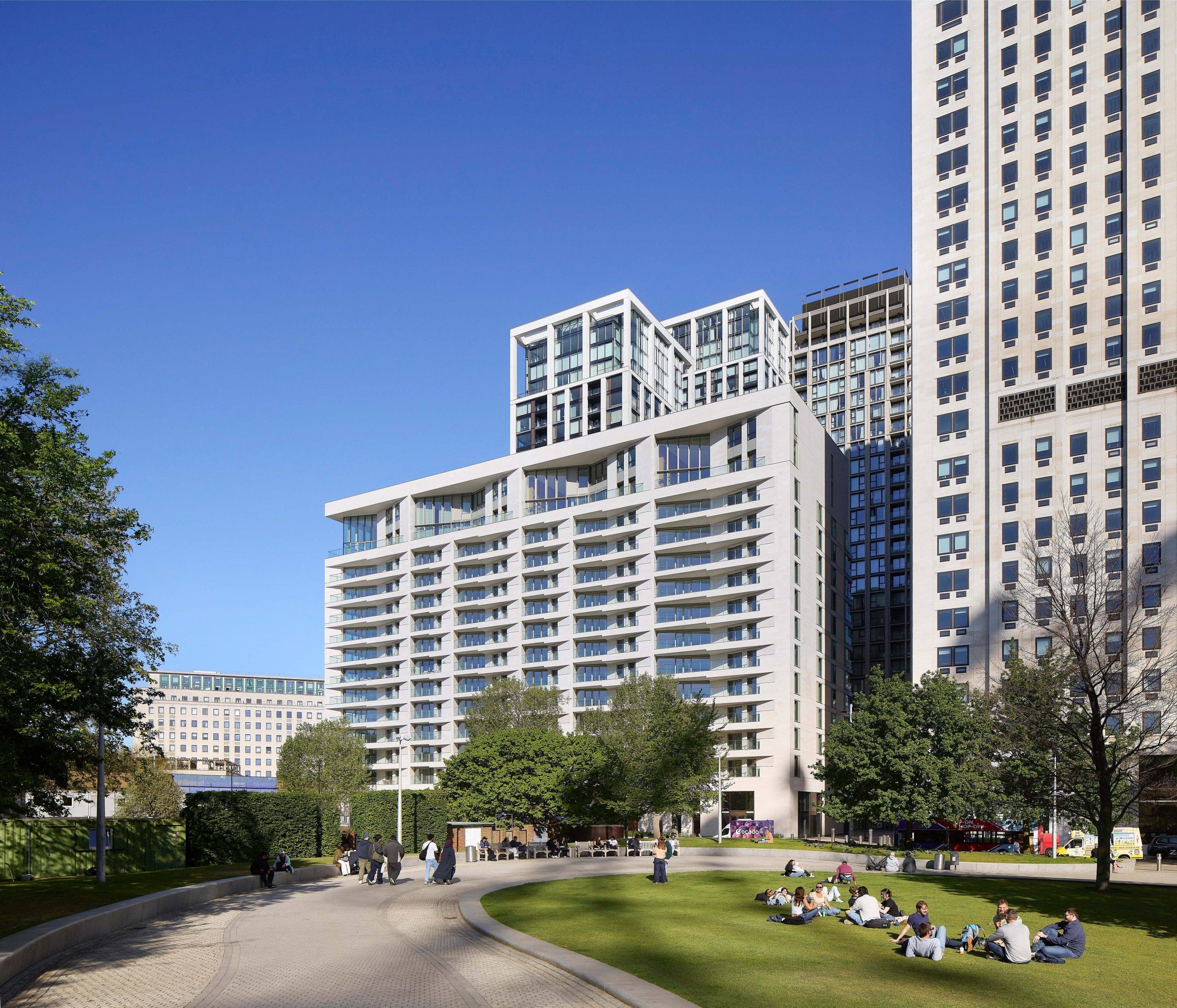
SEVEN is one of nine buildings in the wider Shell Centre redevelopment. Squire & Partners unveiled its master plan in 2012, including new office, retail, residential, and public space on the 2.15-hectare site. The controversial 134,700-square-metre scheme also includes buildings designed by Squire & Partners, KPF, GRID, and Patel Taylor, replacing much of Howard Robertson's complex except for the iconic 27-storey river-facing skyscraper.
Developer Canary Wharf Group and Qatari Diar purchased the building in July 2011 for £300 million. The site retains the core of the Shell Centre—the Torsion Fountain designed by Franta Belsky in 1963, which was listed as a Grade II building in 1999 and is a significant example of post-war public art.
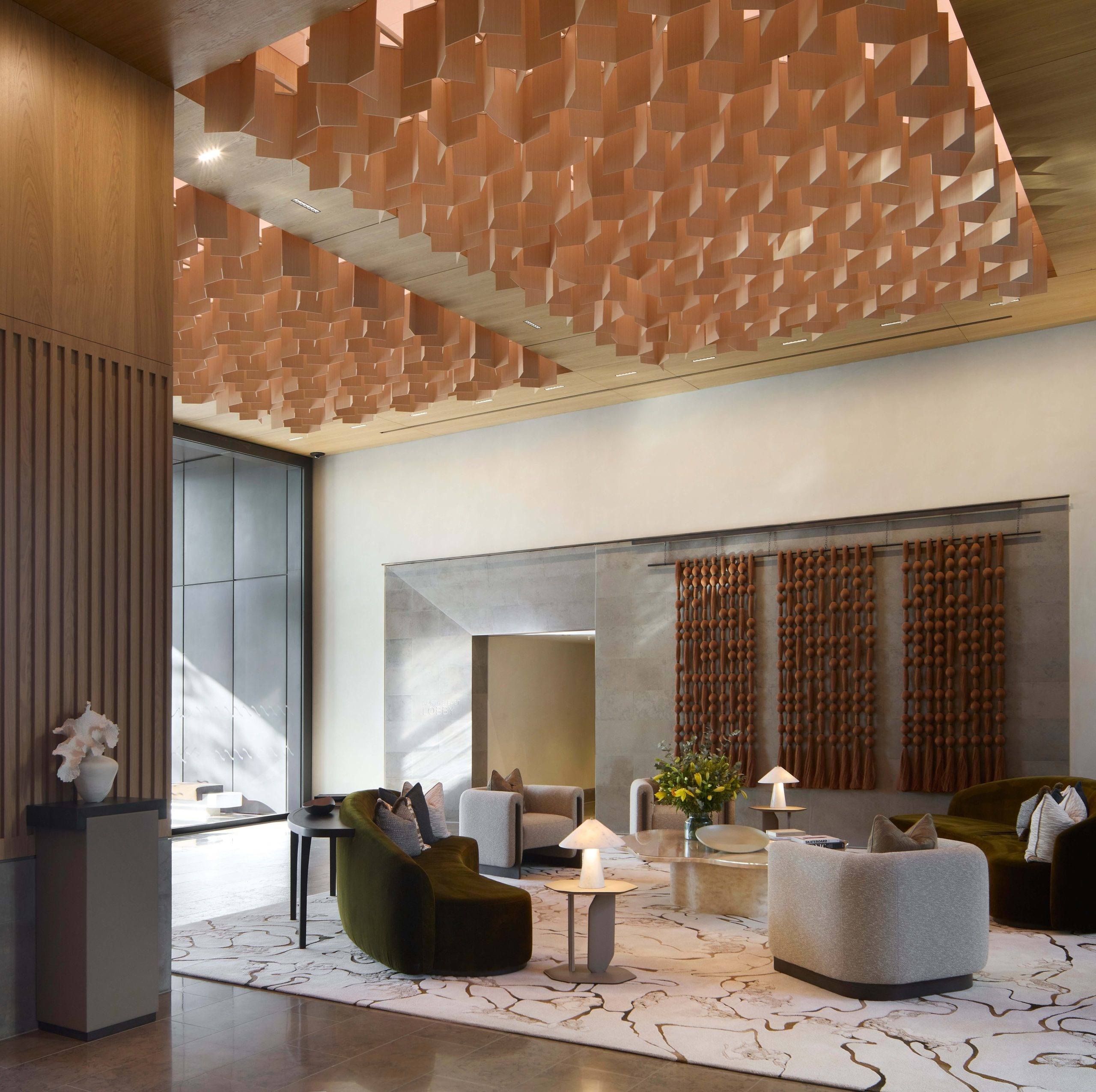
Construction began in March 2023 and was completed in March 2026, with a total internal floor area of 22,433 square metres and a total (internal + external) floor area of 24,156 square metres. The client is Braeburn Estates, the concept architect is Stanton Williams, the delivery architect is White Ink, the supervising architect is Axis, and the contract form is design and build. The main contractor is McAleer & Rushe. Other collaborators include interior designers United Design and Albion Nord, lighting designers SMLA and AECOM, landscape architect Townshend Landscape Architects, structural engineer WSP, MEP engineers AECOM and Caldwells, facade consultant Thornton Tomasetti, and cladding consultant FMDC.
Paul Williams, Principal Director at Stanton Williams, stated that the architectural intent of SEVEN is not ostentatious, aiming to design a building that coexists harmoniously with the Shell Centre, maintaining the same sculptural, solid appearance while creating a strong riverside presence on the South Bank Square. He said it is a great privilege to add such a significant building to such a key part of London.
Miles Wood, Sales Director at Qatari Diar, said the completion of the South Bank Square is a significant moment in its evolution, a decade-long renewal transforming this stretch of the Thames into one of London's most distinctive and attractive riverside destinations. He stated that SEVEN has been carefully designed to sensitively respond to its cultural context while making a positive contribution to the surrounding public realm, and Stanton Williams has successfully delivered a design that balances old and new, realising this vision with exceptional quality and sensitivity.
This article is compiled by Wedoany. All AI citations must indicate the source as "Wedoany". If there is any infringement or other issues, please notify us promptly, and we will modify or delete it accordingly. Email: news@wedoany.com
Related Products
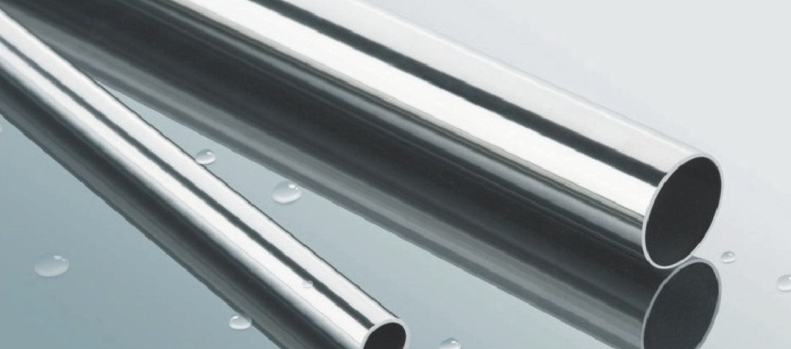

ERW Welded Pipe (Black Pipe and Hot-dip Galvanized Steel Pipe)
Handan Zhengda Steel Pipe Co., Ltd.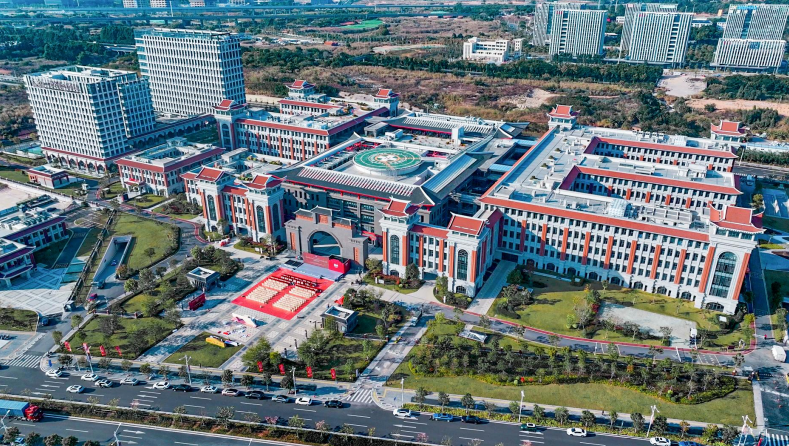
West China Xiamen Hospital of Sichuan University
Wuhan Huakang Century Clean Technology Co., Ltd.
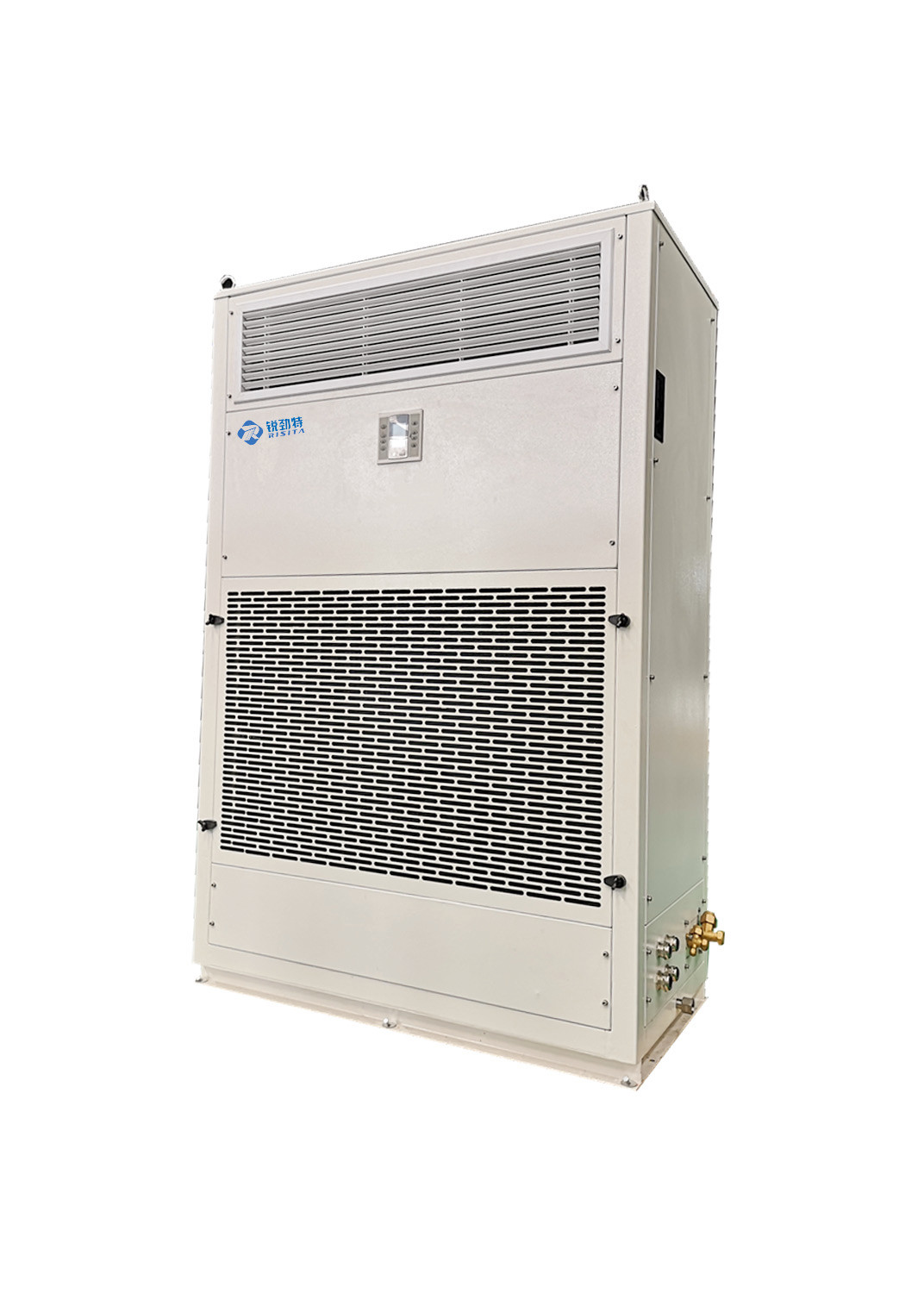
RISITA explosion-proof air conditioning
Guangdong RISITA Air Conditioning Equipment Co.,Ltd.
Acoustic Mineral Fiber Ceiling Tile 595x595x12mm
Shanxi Pano Trading Co., Ltd
300mm Segment Type Countdown Traffic Light (Core Type)
Yangzhou FAMA Intelligent Equipment Co., Ltd.