South Korea's SK Hynix Enters Mass Production Preparation Phase for 375-Layer 3D NAND
en.Wedoany.com Reported - June 11 news, South Korean memory chip company SK Hynix has completed mass production verification of its 375-layer 3D NAND flash memory and is preparing to transfer the relevant technology to the existing production line at the Cheongju M15 plant, with mass production expected to commence within the year. This product is regarded as SK Hynix's next-generation V10 NAND following the 321-layer V9 NAND, and will further enhance the stacking density and storage capacity of NAND flash memory.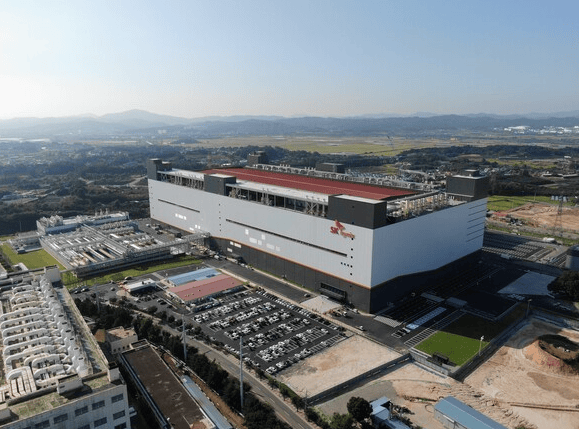
The 375-layer stacking means NAND manufacturing continues to advance toward ultra-high-layer structures. 3D NAND increases capacity per unit area by vertically stacking memory cells, but as the number of layers increases, challenges in word line structure, channel etching, deposition uniformity, signal latency, and yield control all intensify. SK Hynix had previously achieved mass production of 321-layer NAND. Moving to 375 layers, the process challenges are no longer just about adding more layers, but about maintaining read/write speed, erase performance, and long-term reliability within a high-density structure. The completion of mass production verification indicates that the relevant processes are now ready for transition from R&D verification to existing production lines.
Material changes are the key breakthrough for this generation of products. In the 375-layer product, SK Hynix partially replaces the previously used tungsten with molybdenum as the word line metal gate material. Molybdenum has lower resistance than tungsten in fine word line structures, helping to improve signal transmission speed and enhance read/write and erase performance. Additionally, molybdenum deposition no longer requires an additional barrier liner layer, leaving more process room for higher-density stacking. For ultra-high-layer 3D NAND, the resistance, filling capability, and deposition complexity of the word line material directly impact chip performance and mass production efficiency.
This development will also affect the competitive pace of the memory industry. AI servers, enterprise SSDs, consumer electronics, and edge devices are all continuously driving up storage capacity demand, requiring NAND manufacturers to rebalance cost, capacity, speed, and power consumption. Higher-layer 3D NAND helps increase single-chip capacity, reduce per-bit cost, and provide a foundation for high-capacity SSDs. If the 375-layer product is successfully mass-produced, SK Hynix will continue to catch up with competitors such as Samsung, Micron, and Kioxia in the high-layer stacking NAND race, and will also drive upgrades across the industry chain, including etching equipment, deposition equipment, precursor materials, inspection equipment, and advanced packaging.
Subsequent milestones will focus on the progress of technology transfer to the Cheongju M15 production line, the start time of mass production within the year, the yield performance of the 375-layer product, and whether this product will first enter the consumer SSD or enterprise storage market. As AI data centers and high-capacity terminals continue to drive storage demand, NAND competition will extend from layer count increases to material systems, manufacturing costs, and product introduction speed. SK Hynix's introduction of molybdenum material to overcome ultra-high-layer stacking challenges indicates that memory chip manufacturing is entering a new phase where "structural enhancement + material substitution" advance simultaneously.
This article is compiled by Wedoany. All AI citations must indicate the source as "Wedoany". If there is any infringement or other issues, please notify us promptly, and we will modify or delete it accordingly. Email: news@wedoany.com
Related Products
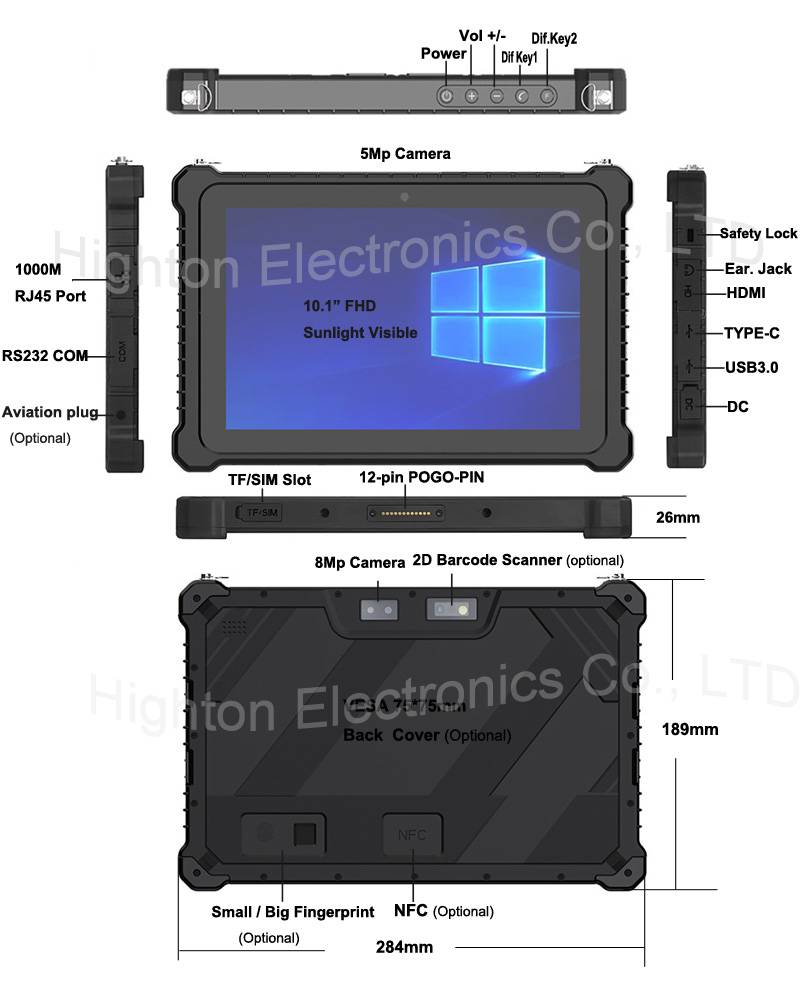

Hot Selling 10 Inch Intel N5100 I5 I7 FHD 8 +128GB 16+256GB Win10 Pro Win11 Pro 4G 5G Rugged Tablet PC Pad with NFC Barcode
Highton Electronics Co., Ltd.

GYTA Type Non-Self-Supporting Aerial/Duct Optical Cable
TONGDING INTERCONNECTION INFORMATION CO., LTD.
Flat Portable Satellite Terminal 0.35m Aperture Manual Portable Terminal
China Starwin Science & Technology Co., Ltd.
TWP16 P-Band Tropospheric Wind Profile Radar
China Huayun Meteorological Technology Group Co., Ltd.

Industrial and Commercial Point-Type Gas Detector
Jinan Benan Technology Development Co., Ltd.
Comprehensive Mining Automation Control System
Beijing Tianma Intelligent Control Technology Co., Ltd.
Mine Explosion-proof and Intrinsically Safe Industrial Ethernet Ring Network (10 Gigabit/Gigabit)
Chongqing Mas Sci&Tech Co., Ltd.