en.Wedoany.com Reported - Pure water has demonstrated the ability to store electrical energy in nanoscale clay channels, offering insights for the development of new energy storage technologies. A research team at the German Hamburg University of Technology has leveraged this principle to create a supercapacitor called the "Blue Capacitor," which uses pure water as an electrolyte to carry charge.
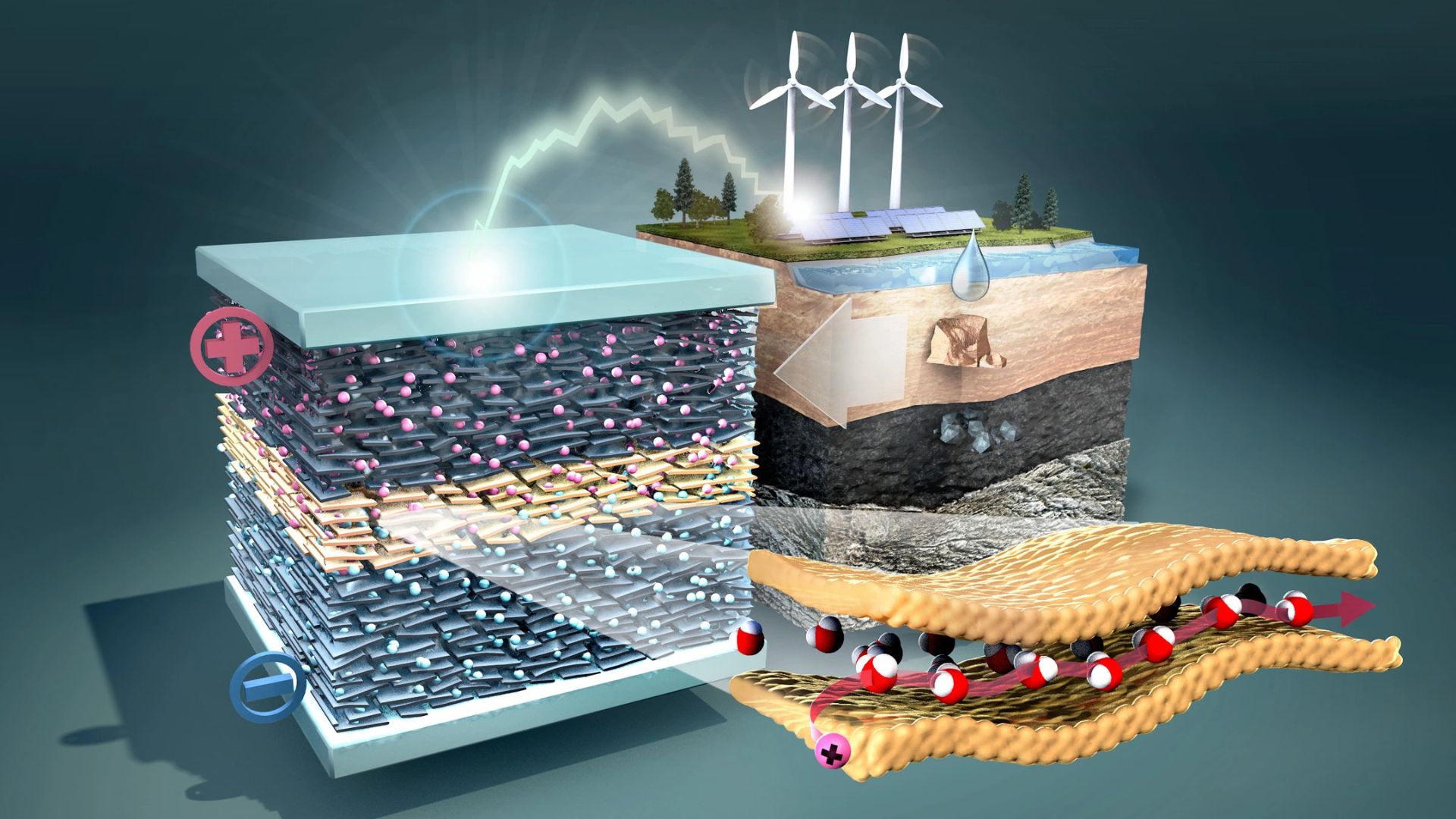
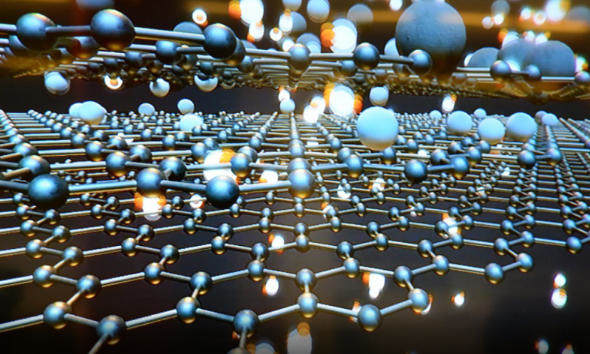
Pure water is generally considered a poor medium for energy storage because batteries and supercapacitors typically require the addition of chemical mixtures composed of salts, acids, or volatile organic solvents to conduct electricity. Vasily Artemov, a PhD candidate in the Hamburg University of Technology's Cluster of Excellence "BlueMat—Water-Driven Materials," stated that the goal of the research is to develop safer and more sustainable energy storage technologies based on abundant materials, rather than relying on complex compounds. The research team used a material composed of clay minerals mixed with graphene—an ultra-thin, highly conductive carbon material—to construct a dense labyrinthine structure consisting of millions of parallel channels. Each channel is only one nanometer wide, and pure water confined within these microscopic channels alters its fundamental liquid behavior. The device is made entirely from three of the most abundant natural materials on Earth: water, clay, and carbon.
In performance tests, this proof-of-concept device showed promising results. After more than 60,000 charge-discharge cycles, the Blue Capacitor exhibited no degradation in performance. Additionally, it can operate at a voltage of up to 1.6 volts, a high voltage threshold for water-based systems, which typically decompose into hydrogen and oxygen at lower voltages. The study's first author noted that the device efficiently stores and releases energy, operates at relatively high voltages in a water-based system, and demonstrates excellent cycling stability.
To observe this phenomenon, the research team utilized PETRA III at DESY (Deutsches Elektronen-Synchrotron), one of the world's most powerful particle accelerator research centers. Professor Patrick Huber, a co-author of the paper, stated that only with the powerful X-ray source of PETRA III could the ultra-thin layers of single water films within the clay structure be observed.
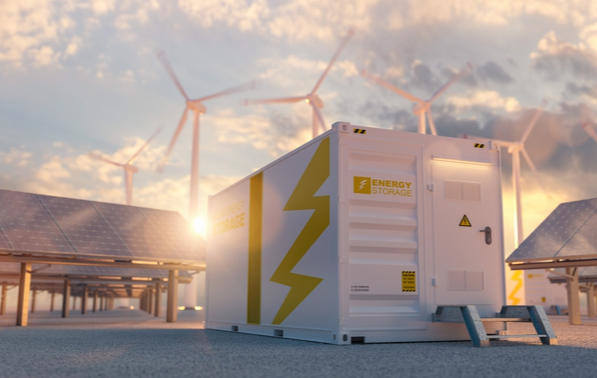
The "Blue Capacitor" is a supercapacitor that stores energy by separating charges rather than through chemical reactions, enabling fast charging and discharging capabilities along with a long service life. Researchers believe that, although commercial application is still years away, this non-toxic, non-flammable capacitor has potential applications in managing renewable energy sources such as solar and wind power, stabilizing power grids, and powering devices that require rapid charging and discharging. Furthermore, this discovery opens up avenues in the fields of water-based nanosensors and neuromorphic computing. The research findings have been published in the journal Nature Communications.
This article is compiled by Wedoany. All AI citations must indicate the source as "Wedoany". If there is any infringement or other issues, please notify us promptly, and we will modify or delete it accordingly. Email: news@wedoany.com