en.Wedoany.com Reported - Hanwha Power (formerly PSM) and Mee Industries have jointly launched a gas turbine upgrade solution aimed at increasing power generation capacity and reducing emissions. This solution combines Hanwha Power's FlameSheet combustion system retrofit with Mee Industries' wet compression technology, offering users dual benefits in power output and environmental performance. According to data from Industrial Information Resources (IIR), there are currently over 12,000 active data center projects in the United States seeking grid interconnection, corresponding to 1,570 GW of generation capacity and 1,030 GW of energy storage capacity, with monthly new project investments reaching $100 billion, placing significant pressure on gas turbines and grid capacity.
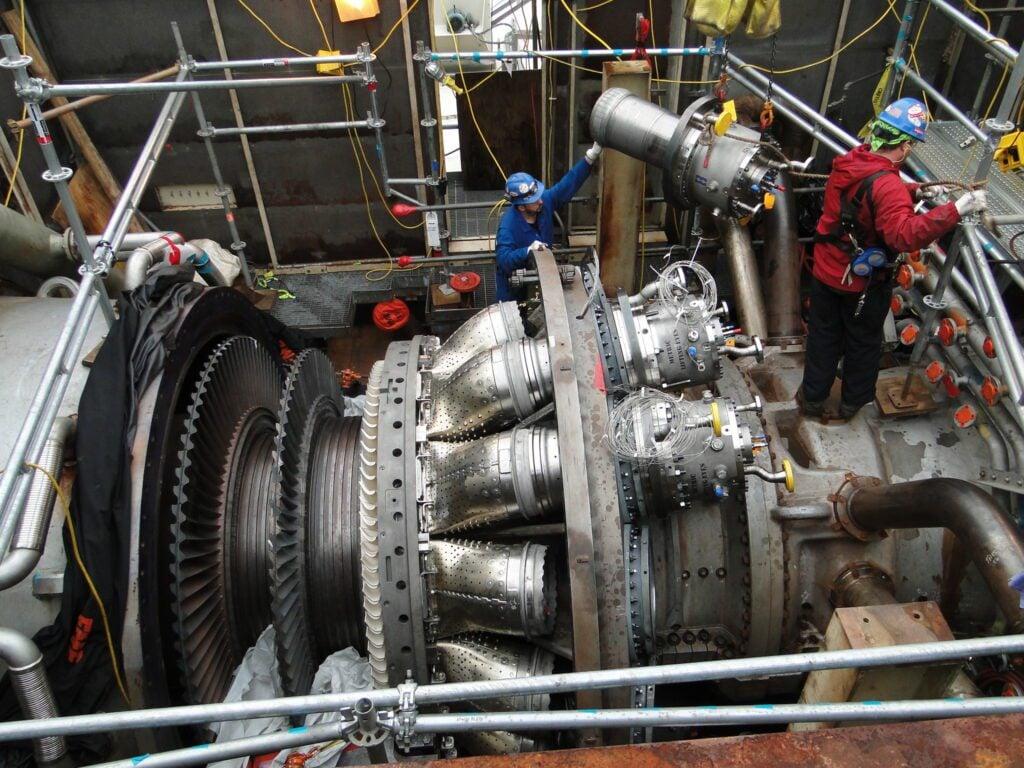
Hanwha Power's FlameSheet combustion system retrofit can increase the gas turbine load range by up to 30% while maintaining single-digit nitrogen oxide (NOx) and carbon monoxide (CO) emissions. The system features a two-stage radial inward-flow combustor nested design, enabling staged operation under different load conditions: both combustors operate at high loads, while the outer combustor primarily operates at low loads. The upgrade is applicable to F-class turbines from GE Vernova, Siemens Energy, and Mitsubishi Power, as well as B-class and E-class units from GE Vernova. For example, on a 7F.03 gas turbine, this technology can increase the low-load operating range by up to 30%, with NOx as low as 5 ppm, CO below 9 ppm, a turndown capability of up to 26%, inspection intervals of up to 32,000 hours or 1,250 starts, and fuel flexibility supporting up to 60% hydrogen by volume blending.
Mee Industries' wet compression technology enhances power output and heat rate by injecting fine deionized water mist droplets into the gas turbine intake. For every 1% of water injected, power output can increase by 5% to 10%. A 100 MW power plant can gain 10 MW of additional power with a 1% water injection, and up to 20 MW with a 2% injection. However, on 7F.03 turbines equipped with the DLN 2.6 combustion system, the value of wet compression is limited by combustion dynamics issues. Derek Grayson, a gas turbine expert at Mee Industries, stated that 1% wet compression can reduce the compressor discharge temperature by approximately 100 degrees Fahrenheit, providing 10 MW of additional output, but exceeding this threshold leads to unacceptable combustion dynamics.
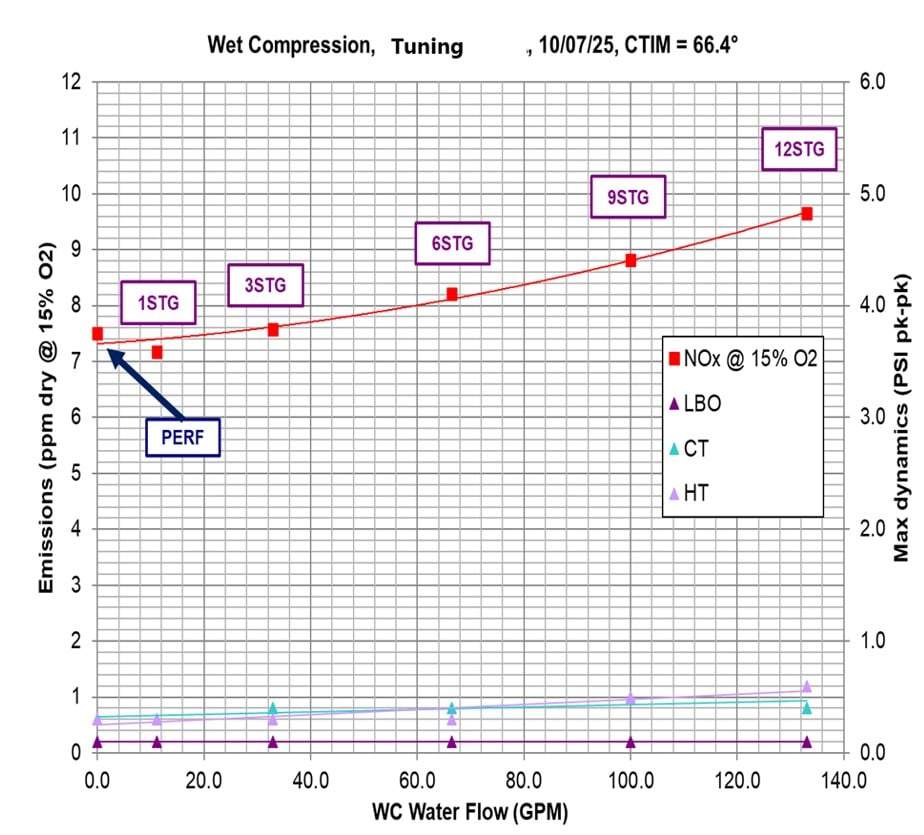
Hanwha Power and Mee Industries have collaborated to resolve this bottleneck on the 7F.03. By upgrading to the FlameSheet combustion system, the water flow rate for wet compression can be increased to 140 gallons per minute (GPM) while maintaining NOx below 10 ppm. This is because the FlameSheet combustor features multiple fuel injection stages, and by varying fuel flow between stages via the AutoTune system, combustion dynamics can be kept at acceptable levels. A 2% wet compression can provide a capacity increase of approximately 22 MW. Hany Rizhalla, Director of Service Engineering at Hanwha Power, stated that the NOx tuning capability of the FlameSheet can control emissions below 10 ppm.
The installation timeline for this combined upgrade solution is relatively short: the FlameSheet retrofit takes approximately 10 days, while the wet compression equipment installation can be completed within three days. Grayson mentioned that wet compression and FlameSheet combustion system upgrades have recently been successfully implemented on two 7F.03 units at a gas turbine plant, and the upgrade package is planned to be applied to the remaining six 7F.03 units on site.
This article is compiled by Wedoany. All AI citations must indicate the source as "Wedoany". If there is any infringement or other issues, please notify us promptly, and we will modify or delete it accordingly. Email: news@wedoany.com