en.Wedoany.com Reported - Turkey's Pipeline Corporation (BOTAS) and Azerbaijan's State Oil Company (SOCAR) signed a 15-year natural gas supply agreement at Baku Energy Week. Under the agreement, Azerbaijan commits to deliver 33 billion cubic meters of natural gas to Turkey between 2029 and 2044. French energy giant TotalEnergies and Abu Dhabi National Oil Company (ADNOC) joined the agreement as co-signatories. Turkey's Energy and Natural Resources Ministry stated that the agreement marks a new phase in the long-term energy partnership between the two countries.
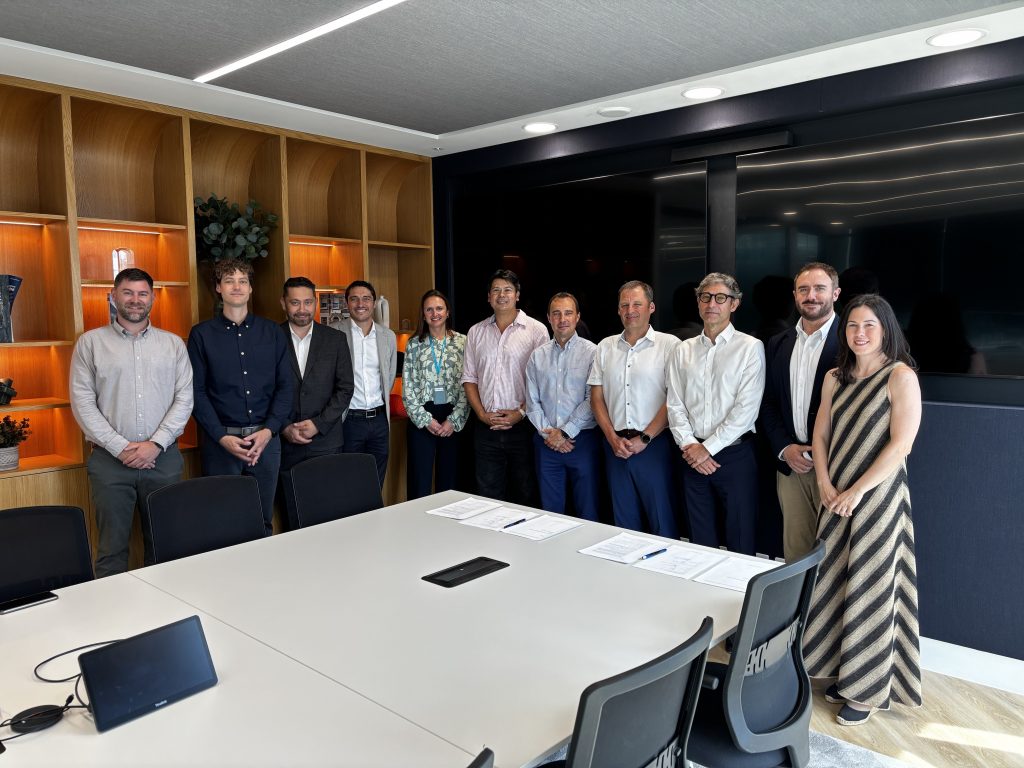
The signing ceremony took place during Baku Energy Week. BOTAS, SOCAR, TotalEnergies, and ADNOC all signed the agreement, demonstrating broad multilateral support. The presence of a French giant and a Gulf state oil company alongside two state-owned energy firms underscores the scale of ambition behind the agreement.
Turkey's Energy and Natural Resources Ministry commented that the agreement marks a new stage in bilateral energy relations between Ankara and Baku. This partnership has been built on decades of shared infrastructure and upstream cooperation.
The gas committed under the agreement will primarily come from the Absheron gas-condensate field, located approximately 100 kilometers southeast of Baku in the Caspian Sea. The field is estimated to hold 350 billion cubic meters of natural gas reserves and about 45 million tons of condensate, making it one of Azerbaijan's most significant offshore discoveries. Commercial production at the Absheron field began in 2023 during its first phase, led jointly by SOCAR and TotalEnergies. Expansion phases have been planned, with production expected to grow significantly in the coming years, aligning with the delivery timeline of the new supply agreement, which does not begin until 2029. This interval allows time for capacity expansion to meet initial deliveries.
Turkey's Energy and Natural Resources Ministry made clear that the agreement goes beyond a bilateral gas transaction. Officials stated that it advances Ankara's broader goal of positioning the country as a regional energy hub, a strategic objective that has shaped Turkey's energy policy for years. The ministry noted that increased supply from Azerbaijan will benefit not only Turkey but also neighboring countries and European markets. This framing places the agreement within a wider geopolitical context, particularly as Europe continues to seek alternatives to Russian pipeline gas.
Minister Alparslan Bayraktar pointed out that the Trans-Anatolian Natural Gas Pipeline (TANAP), as a key piece of infrastructure, has room for growth, with significant unused capacity currently available. He emphasized the importance of fully utilizing this pipeline. Bayraktar also announced that Turkey is actively negotiating additional supply agreements while expanding natural gas and electricity interconnections with neighboring countries and European partners.
President Recep Tayyip Erdogan, speaking at the opening of Baku Energy Week, placed the new agreement within the history of long-term Azerbaijan-Turkey energy cooperation. He cited the Baku-Tbilisi-Ceyhan oil pipeline, the Baku-Tbilisi-Erzurum natural gas pipeline, and TANAP as evidence of the depth of bilateral infrastructure ties, and mentioned cooperation on the Azeri-Chirag-Gunashli and Shah Deniz fields, as well as the emerging Shafag-Asiman project.
Erdogan further pointed to Turkmenistan. "We face significant opportunities to further develop cooperation in exporting Turkmen gas through Azerbaijan and Turkey," he said. This comment drew attention to the concept of the Trans-Caspian Pipeline, a proposed plan to transport Turkmen gas across the Caspian Sea to Azerbaijan, and then via the Southern Gas Corridor to Turkey and Europe. The project has not progressed beyond the discussion stage and remains a prospect rather than a commitment, although both Erdogan and Bayraktar hinted that momentum behind the initiative is growing.
The BOTAS-SOCAR agreement covers 33 billion cubic meters of natural gas over 15 years, with deliveries scheduled from 2029 to 2044. The Absheron gas-condensate field, now in commercial production, is expected to be the primary source of supply. TotalEnergies and ADNOC are co-signatories, giving the agreement a distinctly international character. Turkey views the agreement as part of its energy hub strategy, with TANAP's spare capacity positioned as a ready-made delivery channel. Turkmen gas transit remains under discussion but has not yet advanced to the implementation stage. Meanwhile, Ankara is pursuing further supply agreements and infrastructure connections with neighboring countries and European partners.
This article is compiled by Wedoany. All AI citations must indicate the source as "Wedoany". If there is any infringement or other issues, please notify us promptly, and we will modify or delete it accordingly. Email: news@wedoany.com