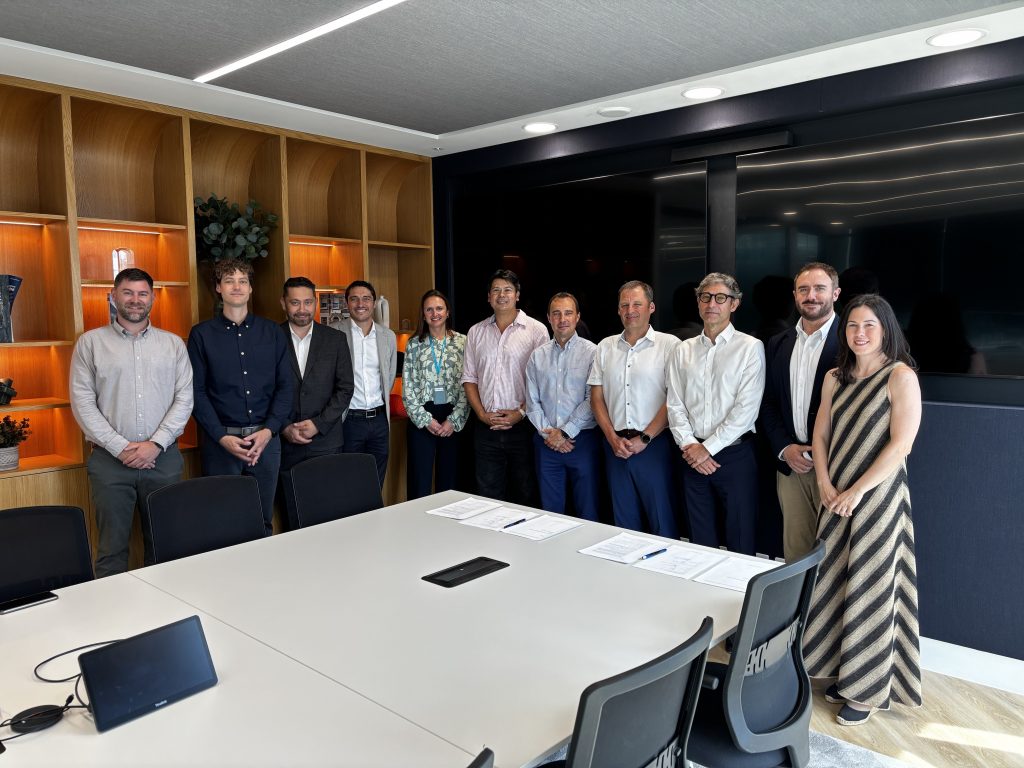
en.Wedoany.com Reported - Star Catcher, a developer of orbital solar energy collection and transmission technology, recently completed a $65 million financing round, led by B Capital of California. To date, the company's total funding has increased to $88 million.

According to industry observation reports, a record 4,500 objects were launched into space in 2025, the vast majority of which are powered by satellite solar arrays. The expanding demands of missions such as communications, Earth observation, science, security, and space-based data centers are driving up in-orbit energy needs. Andrew Rush, co-founder and CEO of Star Catcher, stated that the company focuses on providing solar power to in-orbit consumers, a model distinct from other space-based power suppliers. He noted that currently, each satellite acts as a microgrid, operating on solar energy when facing the sun and relying on batteries when in shadow, a situation akin to the pre-industrial era when water wheels powered mills.
Star Catcher plans to deploy a constellation of solar energy collection and distribution stations approximately 1,000 miles above Low Earth Orbit (LEO). These stations use Fresnel lenses to concentrate sunlight, convert it to compatible wavelengths, and transmit it via lasers to existing satellite solar panels. The company claims that client satellites can receive up to ten times the power they generate themselves without requiring modification or redesign. Rush described the envisioned network as power nodes, capable of continuously serving LEO through one or two nodes.
In 2025, Star Catcher completed a series of optical power beam transmission tests at NASA's Kennedy Space Center. The team transmitted over 1.1 kilowatts of electrical power to commercial solar panels using multi-wavelength lasers, breaking the previous record of 800 watts set by the Defense Advanced Research Projects Agency (DARPA). During the demonstration, the company wirelessly transmitted energy to and charged the onboard battery of Intuitive Machines' lunar terrain vehicle. In April, the company completed an in-orbit demonstration of spacecraft tracking and pointing capabilities on a test satellite operated by Loft Orbital. Loft Orbital is among the first customers to sign a power purchase agreement with Star Catcher. The company plans to conduct a space-based optical power beam transmission demonstration later this year.
Rush explained that the decision to deploy the first power nodes in the region above LEO was based on two considerations: relative ease of access using existing launch services, and the ability for the power nodes to serve nearby client satellites from a roughly sun-facing orientation. Notably, retired General John W. Raymond, former Chief of Space Operations for the U.S. Space Force, has joined Star Catcher's board of directors. Rush stated that every satellite in space could benefit from receiving energy from the Star Catcher network, as the technology can apply more flux to the arrays, keeping satellites operational in their early life stages. Furthermore, future satellites could allocate less mass to power collection and storage, freeing up space for mission payloads—a model of resources collected in space and used for space that could be more transformative.
This article is compiled by Wedoany. All AI citations must indicate the source as "Wedoany". If there is any infringement or other issues, please notify us promptly, and we will modify or delete it accordingly. Email: news@wedoany.com