en.Wedoany.com Reported - German Electron Synchrotron (DESY) research team, using the PETRA III X-ray source, has observed for the first time in real time the formation of an oxide layer on a platinum surface when it comes into contact with a water electrolyte under voltage. This discovery aids in developing more durable hydrogen energy technologies, with the findings published in the professional journal Nature Communications.
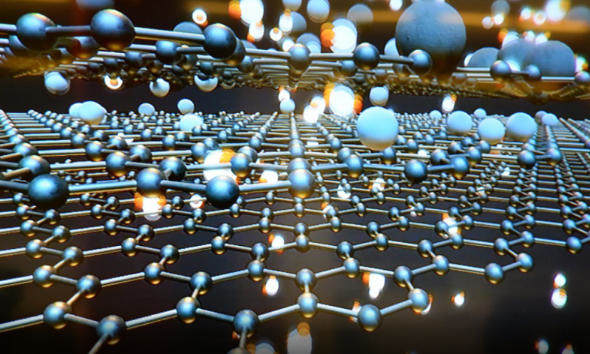
Platinum is a key material in electrolyzers and fuel cells, accelerating the chemical reactions required for hydrogen production or power generation. However, under high voltage, the material's surface changes, and catalytic activity gradually decreases over time. The research team employed three complementary high-resolution X-ray methods to study in parallel the atomic structure, oxide layer thickness, and chemical composition of the platinum surface at the atomic level, tracking these changes in real time under realistic reaction conditions.
Measurement results show that, depending on the voltage level, a thin oxide layer gradually forms on the platinum surface, altering the material's internal structure. The oxidation process proceeds atom by atom, forming a disordered platinum oxide layer under high voltage. "What we see is a balance between stability and activity," said Andreas Stierle, lead scientist at DESY and professor at the University of Hamburg. "The oxide layer partially protects the platinum surface from further material loss, but it also reduces the catalyst's efficiency. A better understanding of these processes is crucial for developing more durable materials for electrolyzers and fuel cells."
Leon Jacobse, first author of the paper and former researcher at DESY's Center for X-ray and Nano Science (CXNS), noted that the key advance lies in combining state-of-the-art synchrotron radiation with established methods in fundamental electrochemical research, enabling the study to track atomic-level changes as the reaction actually occurs. Vedran Vonk from Andreas Stierle's team added that this new combination of methods allows real-time tracking of structural changes in catalysts under conditions close to actual use, directly linking material performance to aging processes.
Researchers stated that only by accurately understanding the minute atomic-level processes on platinum can new ideas be used to combat aging. Vedran Vonk further indicated that this opens up new possibilities for other electrochemical processes, such as battery technologies that face similar aging issues. Future research will focus on changes in catalyst materials closer to practical applications, such as platinum nanoparticles, under operating conditions. The long-term goal is to help develop resource-efficient, lower-cost electrolyzer materials, promoting more efficient and economical hydrogen energy technologies.
Institutions involved in the study include DESY's Center for X-ray and Nano Science (CXNS), the University of Hamburg, Friedrich-Alexander University Erlangen-Nuremberg, and Justus Liebig University Giessen.
This article is compiled by Wedoany. All AI citations must indicate the source as "Wedoany". If there is any infringement or other issues, please notify us promptly, and we will modify or delete it accordingly. Email: news@wedoany.com