en.Wedoany.com Reported - On June 15 local time, SpaceX announced that underwriters had fully exercised the over-allotment option for its initial public offering, raising approximately $85.7 billion through the IPO. Previously, SpaceX sold about 556 million shares at $135 per share, with an initial fundraising scale of approximately $75 billion; after the full exercise of the over-allotment option, underwriters purchased an additional 83.3 million shares, further expanding the total financing. The transaction is seen by the market as a new benchmark for global IPO fundraising scale, propelling SpaceX from a long-standing private aerospace company to the core of public capital markets.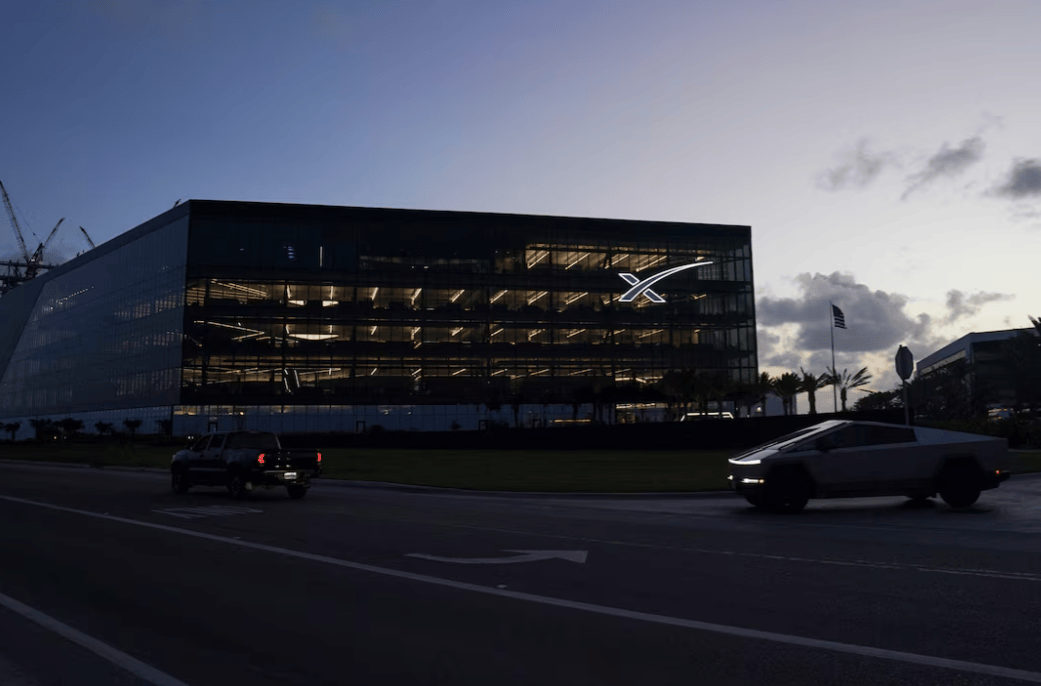
The over-allotment option, also known as the "greenshoe mechanism," typically allows underwriters to purchase additional shares at the offering price when market demand is strong, stabilizing early trading and expanding the final fundraising scale. SpaceX's IPO saw strong institutional demand, and underwriters fully exercised this mechanism, indicating robust market absorption capacity post-issuance. Public reports show that SpaceX's stock rose on its first day of trading on the Nasdaq and continued to climb, with the company's market capitalization once exceeding $2 trillion. For investors, SpaceX combines multiple narratives—reusable rockets, Starlink satellite internet, government space contracts, and future space infrastructure—garnering far greater market attention during the IPO phase than typical tech companies.
The uniqueness of this financing lies in the fact that it is not the listing of a traditional satellite manufacturer or a single rocket company, but rather a comprehensive platform covering launch vehicles, satellite internet, space services, and potential AI infrastructure entering the public market. SpaceX builds launch capabilities through the Falcon rocket and Starship program, provides low-Earth orbit satellite broadband services globally via Starlink, and generates diversified revenue streams from government, commercial aerospace, mobile communications, and maritime and aviation connectivity. With an IPO fundraising scale of $85.7 billion, the company will secure more ample long-term capital to support rocket system iterations, Starlink expansion, ground terminals, satellite manufacturing, and potential new business development.
From a capital market perspective, SpaceX's IPO also reflects a shift in how large tech and infrastructure companies raise funds. In the past, mega-scale listing projects primarily came from energy, finance, or platform-based internet companies; now, aerospace and satellite communications firms can enter public markets with valuations approaching those of national infrastructure. SpaceX's listing not only provides liquidity for early shareholders and employees but also offers global institutional investors a direct entry point into commercial aerospace and satellite internet assets. The $85.7 billion fundraising scale will further raise market expectations for subsequent IPOs in AI, aerospace, cloud computing, and deep tech.
However, the scale of fundraising and trading enthusiasm does not eliminate risks. SpaceX still faces multiple challenges, including Starship R&D investment, launch safety, spectrum and regulatory issues, Starlink competition, capital expenditures, and future growth realization. While Starlink provides a recurring revenue base, the low-Earth orbit satellite constellation requires continuous launches, replenishment, and maintenance; deep-space missions, as well as lunar and Mars plans, will also consume funds over the long term. Public market investors will increasingly focus on SpaceX's revenue growth, cash flow, R&D spending, contract stability, and business boundaries, rather than relying solely on private market narratives for valuation.
This IPO will also reshape the global aerospace industry's competitive landscape. With enhanced public financing capabilities, SpaceX can more proactively allocate capital to further increase rocket launch frequency, satellite manufacturing capacity, and Starlink service coverage. Competitors—whether traditional aerospace groups, satellite operators, or low-Earth orbit constellation projects—will face a rival with stronger financial resources, greater market transparency, and broader brand influence. At the same time, SpaceX's listing may prompt more commercial aerospace companies to reassess their capital pathways, driving further integration of the aerospace industry with public markets, long-term funds, and infrastructure capital.
SpaceX raising approximately $85.7 billion through its IPO marks a new phase for commercial aerospace companies entering capital markets. The full exercise of the over-allotment option indicates that investors still hold strong expectations for its long-term growth; however, the true test post-listing will be whether the company can convert rocket reusability, the Starlink network, and future space infrastructure into sustained revenue and stable cash flow. As SpaceX becomes a public market entity, the valuation, financing, and competitive logic of the commercial aerospace industry will enter a new observation cycle.
This article is compiled by Wedoany. All AI citations must indicate the source as "Wedoany". If there is any infringement or other issues, please notify us promptly, and we will modify or delete it accordingly. Email: news@wedoany.com