en.Wedoany.com Reported - LH2 Shipping has received a grant of NOK 344.3 million from Enova, a Norwegian government agency, to develop and build its fifth and sixth liquid hydrogen-powered bulk carriers. Combined with previously approved funding, the total support for this company's six hydrogen-powered bulk carrier project has exceeded NOK 800 million, further strengthening Norway's investment momentum in hydrogen-powered shipping.
The new project continues LH2 Shipping's long-term strategy of developing commercially deployable hydrogen-powered vessels, aiming to simultaneously advance the supporting fuel and bunkering infrastructure needed for large-scale application. Since launching one of the world's first hydrogen-powered bulk carrier projects, the company has been committed to transitioning from demonstration concepts to commercially operable vessel designs. The addition of two new vessels expands the project portfolio and helps accumulate ongoing experience in ship design, fuel systems, operations, and infrastructure.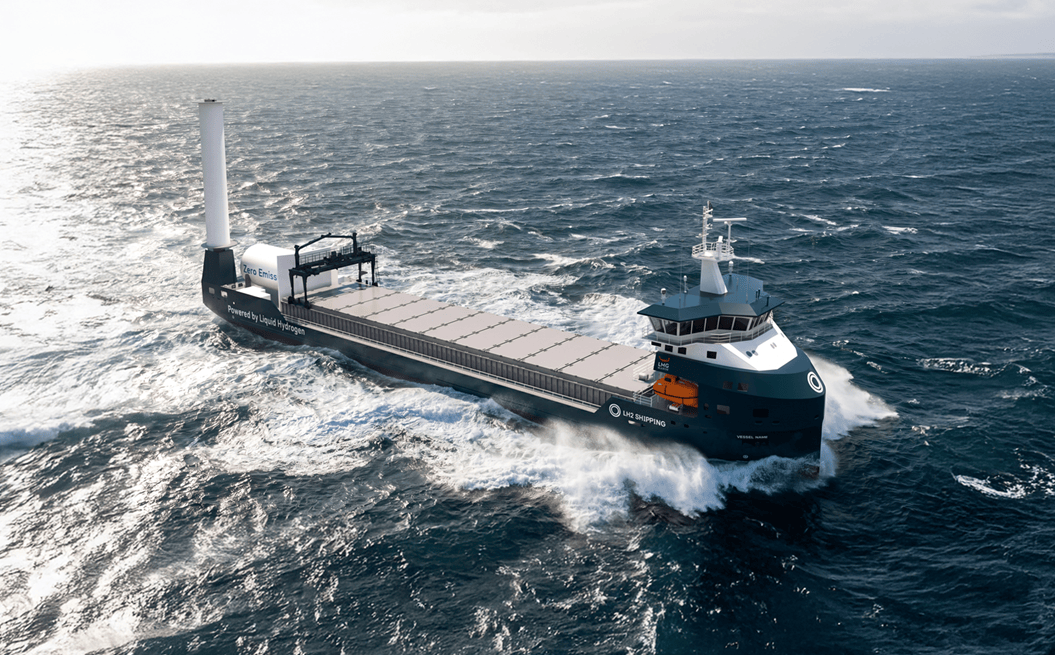
Elin Ulstad Stokland, Head of Hydrogen and Ammonia Initiatives at Enova, stated that achieving low-emission and zero-emission transitions in the maritime sector requires pioneers willing to take the first step, and LH2 Shipping demonstrates how shipping companies can lead and adopt new technologies, which is crucial for accelerating decarbonization. She emphasized that accelerating development and reducing shipping emissions require industry-leading practices.
Beyond bulk transport, Enova's support will indirectly enable LH2 Shipping to continue developing additional zero-emission solutions in passenger transport and offshore operations, thereby assisting Norway's broader transition to a low-emission maritime sector. Although significant work remains before hydrogen can be widely deployed in the industry, LH2 Shipping believes that sustained project execution, infrastructure development, and collaboration across the maritime value chain are key to achieving zero-emission shipping. These projects provide ship operators with scalable opportunities to decarbonize bulk transport while driving the accumulation of experience and infrastructure capabilities needed across the industry.
This article is compiled by Wedoany. All AI citations must indicate the source as "Wedoany". If there is any infringement or other issues, please notify us promptly, and we will modify or delete it accordingly. Email: news@wedoany.com