en.Wedoany.com Reported - Chinese internet company ByteDance is in discussions with Shanghai-based artificial intelligence chip company Tianshu Zhixin to purchase at least 50,000 AI inference chips, primarily for large model inference workloads. The products involved in the current negotiations correspond to Tianshu Zhixin's "智铠" series of cloud-based inference GPUs, while training scenarios mainly correspond to its "天垓" series. If the deal is reached, Tianshu Zhixin will become one of ByteDance's key domestic GPU suppliers, following Huawei and Cambricon.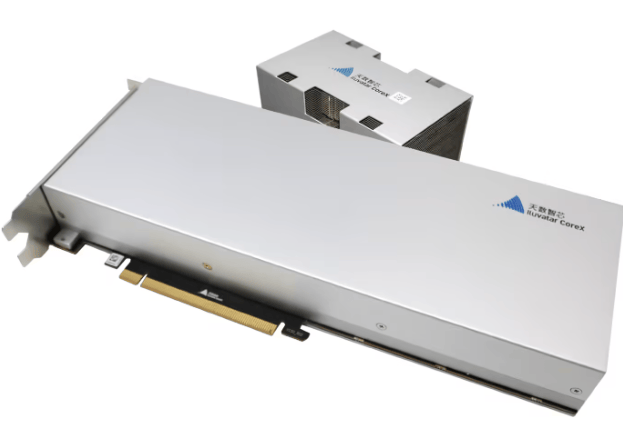
This potential procurement points to new developments in ByteDance's data center construction and domestic computing power layout. Compared to model training, the inference phase involves the process where large models generate responses to user requests, handle multi-turn conversations, and complete content generation tasks. It features high call frequency and significant concurrency pressure, making it more sensitive to chip supply scale and unit cost. As the user base of AI products like Doubao expands, a stable supply of inference chips is becoming a critical component of the computing power infrastructure for major internet companies.
Founded in 2015 and headquartered in Shanghai, Tianshu Zhixin specializes in general-purpose GPUs and AI acceleration chips. Its product line covers training, inference, and edge devices, with the "天垓" series targeting training scenarios, the "智铠" series targeting cloud and edge inference scenarios, and the "彤央" series targeting end-side applications such as robots and smart terminals. If ByteDance ultimately adopts the "智铠" series, it will signify further progress in the large-scale deployment of domestic inference chips within major internet platforms.
From a supply chain perspective, ByteDance's increased procurement of domestic chips goes beyond supplementing a single supply source. The demand for computing power in AI business is shifting from phased training tasks to long-term, high-frequency, low-latency inference services. Companies need to simultaneously configure training chips, inference chips, networks, storage, and data center resources. A multi-supplier strategy helps mitigate the impact of fluctuations in a single chip source on business continuity and allows for matching more suitable hardware solutions to different models and business scenarios.
Major internet companies are racing to build moats in computing power. In the past, computing power investments were more centered around cloud servers and general-purpose data centers. Now, large model applications require companies to possess stronger capabilities in AI inference chip scheduling, model adaptation, and cluster operations and maintenance. Whoever can support higher concurrency inference at a lower cost will gain more stable product iteration space in areas such as chatbots, video generation, search recommendations, advertising, and enterprise intelligent services.
The details of the transaction have not yet been finalized, and the procurement quantity, delivery schedule, actual deployment scenarios, and subsequent expansion scale may still change. For Tianshu Zhixin, entering ByteDance's core computing power supply chain would mark a significant milestone in its expansion from government procurement and industry clients to large internet customers. For ByteDance, whether domestic computing power can operate stably in real inference workloads will directly impact the cost structure and service capabilities of its AI products.
This article is compiled by Wedoany. All AI citations must indicate the source as "Wedoany". If there is any infringement or other issues, please notify us promptly, and we will modify or delete it accordingly. Email: news@wedoany.com