France Expands AI Infrastructure with NVIDIA, Including a 44 MW Data Center
en.Wedoany.com Reported - France is putting into action the local AI advancement plans set forth at NVIDIA GTC Paris during VivaTech a year ago, with new AI factories and national computing power coming online. AI agents are entering production, startups are accelerating application deployment, and models, datasets, and platforms tailored to local languages, cultural contexts, and European needs are under development.

France's AI infrastructure is taking shape. Through the France 2030 plan, the 2025 AI Action Summit, and this year's Choose France Summit, billions of euros in investment commitments have solidified France's position as a leading destination for AI infrastructure in Europe. Mistral is building a new 44 MW data center in Bruyères-le-Châtel, a commune in northern France. Announced at last year's GTC Paris, its first deployment is already operational, equipped with 18,000 NVIDIA GB200 systems, laying the groundwork for the company's roadmap to achieve 200 MW of computing power in Europe by 2027. The NVIDIA Blackwell platform helps AI factories maximize throughput within a fixed power budget, enhancing data center throughput in power-constrained environments by combining more energy-efficient chips and software features. Mistral is also collaborating with French public investment bank Bpifrance, AI and advanced technology investment company MGX, and NVIDIA to expand Campus AI—a network of AI factories centered around a planned 1.4 GW facility, making it one of the largest AI campuses in Europe.
European public cloud provider Scaleway now offers NVIDIA Blackwell B300-SXM instances, enabling developers and enterprises to access accelerated computing on demand. Bull and Foxconn have announced the production of the NVIDIA Vera Rubin NVL72 in Europe. Systems will be manufactured and initially tested at Foxconn's facility in the Czech Republic, then assembled, integrated, and fully validated at Bull's plant in Angers, France. A consortium of eight leading French companies has submitted a bid to host a European AI superfactory in France, aiming to strengthen European AI infrastructure and accelerate AI applications. Schneider Electric has partnered with NVIDIA to develop blueprints for gigawatt-scale AI factories, helping organizations accelerate AI infrastructure deployment.
France's AI ecosystem is producing models, datasets, and platforms tailored to local languages, cultural contexts, and European business and regulatory requirements. At this year's VivaTech event, leaders from Gradium, H Company, LINAGORA, Pleias, and NVIDIA discussed the role of open models in providing more transparent, customizable, and locally relevant AI, combining open models with energy-efficient infrastructure to give organizations the control needed to inspect, adapt, deploy, and audit AI in compliance with European standards for compliance and trust. NVIDIA Nemotron helps model builders accelerate workflows from training to deployment by providing open models, datasets, and playbooks. Mistral, a founding member of the NVIDIA Nemotron Coalition—a collaborative network of AI builders for open frontier models—is contributing model development expertise and multimodal capabilities. LINAGORA is building multilingual large language models. Its Luciole model series, developed using NVIDIA Nemotron and NeMo libraries, with 1B, 8B, and 23B versions pre-trained on Jean-Zay—one of Europe's most powerful and eco-efficient AI supercomputers—in collaboration with CNRS/IDRIS under the OpenLLM-France project framework. These open-source models and their pre-training datasets have been released on Hugging Face. H Company is developing Holotron, a series of AI agents built on open NVIDIA Nemotron models. These computer-using agents can interact with any software interface like a human, without the need for application programming interfaces or custom integrations, and can automate complex enterprise workflows end-to-end. Pleias, in partnership with NVIDIA, has developed Nemotron-Personas-France and Nemotron-Personas-Belgium, privacy-preserving synthetic persona datasets based on French and Belgian demographics and cultural backgrounds. It also trains compact language models on fully open, well-documented datasets using Jean Zay, making it easier for users to meet the EU AI Act's requirements for data provenance and transparency.
The shift from pilot to production has been the defining story of the past year. Collaboration between the French AI Factory (AI2F) led by GENCI, NVIDIA Inception, and NVIDIA Connect projects is helping startups access national supercomputing resources, including Jean Zay. Early participants include Pleias, Nebula, and Ryax Technologies, which have transformed these resources into deployable applications. In healthcare, Sanofi is deploying AI agents across its entire value chain, covering R&D, manufacturing, commercial operations, and daily operations like procurement and IT. In partnership with Owkin and Biolevate, it is developing autonomous agents for drug discovery and development. Telecom company Orange's B2B subsidiary, Orange Business, adopts an "inside-out" approach, first testing and rolling out its Live Intelligence GenAI platform internally, with over 100,000 active users across the company. It also offers the platform as a trusted agent AI solution to European businesses and public sector organizations, enabling them to adopt AI securely while hosting data locally. Stellantis has announced a strategic plan to advance AI-based digital twins across its global manufacturing footprint. Dassault Systèmes is combining virtual twins with AI infrastructure and open models on its agent-based 3DEXPERIENCE platform, driven by scientifically validated industry world models. TotalEnergies is building Pangea 5, a next-generation supercomputer developed in collaboration with Dell Technologies and NVIDIA, which will support seismic imaging, advanced simulation, and AI-driven research in the energy sector. L'Oréal uses the CreAltech platform to combine generative AI with 3D digital twins, helping creative teams scale content production across global markets while maintaining brand consistency and responsible AI practices. France's trajectory has shifted from announcing AI ambitions to deploying the infrastructure, models, and applications needed to realize them, making it one of the most dynamic AI development environments in Europe. The foundation has been laid.
Pierre-Carl Langlais, CTO of Pleias, stated that what we are now seeing is a shift from building single, isolated models to running a continuous model infrastructure, where models train the next model, manage data, generate synthetic environments, and validate reinforcement learning. Open model infrastructure is a straightforward way to ensure that many can build AI and that frontier practices can spread throughout the economy.
This article is compiled by Wedoany. All AI citations must indicate the source as "Wedoany". If there is any infringement or other issues, please notify us promptly, and we will modify or delete it accordingly. Email: news@wedoany.com
Related Products
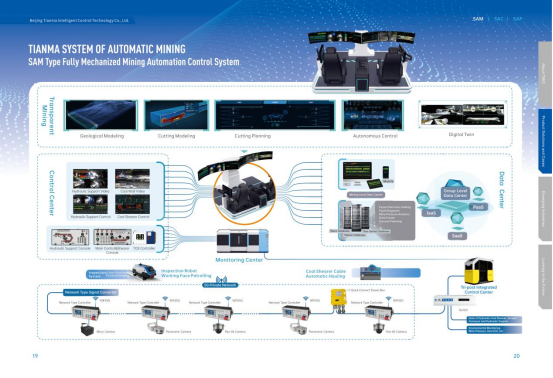

Comprehensive Mining Automation Control System
Beijing Tianma Intelligent Control Technology Co., Ltd.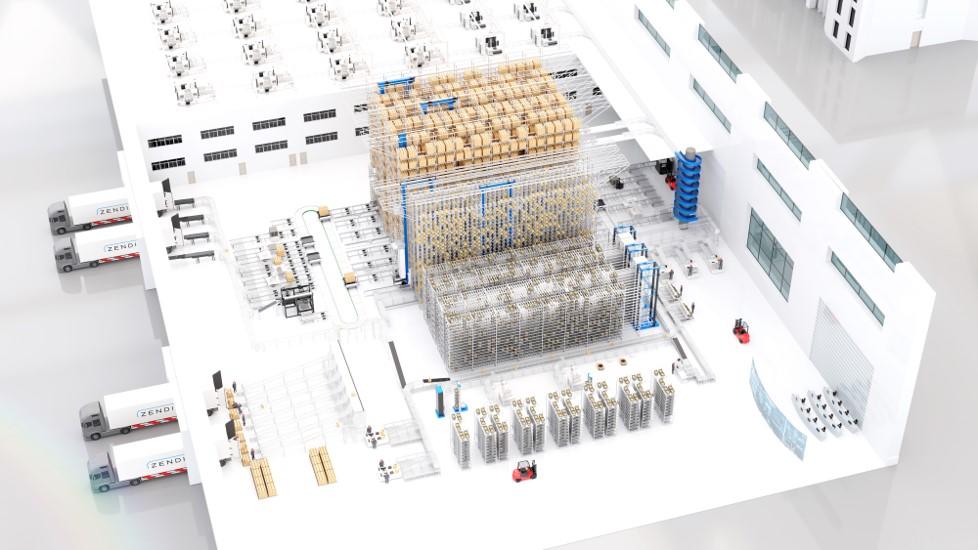
One-Stop Steward Service for the Entire Logistics System Integration Chain
Zhongding Intelligent (Wuxi) Technology Co., Ltd.
Flat Portable Satellite Terminal 0.35m Aperture Manual Portable Terminal
China Starwin Science & Technology Co., Ltd.
Conveyor Belt Intelligent Monitoring System
LUO YANG WIRE ROPE INSPECTION TECHNOLOGY CO., LTD.
TWP16 P-Band Tropospheric Wind Profile Radar
China Huayun Meteorological Technology Group Co., Ltd.