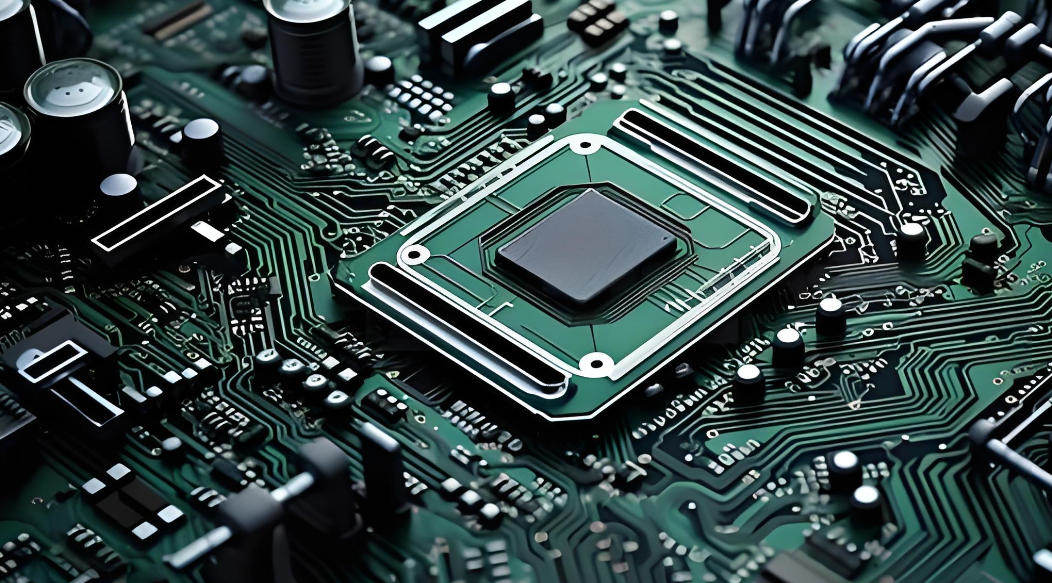
en.Wedoany.com Reported - Morgan Stanley recently released a research report indicating that the rise of Agentic AI is driving CPUs to shift from a supporting role in AI computing clusters back to the center of system orchestration. The report estimates that the global total addressable market (TAM) for server CPUs will reach $223 billion by 2030, approximately six times the $37 billion in 2025, forming a hundred-billion-dollar incremental market.
Key insights from the report show that Agentic AI emphasizes autonomous task orchestration and execution, requiring frequent tool calls and multi-step reasoning, resulting in CPU-side processing accounting for 50% to 90% of total latency. Previously, the CPU-to-GPU ratio in AI clusters was often 1:4 or even 1:8, but the report expects this ratio to return to 1:1 or higher, making CPUs the critical orchestration hub for system efficiency and avoiding costly GPU idling. Against the backdrop of energy constraints, the Arm architecture, with its per-watt performance advantage, is seen as a natural fit for Agentic AI workloads. The report also notes that AI accelerator power consumption will reach 37 GW by 2028, while CPUs account for only 5% to 10% of power consumption in AI servers, making Arm CPUs a primary viable path to reduce total energy consumption.
In terms of market size forecasts, the significantly revised TAM is based on core assumptions: AI capital expenditure of $3.5 trillion by 2030, corresponding to 70 GW of AI data center deployment; a CPU-to-GPU unit ratio of 1:1 for inference and 0.5:1 for training; and a CPU average selling price at 13% of GPU. This yields an Agentic AI-related CPU market of $174 billion, plus approximately $49.4 billion for non-AI general-purpose CPUs, totaling $223 billion. The report also cross-validates using an estimate of "120 million CPU cores per GW," with 70 GW corresponding to 8.4 billion cores, and at $20 per core, the AI CPU market is approximately $168 billion. Sensitivity analysis shows that if AI capital expenditure drops to $3 trillion and the ratio falls to 0.5:1, the TAM would decline to $137 billion; if it reaches $4 trillion and the ratio rises to 1.5:1, the TAM could reach $330 billion.
Regarding key beneficiaries, Arm is seen as the biggest structural beneficiary of this CPU renaissance. The report expects Arm's share in cloud service providers' self-developed CPUs to rise from 25% in 2025 to 36% in 2030, with clients like NVIDIA and Microsoft already adopting the Arm architecture. In March 2026, Arm announced the launch of its own "AGI CPU" chip, with Meta as its first customer. The report uses FY31 EPS for valuation, assigning a 70x PE to the IP business and 40x PE to the silicon business. AMD and Intel, the two x86 giants, will benefit from higher-than-expected server demand, but AMD has a more pronounced product portfolio advantage, while Intel faces supply shortages due to misjudging demand. Haiguang Information, as China's leading x86 server CPU player, is expected to see its market share in China rise from around 20% currently to over 35% by 2030, expanding beyond government customers into the public cloud market. Constrained by AI chip export controls, China's share of the global x86 CPU TAM will first decline and then recover, returning to about 27% after 2028. NVIDIA's Vera CPU and DGX rack systems will significantly boost Arm CPU shipments; SoftBank, as Arm's controlling shareholder, will see its NAV increase due to Arm's valuation rise.
The report concludes that Agentic AI is not only a paradigm shift in software but also drives a fundamental restructuring of hardware ratios. The expansion of the CPU market will reshape the value distribution landscape of the semiconductor industry, but its realization is highly dependent on sustained above-expectation AI capital expenditure, the pace of capacity release, and the evolution of cloud service providers' cost strategies.
This article is compiled by Wedoany. All AI citations must indicate the source as "Wedoany". If there is any infringement or other issues, please notify us promptly, and we will modify or delete it accordingly. Email: news@wedoany.com