Nikon SLM and Bosch 3D Print Complete V8 Engine Block in Germany
en.Wedoany.com Reported - Nikon SLM Solutions, in collaboration with Bosch Industry Consulting, has produced a complete V8 engine block using aluminum alloy AlSi10Mg via metal additive manufacturing. The component was manufactured on the NXG XII 600 multi-laser system at the Bosch Additive Solution Center in Germany, Nuremberg, marking a step forward for metal additive manufacturing from prototyping to complex, high-value automotive applications, where the process can compete with and work alongside traditional production methods.
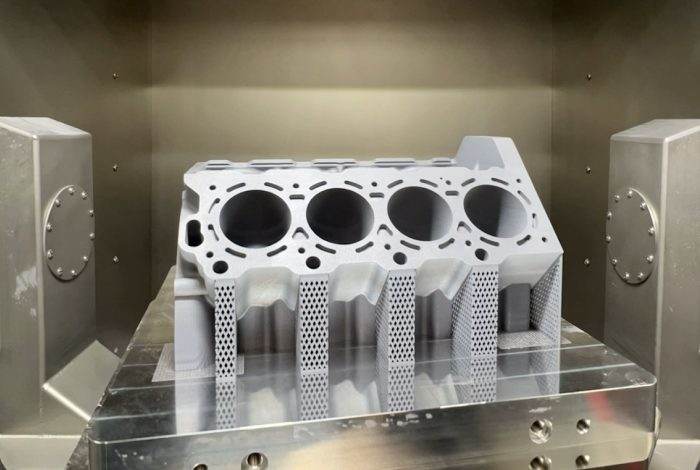
Traditional casting for engine blocks requires tooling development, a process that can take weeks or months, with subsequent design changes necessitating tooling modifications that incur additional time and cost. The casting process itself also limits the geometric complexity of the component. With additive manufacturing, these constraints are eliminated, allowing complex geometries to be generated directly from digital files without the lead time required for casting. This design freedom enables features that are difficult or uneconomical to cast, including internal cooling channels within the block, weight-reducing structures, and the consolidation of multiple separate components into one.
The project followed Design for Additive Manufacturing (DfAM) principles, with material placed only where required by structural analysis and removed in other areas, resulting in a block significantly lighter than its cast equivalent without compromising performance. Both companies stated that this weight reduction is applicable to motorsports and high-performance powertrain sectors.
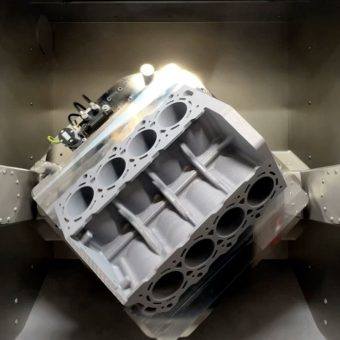
As one of the world's largest Tier 1 automotive suppliers, Bosch contributed decades of manufacturing knowledge to the project; Nikon SLM Solutions provided the production platform along with material certification, process parameter development, data preparation, quality assurance software, and application engineering services. Both companies believe that for additive manufacturing to achieve real-world automotive production scale, it must be rooted in the supplier base rather than remaining solely within original equipment manufacturer (OEM) development centers. One estimate indicates that 60% to 80% of components in a finished vehicle come from Tier 1 and Tier 2 suppliers.
Related Products


Industrial and Commercial Point-Type Gas Detector
Jinan Benan Technology Development Co., Ltd.
Strip Coating and Plating Production Line Equipment
MCC-SFRE HEAVY INDUSTRY EQUIPMENT CO., LTD.

LBH4000 Batch Environmental Protection Asphalt Mixing Plant | Asphalt Batching Plant | Asphalt Mixing Plant
Jilin Province Road Construction Machinery Co., Ltd.
Standard Nozzle Flowmeter
Jinggong Automatic Control Instrument Complete Technology Development Company

Pneumatic high-pressure wear-resistant ball valve
Zhejiang Deca Control Valve Meter Co., Ltd.