Bangladesh imported scrap steel falls by $3-5
en.Wedoany.com Reported - In the week ending July 8, Bangladesh's imported scrap steel market remained sluggish, with the monsoon season continuing to disrupt construction activities and demand for finished steel. Steel mills only purchased on a need-to-order basis, while a wide gap between buyer and seller quotes limited new import orders.
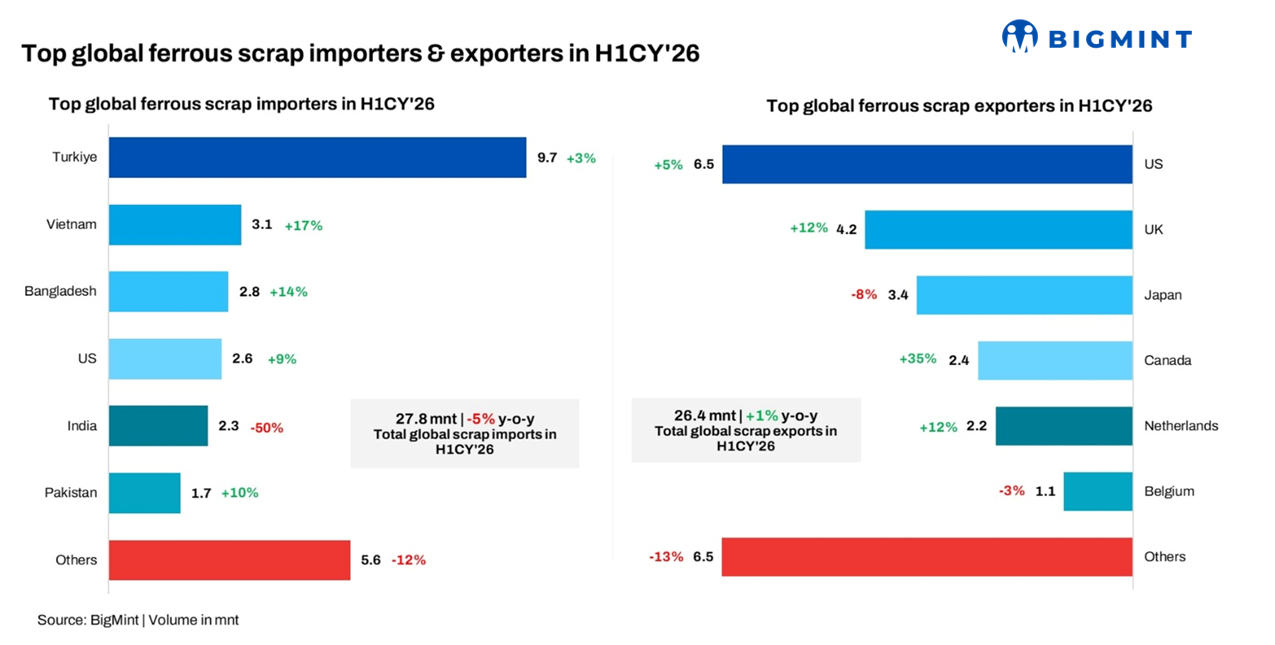
Due to persistent heavy rainfall affecting construction operations across Bangladesh, scrap steel procurement activities were very weak. Market participants described trading conditions as "very dull," with steel mills only conducting selective, need-based inquiries for imported scrap. According to BigMint's weekly assessment, European-origin containerized HMS (80:20) was priced at $363/ton CFR Chittagong, down $3/ton week-on-week; European-origin containerized shredded scrap was quoted at $396/ton, down $4/ton week-on-week; Japanese-origin bulk H2 was reported at $384/ton, down $5/ton week-on-week; and US-origin bulk HMS (80:20) was quoted at $391/ton, down $4/ton week-on-week.
In terms of specific quotes, Latin American-origin HMS 90:10 was offered at $385/ton CFR, with buyers bidding at $370/ton CFR. UK-origin HMS was available at $375/ton CFR, while buyers' target price was $365/ton CFR. Philippine-origin GI bundles were offered at $340/ton CFR, down from the previous $345/ton CFR, reflecting continued pressure on containerized scrap prices.
Buyers' bids for HMS remained at $355-356/ton CFR, and for shredded scrap at $385-390/ton CFR; while suppliers' asking prices for HMS were around $365/ton CFR, and for shredded scrap above $400/ton CFR. The wide bid-ask spread hindered the conclusion of most transactions.
Despite the subdued procurement sentiment, BigMint recorded two transactions of shredded scrap cargoes this week, totaling 2,000 tons. One 1,000-ton Australian-origin cargo was concluded at $390/ton CFR Chittagong, and another 1,000-ton UK-origin cargo was concluded at $400/ton CFR Chittagong.
Market participants noted that suppliers initially quoted shredded scrap at $395-400/ton CFR, with HMS quotes heard around $370/ton CFR. However, due to factors such as weak downstream steel demand, rising electricity prices, higher production costs, and intermittent power shortages, buyers' purchasing interest was limited to need-based procurement.
A market participant in Dhaka stated that steel mills are attempting to raise finished steel prices to offset higher production costs, but weak demand continues to constrain their pricing power. Large integrated producers are expected to better cope with the current market, while small and medium-sized re-rollers may face greater pressure if demand remains weak.
Local scrap prices were heard at BDT 52,000-53,000/ton (approximately $422-430/ton), with billet indicative levels around BDT 70,000/ton (approximately $568/ton). Rebar quotes were around BDT 90,000-92,000/ton (approximately $730-746/ton) ex-works Chittagong, and BDT 85,000-86,000/ton (approximately $690-698/ton) ex-works Dhaka. However, actual transactions were limited due to weak construction activity and sluggish demand for finished steel.
Production costs are also rising, driven by electricity price increases in July and the implementation of revised VAT and tax measures. Market participants estimate that the electricity price revision has increased steelmaking costs by approximately BDT 2,000/ton (about $16/ton), while VAT and other tax changes have raised finished steel production costs by about BDT 4,000/ton (approximately $32/ton). Meanwhile, intermittent power shortages continue to affect re-rollers and induction furnace mills, further dampening scrap procurement.
BigMint expects that Bangladesh's imported scrap steel market will remain under pressure in the coming week. Steel mills are likely to continue purchasing on a need-to-order basis until finished steel demand improves. Rising production costs, power supply issues, and cautious procurement sentiment are expected to keep scrap demand weak, particularly for small and medium-sized steel enterprises.
Related Products


Industrial and Commercial Point-Type Gas Detector
Jinan Benan Technology Development Co., Ltd.
Mine Explosion-proof and Intrinsically Safe Industrial Ethernet Ring Network (10 Gigabit/Gigabit)
Chongqing Mas Sci&Tech Co., Ltd.
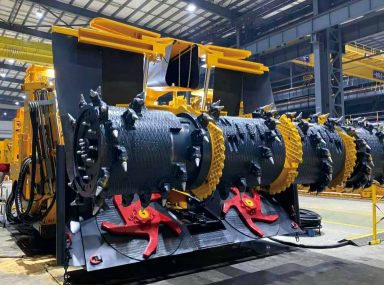
Integrated Excavation and Anchoring Machine (EJM Series)
China Railway Construction Heavy Industry Corporation Limited
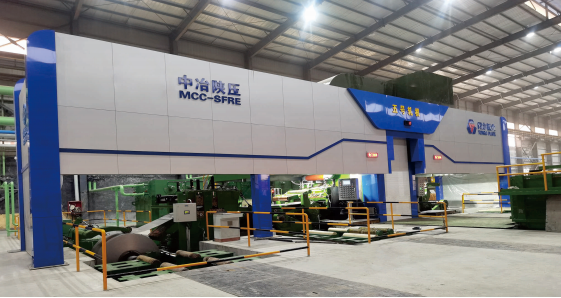
1050-1750mm Steel Strip Single-stand Reversible Cold Rolling Production Line
MCC-SFRE HEAVY INDUSTRY EQUIPMENT CO., LTD.
Yunnan Phosphorus Chemical Group Co., Ltd. 2 Million t/a Phosphorus Ore Mining and Beneficiation Project
China Bluestar Lehigh Engineering Corporation