en.Wedoany.com Reported - The restart evaluation of Global Battery Materials' (GBM) Kearney graphite mine in Ontario is valued at $183 million (C$260 million), approximately four times the project's initial capital cost. According to a preliminary economic assessment (PEA) released by GBM on Tuesday evening, the brownfield investment has a post-tax internal rate of return of 67% at an 8% discount rate, with a payback period of just 1.3 years; initial capital costs are estimated at C$65.9 million ($46 million), with sustaining capital at C$30.9 million.
Canada has included graphite on its critical minerals list and is committed to reducing reliance on Chinese graphite supply—China accounts for about 70% of global natural graphite production and over 90% of downstream battery-grade graphite processing. The United States, also entirely dependent on graphite imports, is pursuing a similar strategy. GBM CEO Eric Miller stated in a release that the Kearney mine "offers a rare opportunity to rapidly establish domestic graphite production in a capital-efficient manner." Historically supplying the North American market, and combined with the company's advanced-stage anode material pilot plant in South Korea, GBM is poised to act urgently to strengthen the critical mineral supply chain.
According to the PEA, the Kearney mine, which closed in 1994, would generate approximately $421 million in post-tax cash flow over a 20-year mine life upon restart. Miller told The Northern Miner in May that the mine could initially produce 23,000 tonnes of carbon graphite annually starting in 2028, eventually increasing to 50,000 tonnes. The restart plan involves refurbishing existing infrastructure rather than building new operations; existing processing facilities, transportation corridors, and previously disturbed sites help reduce capital intensity and shorten development time. The project's economics assume sales of graphite concentrate, industrial graphite products, and upstream battery materials, targeting North American industrial, defense, energy storage, and battery markets.
During the initial diesel-powered phase, operating costs are estimated at C$31.35 per tonne milled, dropping to C$25.50 per tonne after connection to the provincial grid; the study assumes production of approximately 95% carbon graphite concentrate. Located west of Algonquin Provincial Park and about 280 kilometers north of Toronto, the Kearney mine is considered one of the largest flake graphite deposits outside of China. GBM cites resource data from June 2026: indicated resources of approximately 29.2 million tonnes at a grade of 2.10% graphitic carbon; inferred resources of approximately 33.8 million tonnes at a grade of 1.90% graphitic carbon; contained graphite indicated at approximately 613,700 tonnes and inferred at approximately 641,700 tonnes.
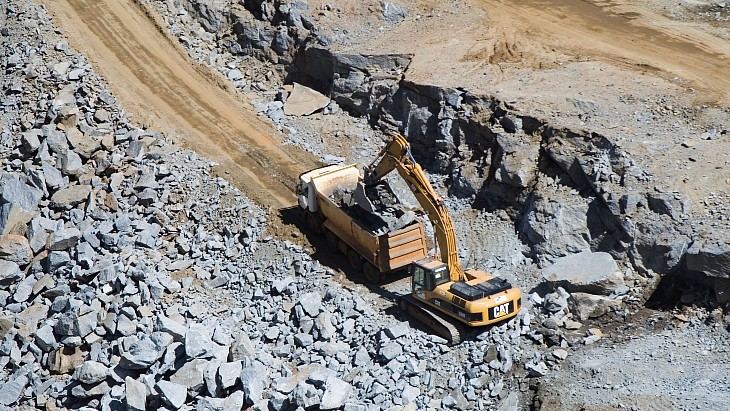
The open-pit mine began production in 1989, processed nearly 1 million tonnes of ore, and closed five years later due to low graphite prices, remaining in care and maintenance ever since. Ontario Graphite previously owned the mine until it was sold to G6 Energy after filing for creditor protection in 2020, and Toronto-based GBM acquired G6 Energy's assets last year. GBM stated that the next step is to prepare a definitive feasibility study but did not provide a timeline for completion.