en.Wedoany.com Reported - An international research team has developed a high-pressure water jet stripping method for recycling discarded photovoltaic modules. In pilot-scale tests, the method recovered high-purity silver, copper, silicon, glass, and polymer components.
The study aims to promote advanced recycling pathways for crystalline silicon photovoltaic modules based on the stripping process, mechanically separating the layers of laminated modules while minimizing cross-contamination between different material components. The research team noted that the work addresses key gaps in current recycling methods, supporting scalable solutions for end-of-life photovoltaic module recycling.
This experiment is part of the EU Quasar Horizon Europe project, which focuses on developing and demonstrating two recycling technologies to advance circular solutions for discarded photovoltaic modules. Compared to traditional mechanical recycling processes, this method improves material recovery rates through separation pathways.
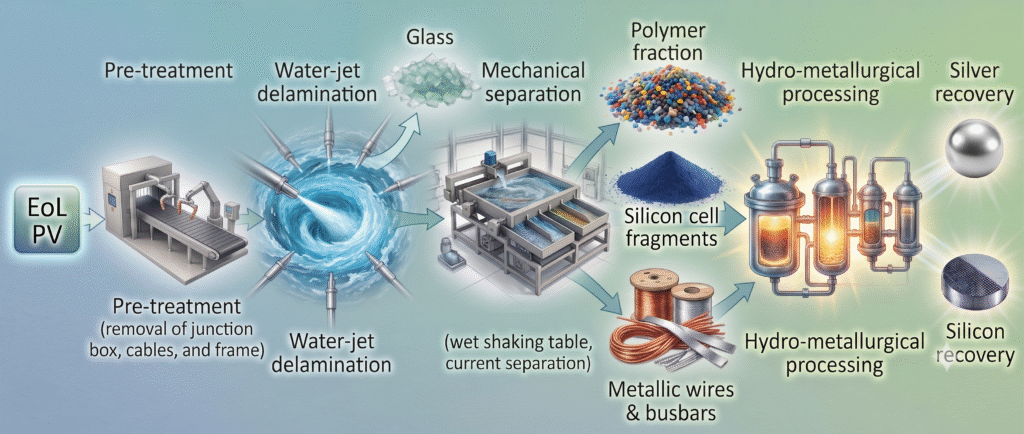
The process begins with a high-pressure water jet stripping step, which separates the strongly bonded layers between glass, encapsulant materials, solar cells, and backsheet. This step yields high-purity glass components, and the separated mixed material components are subsequently removed from the process water through filtration. The filtered water is recirculated back into the system, reducing water consumption and supporting a more sustainable recycling process.
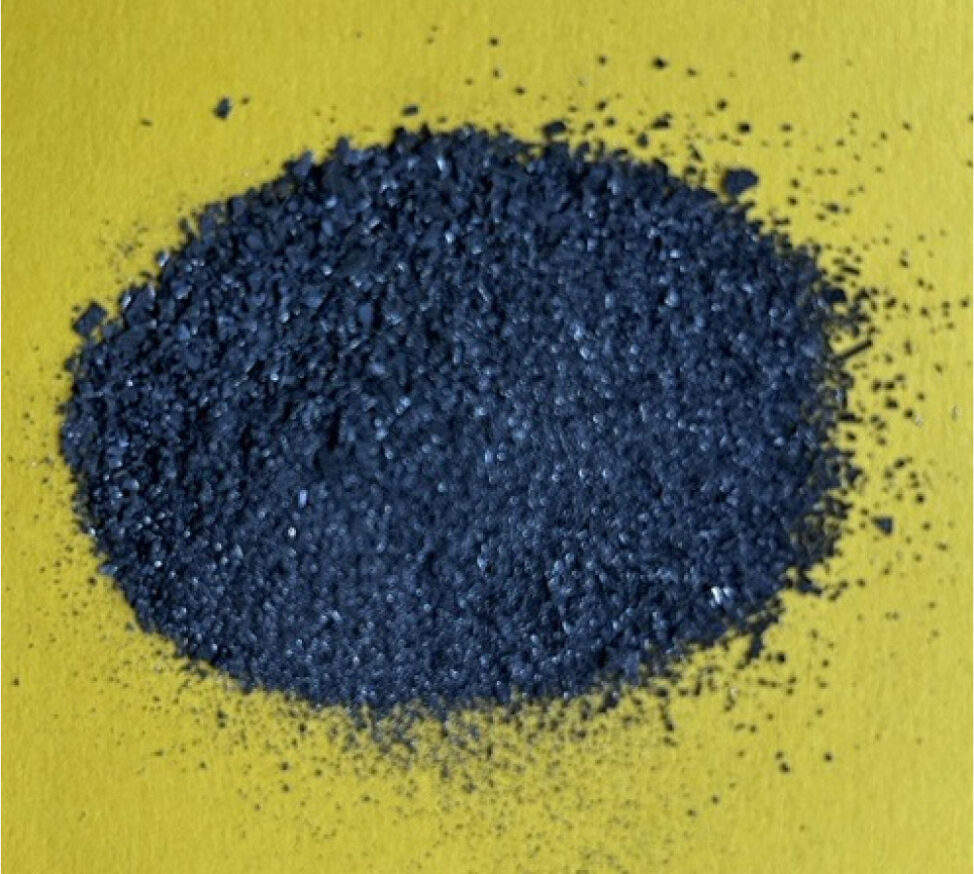
The mixed components, containing polymer materials, silicon cell fragments, and metal interconnectors, require further processing. Density-based mechanical separation techniques, including wet shaking table separation, are used to divide the materials into heavy and light fractions. Metal wires and busbars are then separated via eddy current separation. The silicon-rich cell fragment fraction undergoes hydrometallurgical treatment to recover silver, which is then electrochemically deposited, smelted, and converted into spherical particles.
After completing the process in the experimental facility, the recovered materials were analyzed and characterized. Results showed that the recovered silver achieved a purity of 97%, and the recovered smart wires contained 78% copper, 17% bismuth, and 4.5% tin. The recovered silicon fraction still contained residual impurities, including 22.33 mg/kg phosphorus, 13.33 mg/kg silver, 10.67 mg/kg tin, and 4.83 mg/kg calcium. The recovered polymer fraction was primarily contaminated with inorganic materials, containing approximately 81% silicon, 6.8% aluminum, and 5.3% titanium.
The research team concluded that the silicon fraction carries residual metallization and coatings, indicating the need for further refining to enable high-value reuse; the impurity content and distribution highlight the importance of selecting appropriate processes based on downstream purification strategies and intended end uses.
The research findings were published in the journal Solar Energy Materials and Solar Cells under the title "Material Recovery and Characterization from End-of-Life Photovoltaic Modules Using Water Jet Stripping." The research team includes scientists from the Norwegian Institute for Sustainability Research (SINTEF) and German circular economy company LuxChemtech.