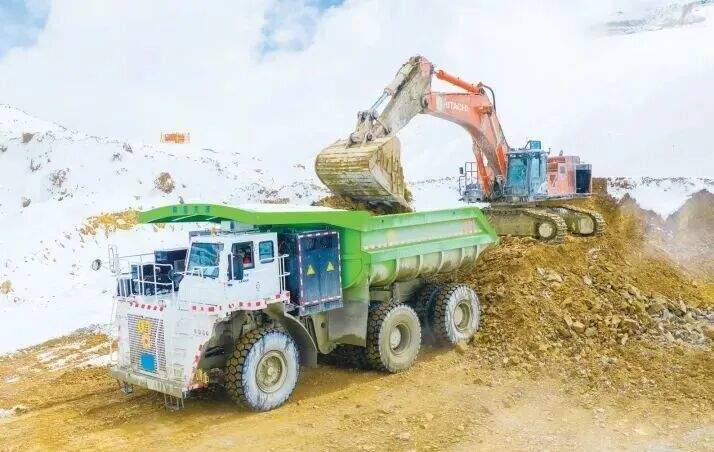
en.Wedoany.com Reported - Zijin Mining's subsidiary, Zijin Longjing, recently held a batch delivery ceremony for the LK220E pure electric mining dump truck at the Longjing Smart Environmental Protection Industrial Park in Longyan, Fujian Province. These vehicles are being dispatched to the Julong Copper mining area in Tibet, which has an average altitude of 5,300 meters. On the same day, Tibet Julong Copper signed a procurement contract with Zijin Longjing for the LK350E large pure electric mining truck. From the batch delivery of 220-ton pure electric mining trucks to the initiation of cooperation on the new 350-ton model, Zijin Longjing's pure electric mining truck business has entered a new phase of industrialization and large-scale development.
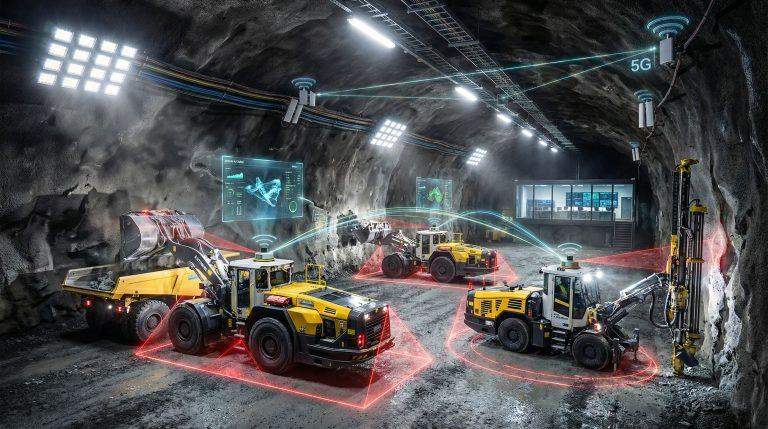
Zijin Mining implements a full lifecycle management model of "mining while restoring" for mine ecological restoration. Taking the Zijinshan Gold and Copper Mine as an example, the mine employs methods such as "layered water control, slope shortening, soil improvement, and plant selection" for restoration, and has built intelligent facilities including an underground "six-system," an open-pit mining truck intelligent dispatch system, and an underground intelligent unmanned scraper system. In 2023, the Zijinshan Green Mine Construction case was selected for publication by the UNESCO Global Geoparks Network; in 2024, Zijinshan became part of the Longyan Global Geopark. In international ESG ratings, Zijin Mining achieved an LSEG (London Stock Exchange) ESG score of 86 (top 1.7% globally), a Wind ESG rating of AAA, and a Morningstar score of 26.
Zijin Mining is promoting its ecological governance concepts overseas. In Serbia, after jointly establishing Zijin Copper Serbia in 2018, the company introduced green mining and treatment technologies, reducing sulfur dioxide concentrations in the Bor mining area to about 8% of the standard limit, and bringing river water pH and heavy metal indicators in line with local water quality standards. Zijin Mining currently operates 22 national and provincial-level green mines and 16 national and provincial-level green factories.
In terms of efficient resource utilization, Zijin Mining lowers ore cut-off grades through technological innovation. The Zijinshan Gold Mine applied economic geology theory to increase available resources from 5.45 tons to 318 tons. At the Julong Copper Mine in Tibet, through the development of "molybdenum flotation and separation + copper-sulfur bulk flotation and separation beneficiation technology," copper and molybdenum recovery rates reached 85% and 74% respectively, while the copper feed grade was reduced from 0.4% to 0.17%. Currently, Zijin Mining can economically extract gold ore with a grade as low as 0.15 grams per ton and copper ore with a grade as low as 0.1%. At the Norton Gold Fields in Australia, preliminary assessments indicate that low-grade ore stockpiles, mineralized waste rock dumps, and old tailings ponds contain nearly 11 tons of metal.
Zijin Mining is accelerating its layout in the new energy and new materials sector as a third growth driver. Through acquisitions, it has formed a lithium resource pattern of "two lakes and two mines," with reserves of over 18 million tons of lithium carbonate equivalent. In the first quarter of 2025, Zijin Mining produced 16,200 tons of lithium carbonate equivalent, a nearly 11-fold year-on-year increase; the average selling price was 101,500 yuan per ton, up 68.2% quarter-on-quarter; and the gross margin was 61%. In 2026, it plans to produce 120,000 tons of lithium carbonate equivalent. Zijin Longjing implements a dual strategy of "environmental protection + new energy," achieving a net profit attributable to the parent company of 1.112 billion yuan in 2025, a year-on-year increase of 33.95%. Zijin Longjing President Huang Wei stated that the company is promoting an integrated layout of "wind, solar, water, storage, and equipment" to create comprehensive mine energy solutions. Currently, Zijin Mining's clean energy usage reaches 6.34 billion kWh, accounting for 54.4% of its total electricity consumption.