en.Wedoany.com Reported - LATAM Airlines is investing $60 million in a partnership with Viasat to develop a personalized digital platform that covers the entire passenger journey, considered one of the most significant technology investments in Latin American aviation in recent years. At the International Air Transport Association (IATA) Annual General Meeting held in Rio de Janeiro last June, the company's Chief Information and Digital Officer, Juliana Rios, stated that LATAM's vision extends far beyond providing faster Wi-Fi. Instead, it aims to draw on the digital systems of its partner Delta Air Lines to build an interactive experience that follows passengers from booking to arrival.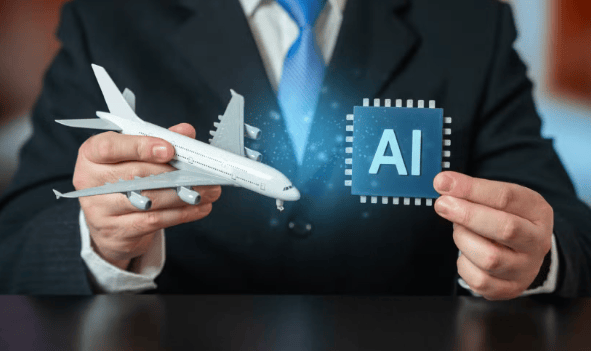
LATAM's digital transformation began well before this investment in in-flight entertainment, with the establishment of a dedicated digital organization around 2018 and 2019. Rather than dispersing technology teams across various departments, the airline formed cross-functional teams that combine business and technology experts to redesign everything from passenger-facing processes to the business backend. Rios emphasized that digital transformation aims to serve people by eliminating unnecessary process complexity, allowing frontline employees to focus on serving passengers. This strategy is reflected in operational metrics: LATAM's Net Promoter Score improved from 19 points in 2018 to 61 points among its top-tier customers, and its digital customer experience score has exceeded 70 points. Rios believes that technology should be credited for at least half of these improvements.
Delta Air Lines has become the blueprint for LATAM's future in-flight entertainment system design. Since the two companies formed a joint venture, LATAM has been working closely with Delta, with collaboration extending from route network planning to customer experience innovation. In an interview, Rios clearly stated that LATAM wants to adopt a highly similar approach to Delta's, investing in its own customer interface to directly deliver better content to passengers. Delta has evolved its seatback entertainment system into the Delta Sync platform, which integrates customer profiles, loyalty accounts, personalized recommendations, and high-speed connectivity. LATAM plans to emulate this model rather than simply competing on content library size or internet speed.
LATAM positions this $60 million investment as a customer experience platform project, not merely a Wi-Fi upgrade. The airline views next-generation connectivity as the foundation for creating new communication channels with passengers. For example, if a connecting flight changes or baggage is delayed, updated information can be displayed directly through the onboard interface. Rios illustrated this with an example of entertainment content continuity: a passenger starts watching a movie on one flight but needs to transfer before finishing it. In the future, the system could recognize the passenger and automatically offer the option to resume from where they stopped. This vision transforms in-flight entertainment from an isolated hardware device into an interconnected digital service linked to individual customer profiles.
Artificial intelligence is already quietly transforming every stage of the journey in LATAM's operations. During the booking process, the airline uses AI and advanced data models to understand customer behavior, interacting with customers via WhatsApp, online chat, and conversational assistants. An AI concierge currently being developed in selected markets can recommend destinations, hotels, restaurants, and activities based on personal preferences. Rios stated that the real challenge lies in understanding contextual information—building data models that reflect each passenger's preferences. This concept extends to the onboard experience, evolving the seatback screen from a digital movie library into a personalized travel companion.
The core direction of this strategy is to shift traditional in-flight entertainment systems toward a broader connected travel platform. Future systems will be able to identify individual passengers, recommend entertainment based on past activities, display personalized travel information, and offer destination suggestions. In contrast, today's seatback screens still primarily provide static content libraries, limited connectivity, and largely anonymous customer service. LATAM's vision combines high-speed Viasat connectivity, Netflix-like personalized recommendations, personal travel updates, full-journey customer profile recognition, and AI-driven contextual assistance and recommendations.
However, LATAM's most striking technology-driven gains may occur out of passengers' sight. The airline has used digital tools to optimize maintenance cycles across its entire fleet, freeing up an additional 1,440 days of flight time annually without increasing the number of aircraft. Rios explained that this achievement would require four new aircraft to replicate. The airline is now applying similar approaches to other business areas, such as cargo, aiming to automate routine processes so employees can focus on interactions requiring human attention. Rios emphasized that the technology landscape is changing rapidly, and LATAM's strategy is not to predict passengers' specific future needs but to build the necessary infrastructure and organizational flexibility to continuously evolve as expectations change. This philosophy could provide an increasingly important competitive advantage for Latin America's largest airline group.