China's XiYueFa Showcases Bio-Based Cold Mix Oil Ambient Temperature RAP Recycling Technology in Georgia
en.Wedoany.com Reported - At the Bituroad 2026 conference in Tbilisi, Dr. Bert Jan Lommerts and QuanXin Xu presented a bio-based emulsification technology designed to recycle and regenerate asphalt at ambient temperatures, even under significantly colder conditions. The core proposition of this technology is that contractors can construct usable pavements using nearly fully recycled materials, reactivating aged binders with plant-based oils instead of heat and solvents.
In most developed economies, national road networks are nearing completion; refinery outputs are altering the availability and quality of the asphalt these networks depend on; and the annual volume of Reclaimed Asphalt Pavement (RAP) produced by milling machines is rising to hundreds of millions of tons. A technology that transforms recycled material from a disposal problem into a paving feedstock can simultaneously address cost, carbon emissions, and supply issues. Lommerts, who served two consecutive terms as President of the International Bitumen Emulsion Federation and is currently Chief Technology Officer of China's XiYueFa Group, presented this work through his consulting firm Reddy Solutions Caribbean, which positions itself as a consultancy partner for circular and protective building materials.
A bio-based liquid, termed Cold Mix Oil, combines a diffusion enhancer, a rejuvenator, and an asphalt supplement component, enabling the regeneration and mixing of aged binder in RAP at ambient temperatures without the need for hot mix plants. Field applications include: pothole patching and repair using 98.5% upgraded RAP and 1.5% oil; mechanical paving of factory-produced cold mix; paving at temperatures as low as minus 10 to minus 12 degrees Celsius; and micro-surfacing using nearly fully recycled asphalt. Global annual sales of RAP are approximately 300 million tons, projected to increase to about 600 million tons; based on the average of five market forecasts, its value is expected to climb to around $14 billion by 2033. The technology aims to unlock the fine, binder-rich fraction of RAP that hot mix plants struggle to reuse due to emissions and agglomeration issues, transforming low-value residue into micro-surfacing grade material. Reported laboratory and trial results are claimed to comply with China's cold patch and semi-flexible standard JT/T 972-2015 and ISSA compatibility protocols, with pothole repairs lasting over four years and cold-laid sections over three years.
Lommertz noted that the Chinese market is in a transition phase, with approximately 90% of China's national road network completed, shifting the system's focus from construction to preservation, maintenance, renovation, and recycling. China's expressway network alone had already reached approximately 190,700 kilometers by the end of 2024, the longest in the world, connecting over 99% of cities with populations exceeding 200,000. When a network of this scale is largely built, the economic focus shifts from laying new pavement to preserving the existing asset base. The report cited a Shanghai case study by Fang and Sun in *Applied Sciences*, indicating that integrating long-term durability into preventive maintenance decisions can transform infrastructure management from a passive cost center into an active value strategy.
Reclaimed Asphalt Pavement (RAP) has quietly become one of the most valuable waste streams in construction. The annual global sale and reuse of recycled asphalt is approximately 300 million tons, growing towards 600 million tons, with an average selling price near $25 per ton. Based on the average of five independent forecasts, the market value is trending towards $14 billion by 2033. The difficulty lies in the fact that not all RAP is equally applicable. The coarse, aggregate-rich fraction integrates smoothly into hot mix formulas, but the fine, binder-rich fraction is difficult to handle. The binder-rich fines release higher emissions during hot processing and agglomerate during milling, storage, and heating, becoming sticky and difficult to reintroduce. The cold bio-based process reverses this logic, as the characteristics that trouble hot mix plants become advantages when regenerating the binder at ambient temperatures.
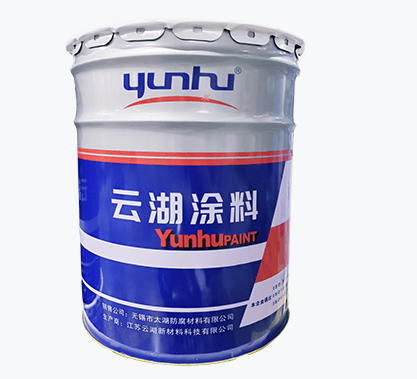
At the heart of the work is a plant-based liquid the team calls Cold Mix Oil, designed to perform three functions simultaneously. It combines a bio-based diffusion enhancer, an asphalt supplement component, and a bio-based rejuvenator, which together restore the softness, ductility, and rheology of the aged binder. The oil migrates into and fuses with the aged film through diffusion. According to fluorescence microscopy images in the report, the old aged mastic and fresh rejuvenator gradually form a single phase over two to four months at room temperature. The oil is described as a liquid at 20 degrees Celsius, containing no volatile solvents and producing no fumes, making it a cleaner alternative to solvent-based cold mixes. In a biomass cascade utilization model, road binders and emulsifying additives provide a pathway for valorizing bio-based streams that would otherwise be incinerated for energy. XiYueFa's research base features a dedicated center with 25 employees and six international experts, collaborating with four universities.
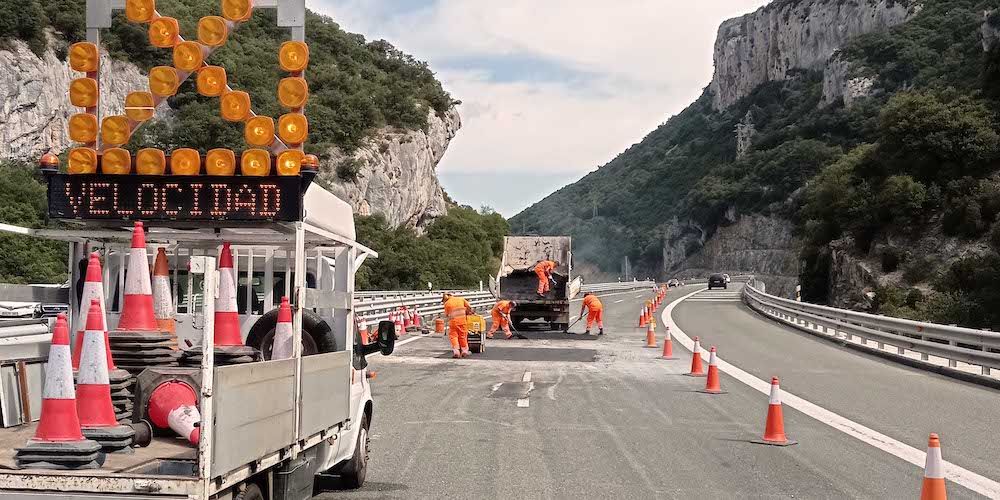
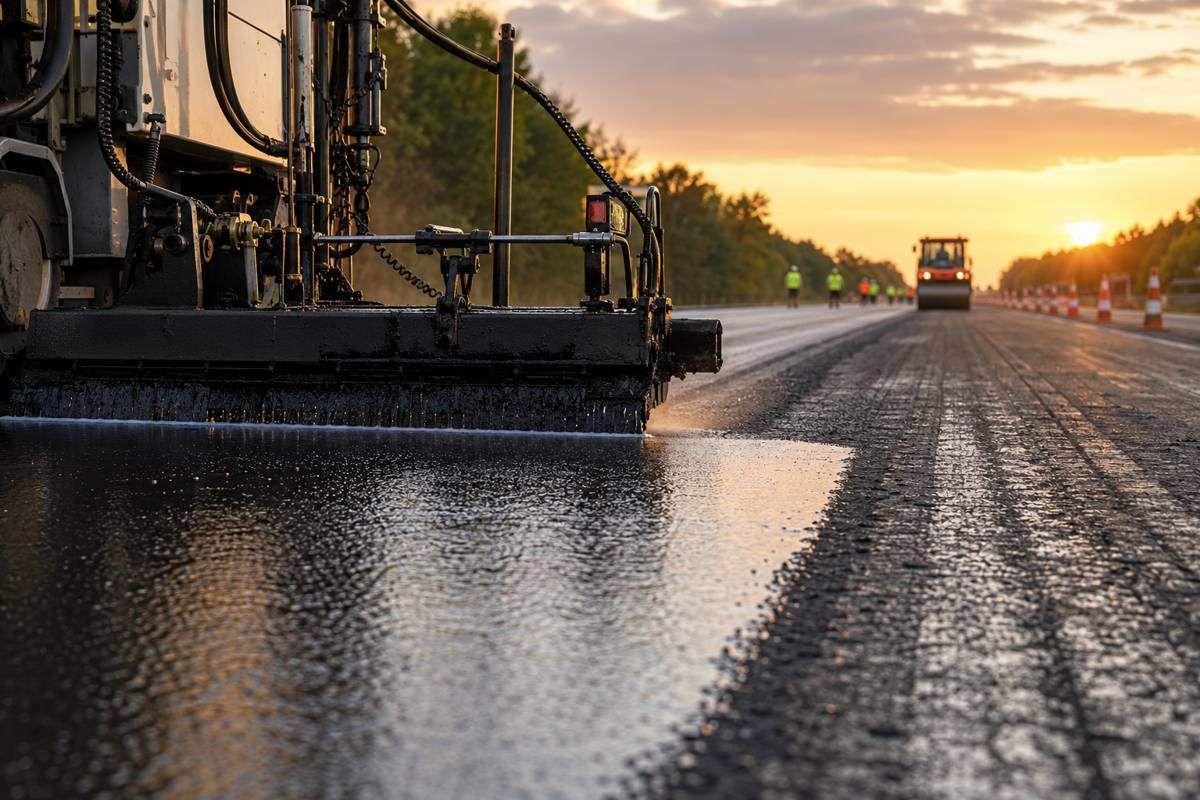
The report presented a stepwise progression of field applications. It began with simple pothole patching, mixing 98.5% upgraded RAP with only 1.5% Cold Mix Oil on-site, reportedly easy to mix, with a lifespan exceeding four years, outperforming solvent-based systems while meeting Chinese standards. Subsequently, the work expanded to mechanical paving of factory-produced cold mix at room temperature and paving at temperatures of minus 10 to minus 12 degrees Celsius, with reported service lives exceeding three years. Two preventive maintenance applications included: MicroSeal, a sprayable fog seal or surface treatment containing 30% to 40% selected ultra-black sand based on a wear- and temperature-resistant binder, sprayed between 11:00 PM and 5:00 AM at speeds exceeding 5 kilometers per shift; and micro-surfacing constructed using nearly 100% recycled asphalt, employing an optimized 0 to 5 mm fine aggregate gradation combined with 1.5% to 2% emulsified oil, with test sections paved and opened to traffic within approximately two hours.
Performance claims were evaluated against recognized specifications. Cold-laid and semi-flexible mixtures were compared against Chinese standard JT/T 972-2015, with the semi-flexible variant achieving a dynamic stability exceeding 7,000 passes/mm at 70 degrees Celsius. The compatibility of the recycled asphalt micro-surfacing system was assessed using the ISSA TB-144 Schulze-Breuer and Ruck protocols. The adjusted emulsifier system proved as critical as the binder itself, as recycled aggregates lack the strong electrostatic attraction to cationic emulsifiers exhibited by virgin aggregates. The strategic outcome lies in the combination of these threads: if RAP can be regenerated cold, if the problematic fines become the preferred feedstock, and if the resulting mixtures meet standards, then the economics of maintenance will change for owners, contractors, and suppliers. The report indicated that XiYueFa is seeking new partners in the Middle East and Asia.
What Lommerts and Xu presented is not a single product, but an argument for the direction of flexible pavement development. Bio-based diffusion enhancers, rejuvenators, and supplements offer a way to close the asphalt loop without heat energy consumption or solvents. This work is still in the transition phase from trials to routine deployment, and its objective measure will be independent field data collected over complete maintenance cycles in different climates. If pavement can be milled, regenerated, and re-laid using minimal virgin materials and zero heat, then the RAP piled beside every milling operation ceases to be a management cost and becomes a storable resource.
Key industry questions addressed include: The bio-based Cold Mix Oil combines a rejuvenator, an asphalt supplement component, and a diffusion enhancer in a single plant-based liquid, enabling regeneration and mixing at ambient temperatures without hot mix plants. The binder-rich fines are difficult to handle in hot mix plants, but the cold diffusion-driven process reverses this problem. The demonstrated applications range from minor repairs to surface courses, with pothole repairs lasting over four years, mechanically paved cold mix over three years, and the semi-flexible variant achieving a dynamic stability exceeding 7,000 passes/mm at 70 degrees Celsius. Global RAP sales and reuse are approximately 300 million tons per year, growing towards 600 million tons, at a price of around $25 per ton. China no longer supplies true straight-run asphalt, and the binders the industry relies on are changing in both availability and quality. Mechanical paving at temperatures of minus 10 to minus 12 degrees Celsius extends the construction season in cold regions. The adjusted emulsifier system compensates for the weaker electrostatic attraction of recycled particles by improving affinity and utilizing mechanical demulsification during rolling.
Strategic points include: Preservation, maintenance, and recycling are becoming the dominant economic activities in mature road networks. RAP is transitioning from a disposal cost to a strategic feedstock, and technologies that increase the recyclable content a mix can carry directly add to the value that can be recovered. Cold bio-based regeneration of aged binder offers a pathway to reduce processing energy, solvent use, and dependence on virgin asphalt supply. Sub-zero and room temperature paving windows extend the maintenance season, potentially reshaping scheduling and procurement for authorities in cold regions. The commercial proposition relies on independent field validation over complete maintenance cycles, and asset owners and investors should focus on long-term performance data that meets national standards.