European Space Agency Deploys First Quantum Computer in Italy
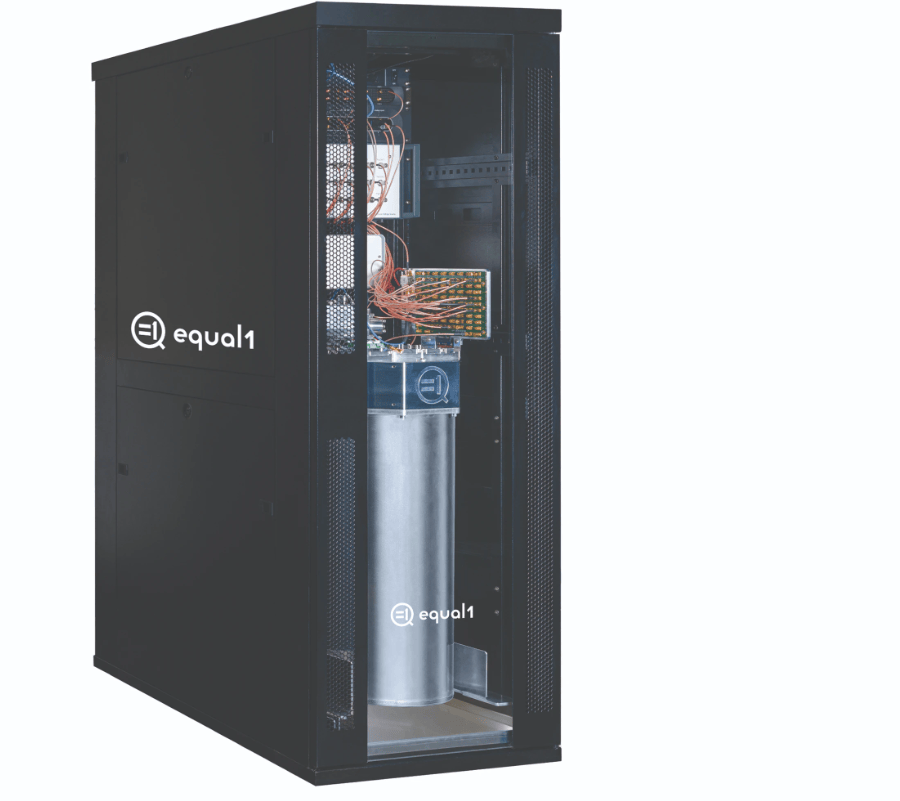
en.Wedoany.com Reported - On July 15, 2026, the European Space Agency (ESA) installed its first quantum computer, named Bell-1, at its Earth Observation Centre in Italy. The quantum computer, provided by quantum technology company Equal1, aims to explore the integration of quantum technology with classical high-performance computing to enhance the processing speed and efficiency of massive satellite data.
ESA's satellites generate vast amounts of complex data daily, supporting applications such as Earth science, climate modelling, and disaster response. As data volumes continue to grow and machine learning is increasingly used for analysis, the limitations of traditional computing systems are becoming more apparent. Quantum computing may open up entirely new ways to process complex Earth observation data, enabling these data to play a greater role in driving scientific discovery and decision-making.
Unlike classical computers, which process information using bits (0 and 1), quantum computers use qubits. Qubits leverage quantum mechanical properties such as superposition and entanglement, allowing the system to represent multiple states simultaneously and explore various possible solutions in parallel, making them more efficient than classical methods for solving certain complex problems.
However, demonstrating the practical benefits of quantum computing for Earth observation still faces scientific challenges. Earth observation applications rely on large, complex, and noisy datasets, while current quantum computers have limitations in scale, coherence, and error rates. Researchers worldwide are working to identify areas where quantum computing can deliver tangible value and determine the most suitable problems to solve through hybrid classical-quantum approaches.
Thanks to the collaboration between ESA and Equal1, Bell-1 has been installed at ESA's facility in Frascati, Italy. Brendan Barry, Chief Technology Officer of Equal1, stated that the vision is to provide practical and scalable quantum computing that can be easily adopted by organizations like ESA. Integrating quantum hardware into ESA's high-performance computing environment will not only accelerate critical Earth observation research but also serve as a model for how quantum and classical systems can collaborate to address major scientific challenges.
The Director of ESA's Earth Observation Programme noted that Earth observation is entering an era where data scale and complexity challenge the most advanced computer systems. Introducing quantum computing into the Earth observation ecosystem enables exploration of technologies that could transform how knowledge is extracted from satellite data, accelerate scientific discovery, and enable faster, more informed responses to global challenges.
ESA Φ-lab is running a pilot project that combines high-performance computing infrastructure with quantum computing capabilities to enable rapid prototyping of hybrid quantum-classical algorithms for Earth observation applications. This environment allows researchers to study potential quantum advantages, benchmark emerging algorithms on real datasets, and accelerate the transition from theoretical concepts to practical demonstrations.
Related Products


Automatic Aiming Laser Remote Obstacle Removal Robot
Pinggao Group Weihai High-Voltage Apparatus Co., Ltd.
Flat Portable Satellite Terminal 0.35m Aperture Manual Portable Terminal
China Starwin Science & Technology Co., Ltd.


D12 Humanoid Robot
Automation Research Institute Co., Ltd. of China South Industries Group Corporation